
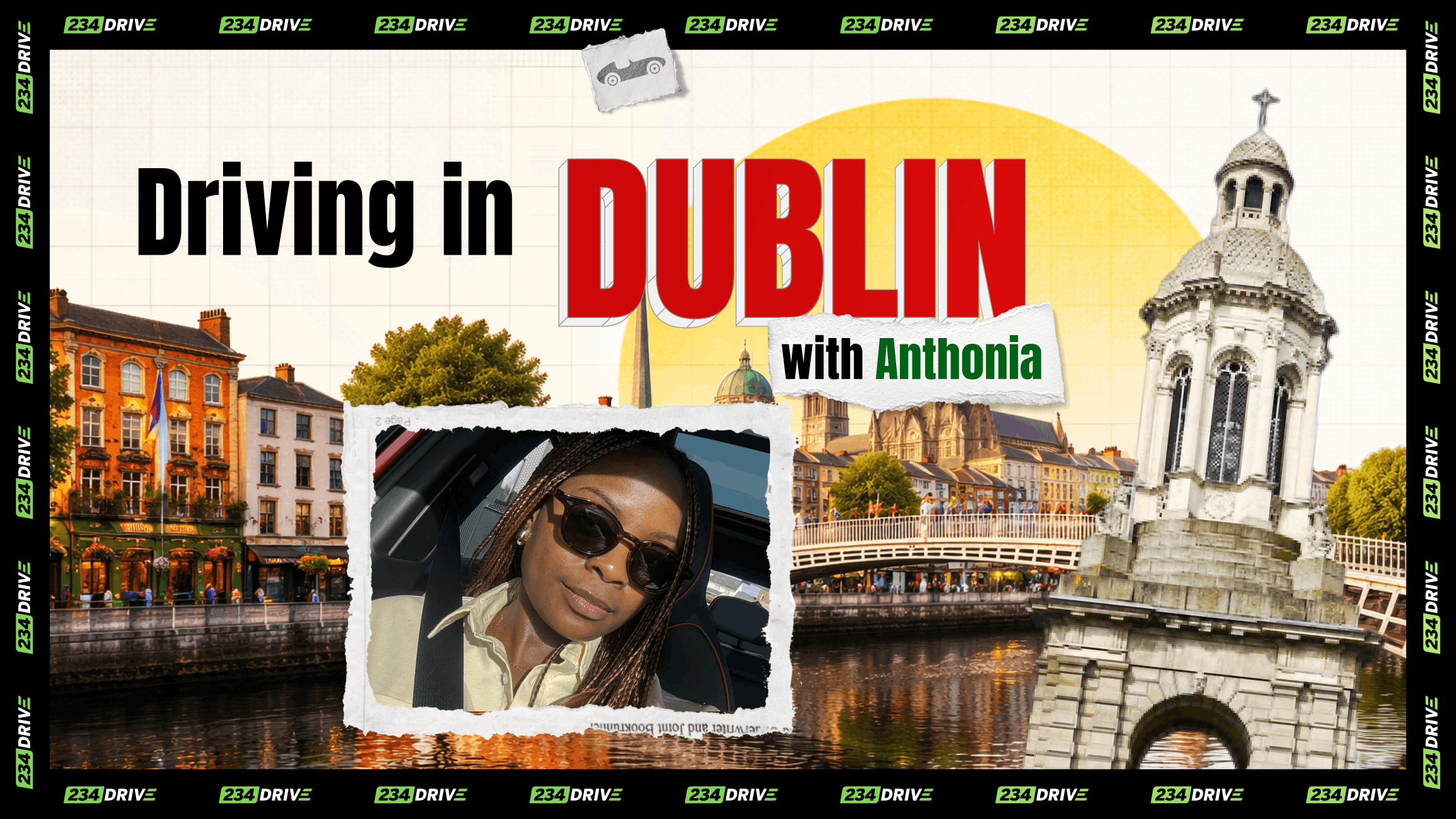
For many newly arrived expats in Dublin, navigating the Irish road network requires a major shift in driving habits. After four years of relying on the city’s bus and tram networks, security analyst Anthonia decided to purchase her first car to accommodate her family’s visit. If you want to understand the reality of driving in Ireland safely without getting overwhelmed by strict roundabout rules, expat licence conversion steps and steep central parking rates, Anthonia’s journey from Lagos to Dublin offers a highly practical road map.
Quick-Start Checklist: Driving in Ireland
Getting behind the wheel in Ireland is a major transition. Before diving into Anthonia’s personal experience of conquering the Dublin roads, use this quick-start checklist to ensure you are legally and practically prepared:
- Evaluate Public Transport vs Driving: Widespread rail, tram and bus networks make Dublin highly connected, but moving to the outer suburbs or driving with family makes owning a personal vehicle highly essential.
- Understand the Irish Theory Test: Before getting behind the wheel, you must pass a 40-question theory test, scoring at least 35 correct answers to secure your learner’s permit.
- Leverage the Foreign Licence Shortcut: Expats holding valid non-EU driving permits can apply for a Reduced Essential Driver Training (EDT) programme, allowing you to complete six mandatory classes instead of 12.
- Budget for High City Parking Rates: Avoid driving into the Dublin city centre if you can. Central parking structures can charge up to €5 per hour, making public transport the preferred option for city centre commuting.

Describe your first driving experience
My first driving experience was in Nigeria at 18 years old. I don’t remember the car I drove. My dad just signed me up to driving school in Lagos and I took classes for about a month during the holidays from uni.
I remember I found it very difficult because it was manual and it was a bit difficult to wrap my head around when to step on your clutch or when to switch gears. So that was the first time I actually was driving a car, but that was not how I learnt how to drive.
After that, I finished my bachelor’s and then I was working, so my dad just put me in the car and we started practising. I used to live on the Mainland and work on the Island. So what my dad would do is he would allow me to drive while he sat in the passenger seat and he would go with me to work and then drive back home. And then when I was almost done from work, he would be waiting for me so we could drive back home.
We did that every day for a month and I got the hang of it. And then after that, he just drove behind me instead. So rather than sitting with me in the car, he now drove behind me and he did that for a week till I was comfortable enough.
You live in Ireland now. What are some of the common ways to get around in Dublin and what are they like?
The common ways to get around would be by bus, tram and train. And they’re ok, depending on where you’re going. If you’re going to the outskirts of Dublin, and if you’re going from the north side to the south side, you have to use multiple modes of transportation. It’s straightforward enough, but it can be long.
How long were you in Dublin before you decided to get a car?
I think four years.
So would you say it’s essential to drive in Dublin?
Because of where I live, I’d say it’s quite necessary. I think one of the reasons why I got a car as well was because my parents came to visit and we had to go around to go shopping or to go visit their own friends. And rather than spending so much money on taxis or having to run for the bus, it just made sense for me to buy a car.
What’s the payment process like in Ireland for buying a car?
You can buy with cash if you have the cash, and you can put part cash and take out the rest in loan. It’s up to you. You can get car loans from the bank, your Credit Union or the dealership themselves. There are interest rates—I don’t remember what the interest rates are to be honest—but you just pay that over time depending on how long you want to do it. Maybe five years, four years, three years, depending on how much you’re borrowing.
It’s up to you. You can do weekly, you can do bi-weekly, you can do monthly. I’m currently doing it monthly.
What car do you drive?
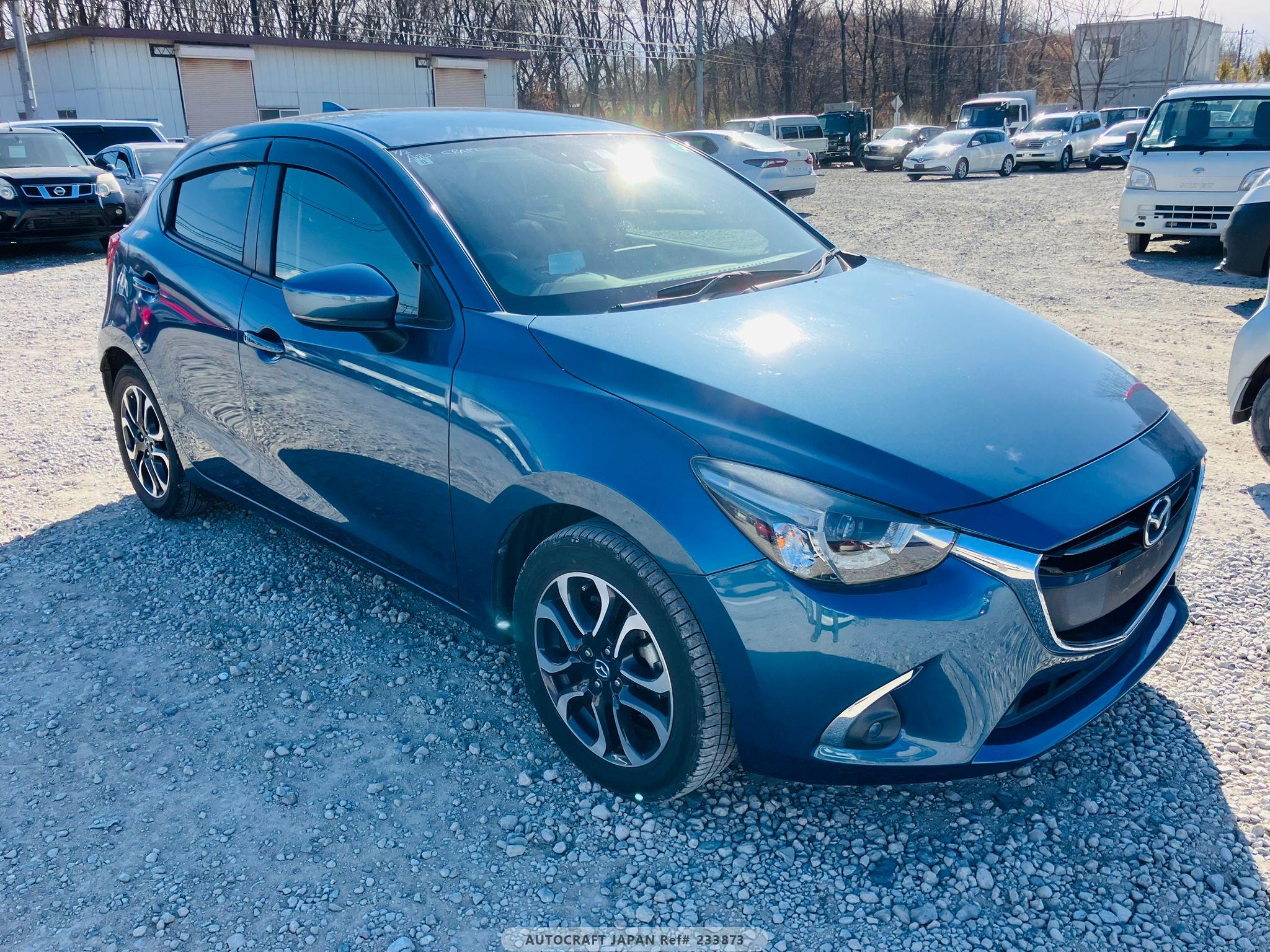
A 2017 Mazda Demio.
What were you looking out for when you decided to buy the car?
I just wanted something that had low maintenance and the fuel consumption wasn’t ridiculous as well. So something that was fuel-efficient and I wouldn’t have to be going to the mechanic every other day. I had a budget in mind as well.
I went to the dealers and gave them my specifications. They brought out three cars: Toyota, Honda and Mazda. I did a test drive for the three of them and I just felt more comfortable in the Mazda. So that’s why I went for it.
How difficult was it to get the requirements you needed to drive in Dublin?
It wasn’t difficult, it was just long.
You have to go through your theory test, which costs €40. I think there are 40 questions and you have to get 35. Once you pass that, you have a year to complete your driving classes and get your full licence. If you don’t do it within that year, you have to apply for a learner’s permit again.
So once you pass your theory test, you get a learner’s permit. If you don’t get your full licence within a year, you have to renew your learner’s permit.
If you have a valid licence from Nigeria, there’s a shortcut that allows you to take 6 classes instead of 12. You just need to get a letter from the Nigerian driving body and send it to Ireland’s and they give you a letter that permits you to do that.
But I didn’t want to go through that route because I felt like I wanted to learn how to drive again. So I did my 12 classes and that took me 12 weeks. I just did one class per week. One class cost €40 per class. Well, it’s €40 to €45 per class, depending on if you want to do it on a weekday or weekend. Weekends are usually more expensive or after-work hours are usually more expensive. So what I did was—because I work from home—I just took my lunch break and just did my classes then.
And then after that, you can now apply for your main test and I think that costs €80. The main test is the practical test. And then once you do that and you pass, they just issue your full licence.
It takes a bit of time and not everyone can do classes every week because it costs €40 per week. So people like to spread it out. And some people don’t pass the tests at once. You have to do it two or three times before you pass. So it’s long, but it’s straightforward.
Do you know if an international driving licence from Nigeria would have been an option in Ireland?
I have an international driving licence, but that would only be useful if you want to rent a car. You cannot convert that. It doesn’t really help.
What is the best part of driving in Dublin?
The best part is just not having to wait for the bus, not having to plan your movement around the transport system because the transport system can be weird sometimes. Once you have a car, you just move.
So the wait time is pretty long for buses?
I think it depends. It really depends. Sometimes there are bus cancellations and sometimes they don’t come. Sometimes it’s delayed. But that doesn’t happen every time. But sometimes it does happen and it’s annoying.
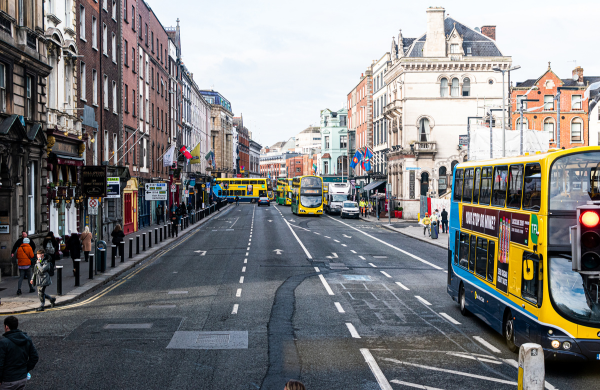
What is a traffic rule in Dublin that took you some time to get used to or that you still haven’t gotten used to?
I think the only thing I can think of is the roundabouts. We drive on the other side compared to Nigeria. And then when I was learning to drive in Nigeria, my dad taught me that somebody has a right of way, but nobody really follows the right of way in Nigeria. But in Ireland it’s stricter because you definitely need to adhere to it. Because if you decide to go when there’s incoming traffic, you can cause a collision.
So that took me a bit of time to kind of understand. But now I’m used to it anyway. But yeah, it would definitely be the roundabouts. And we have loads of that in Ireland.
So apart from Lagos and Dublin, what other cities have you driven in?
I drove in Frankfurt, Germany. I only drove because I landed in the wrong airport and there was no bus or train to take me to the town where my hotel was, so I had to rent a car.
What was the process of that like?
I used my Nigerian international driver’s licence. I rented a car from the airport on the outskirts and I drove about an hour to the city centre where my hotel was. We were only there for the weekend. We just had the car with us throughout the weekend. So we just drove around the city as well and went out for dinner, lunch. We didn’t take it out for touristy activities. When we were done, we drove back to the airport and just dropped the car at the airport.
Between these three cities, what’s the most difficult city to drive in and what’s the best city you’ve driven in?
The most difficult would be Lagos because it’s very rough there. And Dublin is very straightforward. Honestly, as long as you just keep your eyes on the road and people know how to drive.
Frankfurt, I can’t say much because it was just that one time.
Lagos would be the worst, Dublin would be the best, I guess.
Could you make a comparison of the road structure or traffic rules between Germany and Ireland?
There wasn’t much difference. I had not really started driving in Ireland when I drove in Germany to be honest. The only thing is that Germany, they drive on the Nigerian side. So they drive on the right. In Ireland we drive on the left. So that was the only difference.
What’s the traffic situation like in Dublin?
Traffic is just okay. I only drive to work and church. And if I have to go to town, I prefer to take the bus because I don’t like driving to town.
But if I absolutely need to drive to town, you experience a bit of traffic, depending on the time of day, during rush hour on the weekdays. That’s between 6 and 8am or 6 and 9am. And then coming back will be 4 to 6pm as well. Those are rush hour times, so what I try to do is just leave earlier.
Have you ever gotten a traffic fine?
I have gotten a parking ticket. I wasn’t supposed to park on the curb because it’s for pedestrians. So I got a €40 ticket for that..
Have you experienced road rage? Is road rage a thing in Dublin?
I mean I think so, but I haven’t experienced it before. The only place I’ve experienced road rage was probably in Lagos traffic.
What’s the biggest challenge of parking in Dublin and how do you find good spots?
If you’re going into town—and this is one of the reasons why I don’t like going into town—it’s difficult to find cheap parking. If you park on the streets, it’s cheaper because you just need to pay a euro per hour or something. But if you’re using dedicated parking spaces or parking underground, then it’s more expensive.
And that’s why I don’t like to drive into town. I just try to take the bus because it’s so expensive to park in town.
But if you’re going somewhere else that is not in the city centre—maybe you’re going to your friend’s place or you’re going for an appointment, medicals or the dentist or nail appointments—you can find parking around for affordable rates. In my experience, that’s what’s happened.
And then I think there’s an app called Waze where you can just put in where you’re going to. And it gives you parking options. And then you can just plan your movement around that.
What’s the most ridiculous price you’ve seen for parking when you’ve gone out?
€5 per hour. Why? For what? That’s very ridiculous.
If you had an unlimited budget to rent a car for a day, what car would you rent?
Maybe a Mercedes. That’s the only thing I can think of right now because I’m thinking if I want to upgrade my car.
Again, I feel like if I’m to upgrade as well, I’ll just go to the dealers and say this is my budget, this is what I want to do. The specifics are usually not my thing. I just want it to move me from one place to another and look nice.
Did you consult with your dad when you were getting a car?
Yeah, I did. I did ask my dad, but my dad really wanted me to get a Honda for some reason. He was like, “Get a Honda, get a Honda,” and he didn’t want to do anything else.
So I also asked some of my male friends that have cars as well. And then my brother-in-law helped me. So we all just went to the dealer. I feel like I carried all of my male friends to the dealers and then they helped me pick one.
FAQs on Navigating Ireland’s Road Systems
Adapting to the rules and licensing procedures of the Road Safety Authority (RSA) in Ireland is a major milestone. We have compiled the most common questions expats ask when navigating the roads.
Can You Drive in Ireland with a Nigerian Licence?
Yes, but only for a limited period. Visitors and newly arrived expats can drive in Ireland using a valid foreign licence from a non-EU/EEA country (like Nigeria) alongside an International Driving Permit (IDP) for up to 12 months. If you intend to stay long term, you must apply for an Irish driving licence. While your licence cannot be directly swapped, you can bypass the standard six-month permit waiting period and reduce your mandatory lessons from 12 to six classes via the RSA’s Reduced EDT pathway.
What Is the Total Cost to Get an Irish Driving Licence?
Getting fully licensed in Ireland involves several fees. The driver theory test costs €40, and the initial learner’s permit costs €45. Mandatory Essential Driver Training (EDT) classes typically cost between €40 and €45 per hour-long lesson. Finally, booking your practical driving test costs €85, and issuing your full ten-year licence card incurs a €55 fee.
How Do You Find Free or Cheap Parking in Dublin?
Central Dublin is notorious for expensive parking rates, with dedicated garages and underground lots charging up to €5 per hour. Street parking is significantly cheaper, typically starting around €1 per hour depending on the zone. Expats can easily find the cheapest parking options by using navigation apps like Waze or choose to leave their vehicle outside the city centre and use Dublin’s efficient bus, Luas (tram) or DART train networks.