

Lisez cet article en français
For many West African expats, relocating to Abidjan means balancing steep commuting costs against daily road friction. If you are planning to move to the country and want to master driving in Cote d’Ivoire safely, Ademilade’s experiences navigating high-speed highways, rural routes and local administrative systems offer an invaluable expat roadmap.
Rather than purchasing a personal vehicle immediately, Ademilade adopted a highly practical approach to urban mobility: bypassing personal car ownership entirely in favour of walking, using ride-hailing services like Yango and borrowing a car for long-distance road trips. From completing your local licence swap to dodging automated speed traps, this guide outlines what you must understand before getting behind the wheel in the capital.
Quick-Start Checklist: Driving in Cote d’Ivoire
Before diving into Ademilade’s personal experience, use this quick-start checklist to ensure you are legally and practically prepared for the roads:
- Evaluate Ownership vs Ride-Hailing: Abidjan’s active ride-hailing market (Yango and inDrive) alongside shared taxis (wôrô-wôrô) make daily inner-city commuting highly efficient and cost-effective without the financial overhead of car ownership.
- Observe the Five-Year Import Limit: The government strictly prohibits permanently importing vehicles older than five years. This policy has created a highly modern local car market supported by accessible bank loan financing.
- Convert Your Licence Within Three Months: While you can temporarily drive on a valid foreign or ECOWAS licence, long-term residents must complete the official vision and blood tests at the Centre de Gestion to swap to a local driving permit.
- Budget for Speed Camera Fines: Automated speed cameras (radars automatiques) are highly active across Abidjan’s modern road network. Speeding tickets are relatively cheap but must be settled in full before you can renew your annual vehicle papers.
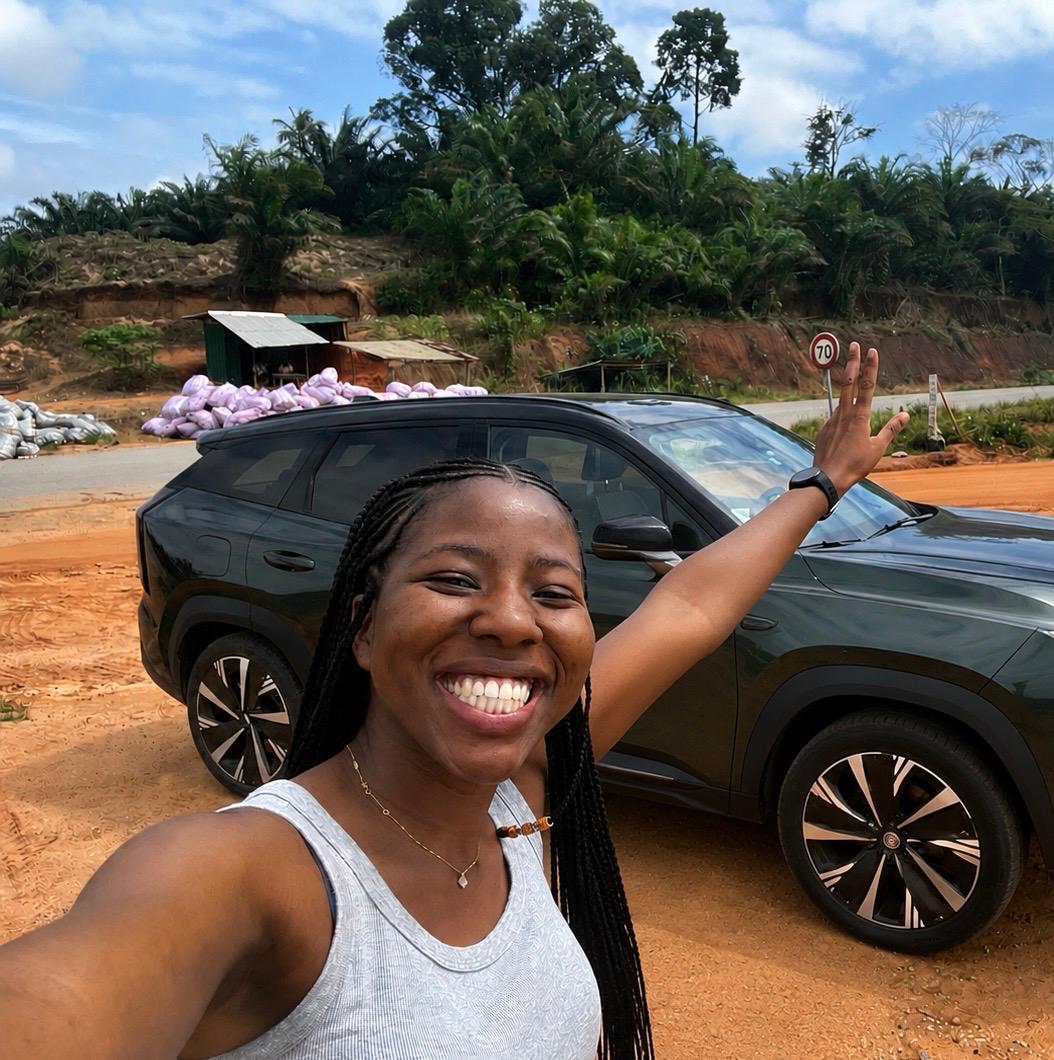
Describe your first driving experience.
I enrolled in a driving school in Lagos in 2021. The first lesson was on the highway around Dolphin Estate in Ikoyi and it was in a manual car, which was very difficult. Yeah, it was a mess. The instructor was at the back like, what is wrong with this woman? Why can’t she figure it out?
When was the first time you drove an automatic and what was it like?
Actually, after driving the manual car, I was convinced I would never learn how to drive because driving as a whole was just that difficult. But a week later, I started learning with an automatic and I was like, what even was the point of suffering through the manual in the first place?! The automatic car was a huge relief.
How essential is it to drive in Abidjan?
It’s not essential. You can get away without a car in Abidjan, especially if you live in the city centre like I do. I’m literally 5 to 10 minutes walk away from my work. The only reason I would buy a car is for travelling up country. I’m very big on travelling this country. I’m very big on road trips. I once drove with a friend’s car to Cotonou from here. So I’m big on that. But in terms of day-to-day living in Abidjan, no, it’s not essential
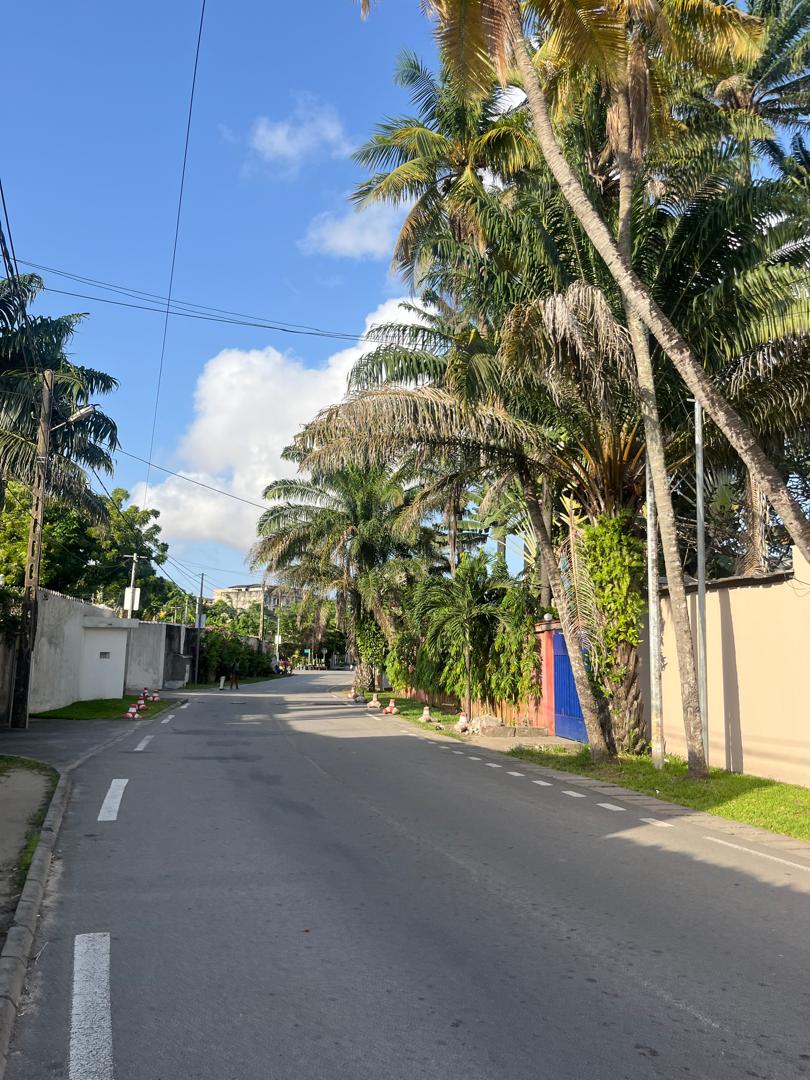
Is Abidjan a walkable city?
No, I would not say that. There are pockets of places where I run. And to ensure cars don’t hit me, I run against the traffic flow. There are almost no sidewalks—it’s basically a myth. You can’t run across the city without the risk of getting hit. It’s just not designed for people to walk. I definitely walk in this city, but it’s not everybody that would join me to walk.
What are the common ways people get around?
There are public BRT buses, which I’ve never taken. Then there are gbakas which are the equivalent of danfos. They’re very cheap. You can travel through cities with them. There are also buses that take you to other cities, like Yamoussoukro or Bouaké.
There are wôrô-wôrô, shared taxis which have different colours based on their commune. For example, Cocody wôrô-wôrô are light yellow while those in Koummassi are green. And then the equivalent of Uber, which is Yango. That’s my most used form of transport. Uber didn’t really hit here, so it’s mostly Yango for ride-hailing apps, and now inDrive is competing. There are private taxis as well, which are more expensive. I only use them when Yango is taking time and you can haggle the price. We don’t really do motorbikes here.
So you do decide to drive sometimes. Tell me about converting your Nigerian license to an Ivorian one.
You can use your Nigerian one initially when you come. You have three months to change it if you want. Every time you go out and come back in, the three-month period refreshes. But the thing is that you need your passport to show the stamp that you entered. But while I was driving on my Nigerian license, no one ever stopped me. You can drive on your ECOWAS licence.
You can even drive on your French licence here for a certain period of time. Also, when I came, I knew I was going to drive so I got an international driver’s license as well in case they were not accepting my Nigerian license. But I eventually did change it just so there’s no ambiguity as to whether I can drive.
What was that process like?
It involves going to the Nigerian embassy, then confirming you have a real Nigerian license, then going to an Ivorian administrative office. In all of this, I paid some fees but they didn’t give me receipts. Somebody calls a price and you just pay. So I remember going to the embassy, telling the man what I wanted to do and he said, okay, 15K XAF (36,000 NGN/ 26.5 USD). I asked, will I get a receipt? He said, do I want my paper or do I not want my paper? I said okay. And then I went to the next place and told the woman, and she said they didn’t issue receipts there.
And then from there you start the official process at the Centre de Gestion. They do a visual test and blood test to make sure you’re okay. And once they have those two papers, they switch you automatically. For this one, they give you a receipt because there’s an official price of around 100,000 XAF (240,000 NGN/ 177 USD).
The process there is quite seamless and you can do it yourself like I did, or have someone take your papers and help you. They’re very used to West Africans. Abidjan is a very pan African West African city, in the sense that there are many West Africans from other countries who move here. And honestly, they’re not just West Africans—there are lots of foreigners in general who live here. They’re used to administrative changes and stuff like that, so it’s quite smooth.
I think it took me one or two months. And the only reason is because I was in and out and it was during the summer. But there’s this thing—there’s a PDF that goes around called ‘the longest day of your life in Ivory Coast.’ And that’s the day you get your license switched. Because it takes time.
So you mentioned you really like driving up country. How far is it possible to drive from Abidjan?
The Ghanaian border, I believe, is three hours away. Yeah. The closest big city is Bassam, which has the beach. That’s like an hour away. There’s a beach two hours away that people regularly go to during the weekend. And then the next big city would be the capital, Yamoussoukro, which is three hours away.
Generally, it’s easy to travel across the country because the roads are ridiculously good and it’s relatively safe. The longest I’d be okay driving is to Korhogo, a city 10 hours away from Abidjan. It’s just that no car company and no friend was willing for me to take their car that far. But it’s something that people do.
Tell me more about the roads
All main cities, even secondary, tertiary cities—the roads to these cities are well-paved. I’ve never seen this anywhere else in West Africa. Mind you, I work in logistics, so there’s a lot of moving around to less developed areas and even there, the roads are very good. There’s only been one time I’ve been on bad roads, and that was when we were entering Ghana. You could see that you had entered a different country. I said, yo, this is not our Côte d’Ivoire reality. The roads were the worst I’ve ever seen in my life. Even in Nigeria, I’d never seen roads that bad. But yeah, travelling in West Africa is something I want to do more and more.
And within Abidjan itself, how spread out is it?
It is super spread out in a way Lagos is not. Well, I don’t know. Without traffic, you can drive in Abidjan one hour, one hour 30 minutes, and you’re still in Abidjan. So it’s quite a vast city..
What’s the traffic situation like?
There is some traffic congestion. I think Abidjan is kind of a headquarters for many organisations. The AfDB is here, the president lives here. So at times, the roads are blocked because there are official events. But generally also, there is traffic, especially if you’re in the direction where most people who live in Cocody or Yopougon commute to work in Marcory. So that would be the traffic axis. But I’m usually against the traffic.
What’s the longest you’ve ever spent in traffic?
I don’t think it was long enough for me to be like, oh my gosh, this is so incredible. It has never been that bad—maybe because I’m a Lagosian. It’s just normal big city traffic.
Is road rage a common thing in Abidjan?
It definitely is a thing, but I’ll admit that I’m usually the one that’s angrier. I learnt how to drive in Lagos, so I use my horn a lot—some people would say too much. But the thing is, my horn does what it needs to do. Also, when I’m in the car with other Nigerians, they think my angry honking is justified.
But generally, people do get angry, I think. Yango drivers, especially, will say the funniest things as they are fighting. But that being said, I’ve also seen one car brush another car and both drivers came out of the car so calm. I was like, this could never happen in Lagos. They would both be shouting.
I was very surprised by that exchange. I understand that everybody’s supposed to have insurance so everybody’s very calm, but still, this was something to behold for me. They were calmly asking each other for their insurance details and I kept thinking, I don’t have the capability of doing that. And I don’t know what you have in your life to have the capability of doing that.
What’s one complaint you have about driving in Abidjan?
There are a lot of speed cameras and the speed limits are super low. On a big road, they say you can do 100 km/hr but I struggle to go below 120. Or on a highway inside Abidjan, I think they’re at 60 km/hr. Again, I feel these are super low and I struggle with them, so my friend gets a lot of tickets on her car. And she knows it’s me because like, I’m like, I can’t drive with these speed limits. And there’s a rule: if you’re over 10, you get charged a certain price. If you’re over 20, they charge you a different amount. So this is how they get their money.
How much are the tickets?
A typical ticket is maybe 2,000 francs (4,800 NGN/ 3.5 USD), so not that much. So I just waive them off, thinking I can afford to pay this. And you’re forced to pay it, I think, when you renew your car papers. That’s where they catch you. You have to pay up, and they have the dates of when you sped and the road you sped on. You can’t really contest it so you just pay up.
What’s the real cost of owning a car here?
Typically, to fill up a tank—I mainly drive a Toyota SUV, my friend’s—would cost about 35K XAF (85,000 NGN/ 62 USD) , which I think is reasonable. But the prices went up officially this weekend with the war in Iran.
What’s the car market like in Abidjan?
So, there’s a rule: you cannot import a car that’s over five years old. When I came, I actually wanted to bring my car in from Lagos. But it’s over five years old, so I couldn’t. Like, you can technically bring it in, but it can’t stay in the country. Or you have to go back to the border every time and renew the pass. So, it’s not a sustainable thing to do.
And because of this rule, there are lots of new cars on the roads. I’ve never seen this anywhere. There are so many new cars. And most people take loans to finance their cars. So there is loan infrastructure. You would come here and think, is everybody balling? Just because of the sheer number of new cars.
But there’s also a secondhand car market, especially amongst people who move here for a certain period of time to work—some would call them expats but I refuse to lol. So there’s a market where you just sell a car to your friend or you’re selling to someone in the same group chat. It’s easy to sell a car.
What’s the most scenic drive you’ve done in Côte d’Ivoire?
Oh, my favourite drive is Abidjan to Assinie. It’s lovely because you just continue driving and you’re between the plantation trees, and it’s just lovely. And that’s my 120 km/hr road because I just get lost in the drive.
FAQs on Navigating Cote d’Ivoire’s Road Systems
Adjusting to Francophone West African road codes and vehicle registration rules can be a major transition. We have compiled the most common questions expats ask when getting behind the wheel.
Can You Drive in Cote d’Ivoire with a Nigerian Licence?
Yes, but only temporarily. Under regional ECOWAS agreements, visitors and newly arrived expats can drive in Côte d’Ivoire using a valid foreign or ECOWAS driver’s licence alongside an International Driving Permit (IDP) for up to three months. If you intend to establish residency or stay long term, you must validate your credentials at your local embassy and register with the Centre de Gestion to swap your foreign licence for an official Ivorian driving permit.
What Are the Document and Testing Requirements for an Ivorian Licence?
To convert your licence, you must visit the Centre de Gestion with your stamped passport, your validated original licence and proof of address. The office will require you to complete a basic visual screening and a blood type test. Once these physical records are cleared and the official processing fee of roughly 100,000 XAF is settled, your local licence is automatically switched and issued.
How Does Speed Enforcement Work When Driving in Abidjan?
Côte d’Ivoire utilises a highly modern, automated network of speed cameras (radars automatiques) rather than physical police patrols to monitor Abidjan’s highways. Speed limits are strictly enforced (typically capped at 60 km/h on inner-city roads and 100 km/h on expressways). Citations are linked directly to your license plate and vehicle registry, and all outstanding speeding fines must be paid in full before you can renew your annual car registration papers.