
Learning how to drive in Los Angeles is often an exercise in unlearning flat-road assumptions. For Amarachi, a senior financial services auditor who put off driving until moving from Nigeria to the US for her studies, the transition was a matter of sheer survival. After mastering the wheel in Houston, she relocated to Southern California and was met with a stark topographical reality: roads that appear completely level can suddenly dip into steep downhills, requiring alert, defensive braking.
Combined with rigorous highway loop systems, strict carpool lane enforcement and premium parking rates, driving in LA demands high strategic planning. This guide delivers a clear roadmap to navigating the city securely.
Quick-Start Checklist: How to Drive in Los Angeles
Conquering the freeways of Southern California requires a mix of legal preparation and physical adaptability. Use this quick-start checklist to prepare for the road:
- Anticipate Deceptive Topography: LA’s hilly terrain means flat-looking roads can disguise rapid downhills. Stay alert and monitor your speedometer as your vehicle can accelerate quickly without you pushing the pedal.
- Audit Your Carpool Lane Access: High-Occupancy Vehicle (HOV) lanes are strictly reserved for cars with two or more occupants. Driving alone on these lanes to bypass bottlenecks will result in heavy, automated fines.
- Master the Hillside Steering Lock: When parallel parking on LA’s steep streets, you must turn your tyres so they face the left to prevent your vehicle from rolling into traffic.
- Use Commercial Parking Buffers: Mall parking structures are highly expensive. Save on hourly fees by parking near larger pharmacies or commercial plazas a brief distance from your final destination.
Amarachi, a senior financial services auditor, put off learning how to drive for as long as possible. It wasn’t until she moved from Nigeria to the US for her studies that she decided to learn out of necessity at 19 years old—public transport was simply not practical. Now she’s in LA, where roads that look flat turn out to be downhill, parking at the mall costs too much for her liking and rush hour lasts from 4:30pm to 8pm. She got fined once for using the HOV lane while driving alone in a bid to beat traffic. These days, she just stays in the office until the roads clear.
What was your first driving experience?
My first time driving was in Houston, Texas. I drove my sister’s car, which was a Nissan at the time. I was about 19 or 20 years old and it was quite a scary experience for me, especially because I had never really wanted to drive. I was mostly scared of the trucks on the road, but I overcame it. In Houston, the public transport system is not convenient in some areas, so I really needed to learn how to drive.
What are some of the common ways to get around in LA and what are they like?
The common ways to get around would be by personal car, compared to the metro or buses.
So would you say it’s essential to drive in LA?
I think it’s essential to have your own car in LA. If you’re living in some areas where the bus is convenient, good for you, especially because the gas (fuel) prices here are a lot more expensive compared to Houston. Uber and Lyft are also quite expensive. So it’s easier to just have your own car and drive here.
What do you look out for when buying a car?
I look out for features like car play—being able to connect your phone to your car and having an interface that mirrors your iPhone homescreen for instance. It gives a more modern feel and aids convenience, especially since I can easily connect to Google Maps or Apple Maps.
What car do you drive?
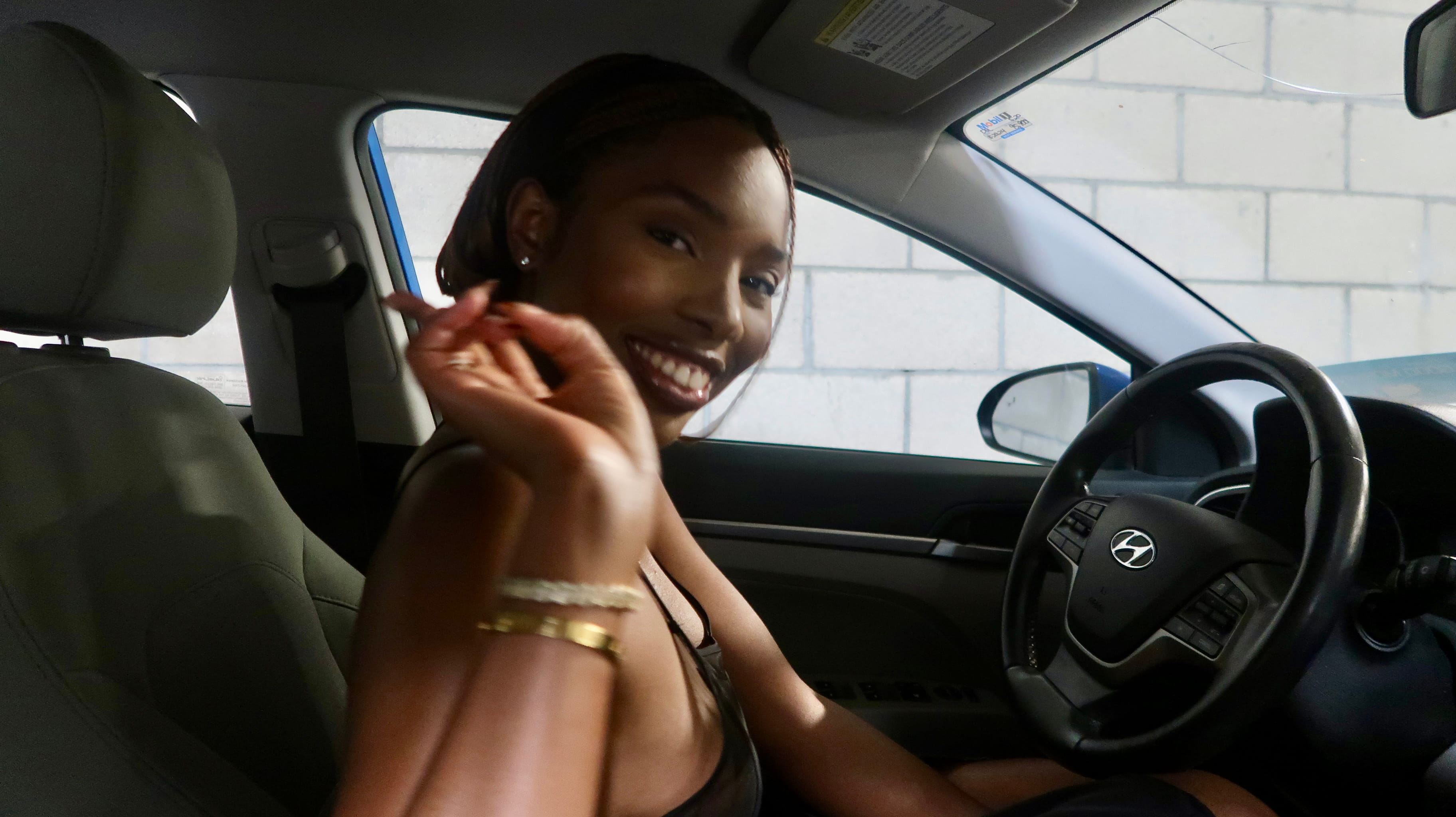
I currently drive a Hyundai Elantra.
Was it hard to fulfil the requirements for driving in LA?
Actually, I’ll talk from a Houston perspective since that’s where I learnt how to drive. I took summer driving classes since school was out of session and then I got the licence. It wasn’t the international licence so I don’t drive when I go to Nigeria, but in some other countries where they take US licences, I’m able to drive there as well if I rent a car. I’d say the requirements for the licence were pretty straightforward and easy to get.
Does it make more sense to lease or rent a car in LA?
I would say it makes more sense to lease than to rent because with renting, you could only do it for a couple of months. But with leasing, you can have it leased for up to 2 years and then you return it or you lease it to buy it. Some companies give the lease-to-buy option.
If you had only one hour to drive in LA, where would you drive to?
If it’s not during rush hour, I’d say to go to the beach. Maybe Malibu Beach since it’s not far from the city centre. But during rush hour, it can take you more than 40 minutes to even get to the beach.
Best place to drive at night?
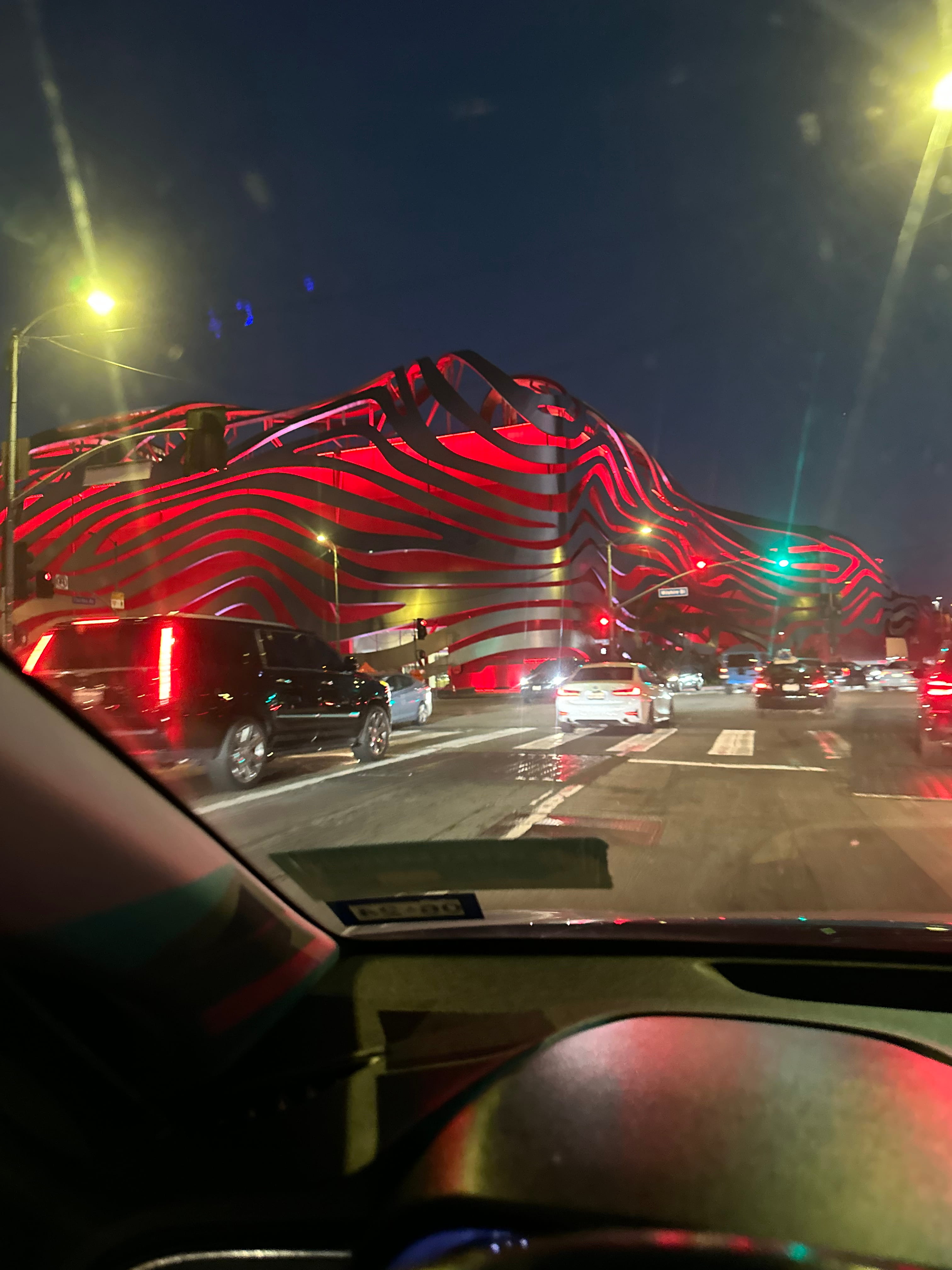
I feel like this question really depends on the person. But for me, I’d say restaurants, because most times, I go out with my friends in the evening to restaurants. Also because traffic is mellowing around that time.
What’s the most difficult city you’ve driven in?
That would be Rincon in Puerto Rico. The roads are very steep and narrow there, because it’s a hilly city.
What’s the best city you’ve driven in?
Maybe Houston, because they have more toll roads than LA. That means you can only access the road if you have a toll tag and you don’t have to be stuck in traffic on normal roads.
What’s a traffic rule in LA that you haven’t gotten used to?
I think that would be parking on a hill, because LA is very hilly. So when you park on the hill—especially parallel parking, you have to turn your steering where your tyre faces the left side. You can’t just park on the hill straight so your car doesn’t roll down.
What’s something unique about driving in LA?
Again, it’s the driving on a hill thing. Some roads look like they’re on a levelled surface, but when you’re driving, you’ll realise that you’re going down a hill because of how fast your car is going even without you pushing on your accelerator. That’s something I was scared of when I initially moved here.
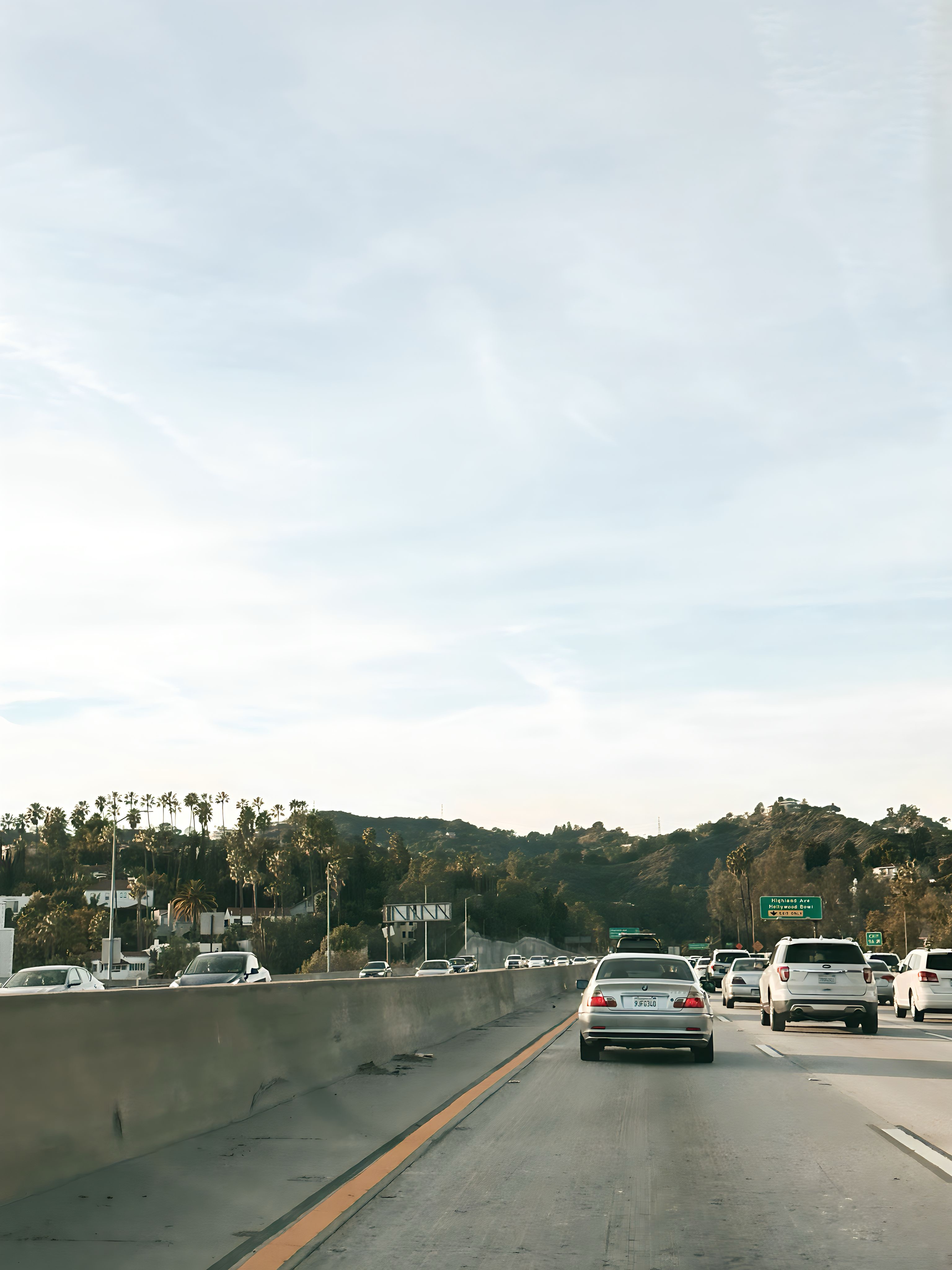
Have you ever gotten a traffic fine?
I got one for driving on an HOV lane, which is a lane on the left side of the road that is meant for cars which have 2 or more people. I got on that lane because I was trying to beat traffic, even though I was the only person in the car. So yeah, unluckily for me, I got fined.
What’s rush hour like in LA and how do you deal with it?
It starts around 8AM through 11AM. It’s really bad during the week. People are always driving in this city and no one’s staying in their houses. So in the morning, it can take you an hour to get to work. Then in the evening, it’s from 4:30PM through 8PM. In the morning, I can’t really do anything about it because I have to be at work on time. But in the evening, I stay longer in the office so I don’t have to stay in traffic after a long day.
How do you handle road rage in LA?
Honestly, I just ignore people who are acting crazy on the road. And I try to stay in a lane away from them just in case they want to act out, because I have seen situations where people actually go on attacking each other on the road and it leads to something bad.
What’s the craziest thing that has happened to you while driving in LA?
Once, my car stopped on the highway and that was annoying but also almost expected, because my car had been acting up that week. Thankfully, I was able to move it to the side of the road and just sit down there for 10 minutes and it started working again. I drove it back home and then I took an Uber to work.
What’s the biggest parking challenge in LA and how do you find good spots?
Most of the parking situation in LA is street parking, so you have to parallel park and not everyone is good at parallel parking. Also, most public parking spots here are paid, by the hour and some even minutes. That’s just too much money. Getting charged for public parking at a mall where people go to almost everyday is honestly a challenge. The best way to find a spot would be maybe parking in a commercial area, like where you see smaller stores like pharmacies, a bit of a distance from where you’re actually going.
FAQs on Navigating Los Angeles’s Road Systems
Acclimatising to the complex transit network of Southern California can be a steep learning curve. We have compiled the most common questions expats ask when learning how to drive in LA.
Can You Convert an Out-of-State Licence Directly in California?
Yes, but the process depends entirely on your legal status and the type of licence you hold. If you possess a valid driver’s licence from another US state—such as Texas—the California DMV will typically waive the practical driving exam. You will, however, still be required to submit a physical application, pay the registration fee, pass a vision screening and clear a brief written knowledge test on California-specific road rules.
How Do You Avoid Expensive Parking Fees at LA Shopping Centres?
LA is notorious for charging steep fees even in commercial shopping mall garages. If you want to bypass these premium rates, avoid parking directly in mall structures. Instead, seek out nearby open-air commercial plazas, local pharmacies or grocery store lots that offer validation schemes. Alternatively, use metered street parking, but ensure you carefully read the curb colours and sign rules to avoid expensive towing penalties.
What Are the Restrictions on Using LA’s HOV Lanes?
High-Occupancy Vehicle (HOV) lanes—commonly marked as carpool lanes on the extreme left of major freeways—are designed strictly for vehicles carrying two or more occupants (or clean-air vehicles with official DMV decals). Entering these lanes as a single occupant in an attempt to beat rush hour bottlenecks is highly illegal. California highway patrols monitor these lanes heavily using both physical cruisers and smart cameras, issuing hefty automated fines that start at $490.