
The heavy drum of Gqom continues to reverberate through the floors of a rave. At around two in the morning, the crowd begins to lose track of the passing hours. They can easily spend the entire night dancing aggressively, speaking with strangers, and sharing drinks until their voices go completely hoarse. Everyone inside the building is enjoying the strange freedom that accompanies staying awake while the vast majority of the city sleeps. Eventually the night reaches its inevitable conclusion.
The bright overhead lights suddenly come on, blinding the remaining die-hard ravers as the resident DJ plays the final song of the set. That exact moment triggers a collective mental shift across the room. People begin to calculate the exact physical distance between their current location and their comfortable beds. I know this specific calculation all too well as I attend these raves regularly and rely mostly on public transport to get back home at night.
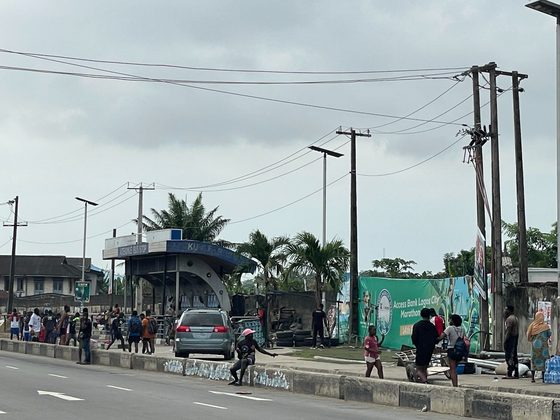
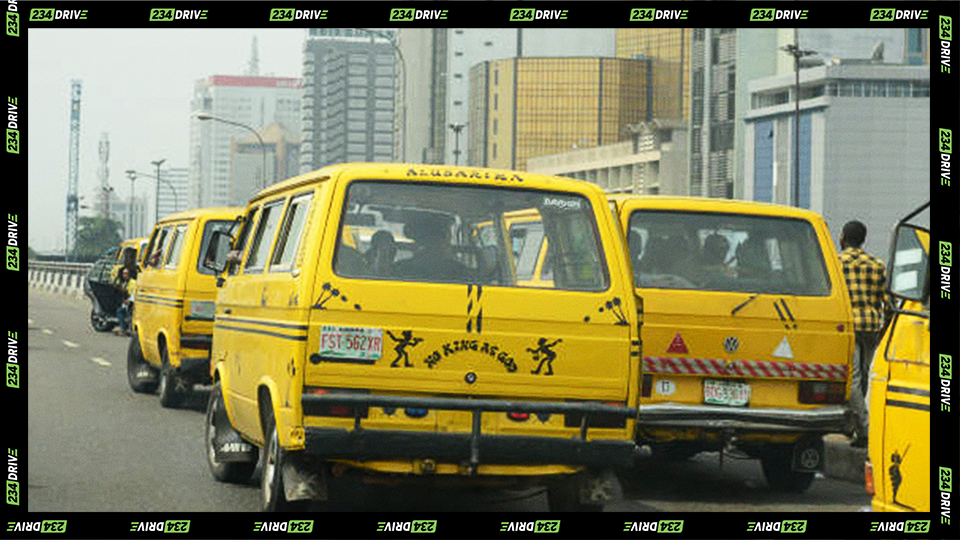
But on one of these nights, standing on the side of a deserted road at three in the morning changed my perspective on the entire metropolitan area. Waiting for a Danfo or a Korope forced me to observe the hidden economy operating in the shadows. I stood there shivering slightly in the humid air, watching the people who were completely excluded from the party. I saw the exhausted woman who sold Agege bread and butter by the gutter, cleaners carrying heavy bags of dirt out of the raves, and tired bouncers rubbing their eyes after dealing with unruly crowds. It was easy to imagine that, for thousands of citizens, these stressful routines were simply part of everyday life.
Judging the Shadows and the Threat Within
Adebaiye Fawaz manages a bar in Yaba, and the time he closes from work depends heavily on the day. Monday can see him close around 11 p.m., while busy Fridays, Saturdays and Sundays can keep him at work until about 4 a.m. His route takes him through Yaba and Ojota, and after years of making the journey, he knows that finding a bus is rarely the first problem.
The bigger question is whether the bus he finds is one he feels comfortable entering.
‘You will find a bus,’ Fawaz told me. ‘But there are some times that when you see a bus, you won’t even be able to enter it. Especially when it’s only guys that are inside or you just don’t feel comfortable going in.’
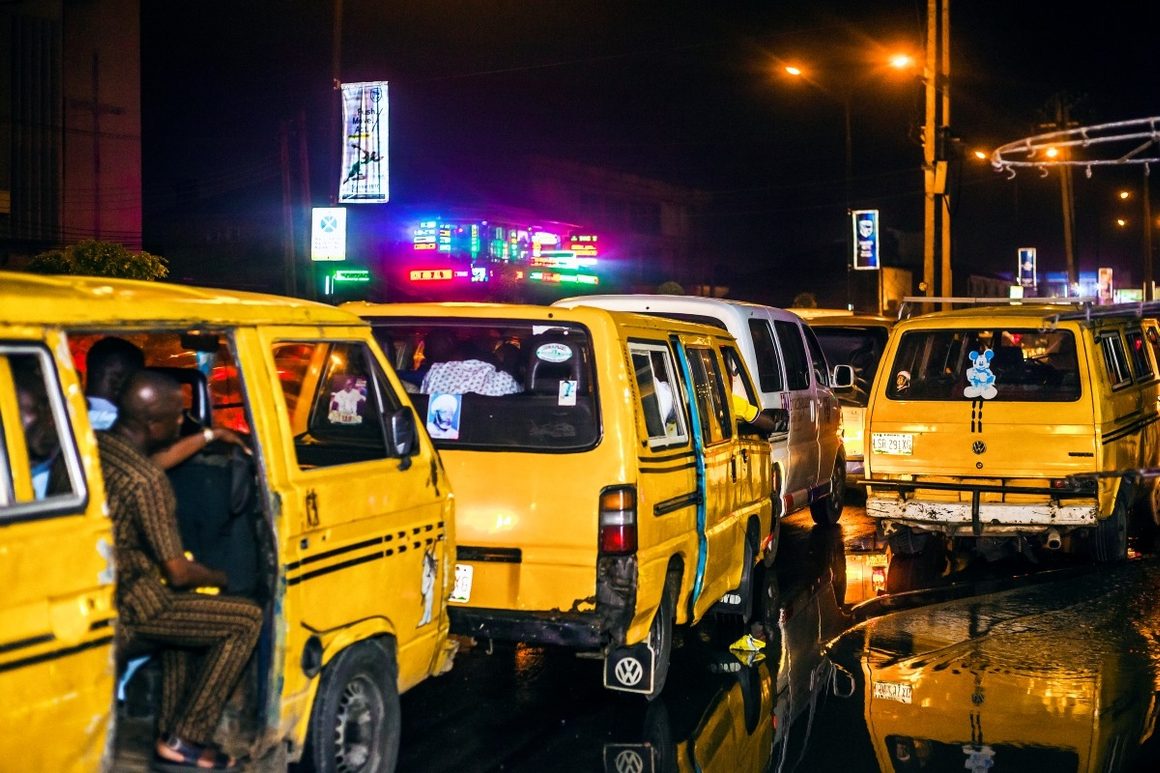
For him, getting home at night involves judging the people inside the vehicle as much as judging the vehicle itself. He described it as a matter of protecting himself from ‘the kind of bus you want to enter, the people in the bus and some other stuff like that.’
That caution affects how he presents himself. Fawaz told me that he keeps cigarettes in his bag and may take one out while travelling because he believes it makes him appear more familiar to the people around him. That detail might seem small, but I’ve been in his shoes and done the same several times. During the day, the number of people on the road, open businesses, and constant movement can make public transport feel like part of the city’s ordinary rhythm. But at night, many of those familiar points of activity disappear, and passengers are left making more individual decisions about where to wait, which vehicle to enter, and how much risk they are willing to accept.
For Ugochi, a market vendor at Sabo Market, Yaba, she describes the situation differently. She lives in Bariga and usually takes a korope from the market, turning to a keke when one is available.
‘Na bus na. Keke, korope, anyone wey we see na him we dey use go house,’ she told me.
Her biggest concern is what can happen inside the bus, particularly when she cannot be certain whom she is travelling with. She mentioned the fear of kidnapping and ‘one-chance‘ incidents, then explained that she takes care to protect whatever money she has made from work during the journey. She also mentioned that she’s mostly scared, but fear does not remove the need to travel. She still has to take the bus because, as she put it, people still have to use something to get home.
Scarcity and the Battle For a Ride
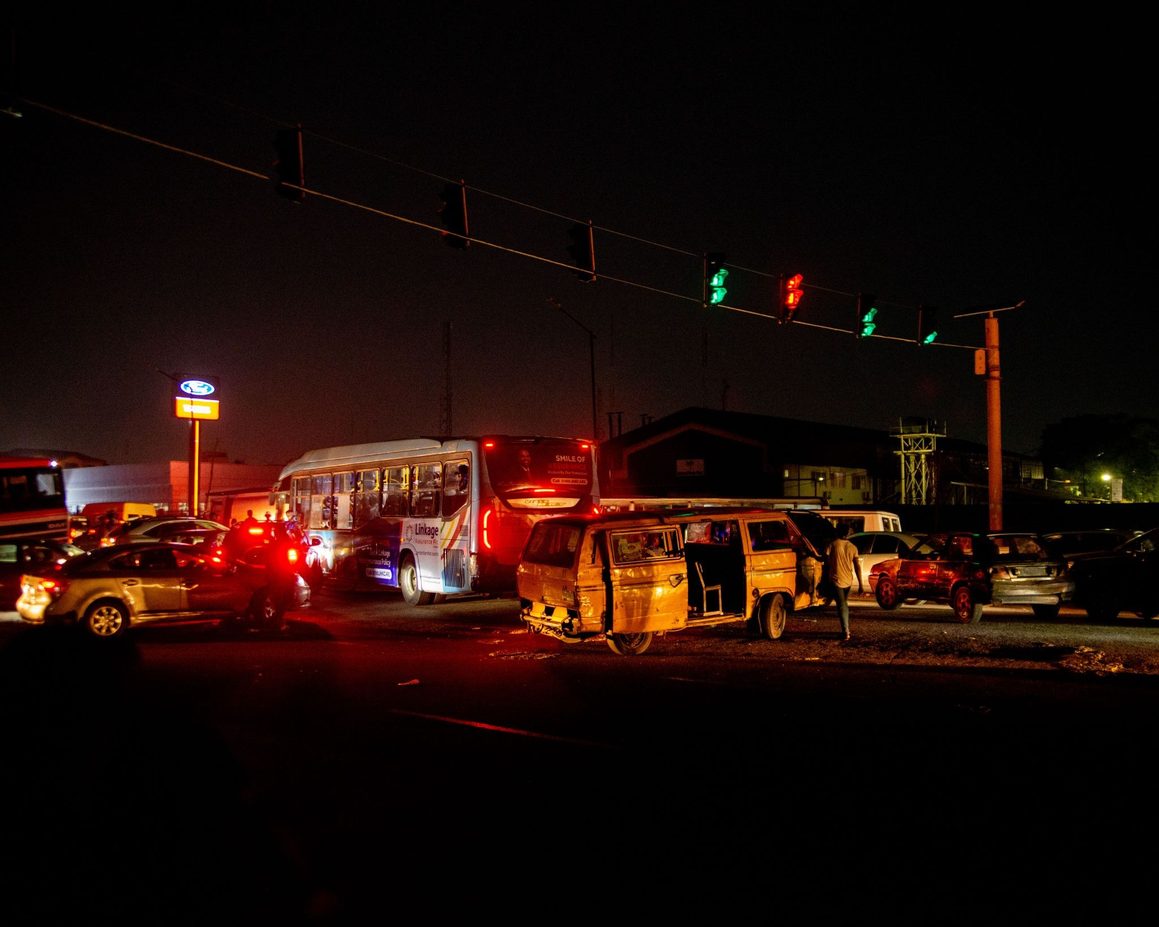
John Goodnews works professionally as a DJ and shuttles regularly between the Island and the Mainland for his gigs. When he has his full DJ equipment with him, he uses ride-hailing services because he does not want to risk taking the equipment on public transport. When he is travelling light, he takes a danfo or korope, depending on what is available.
His experience changes after midnight, when finding public transport becomes much harder.
‘These days, I make sure I leave wherever I am before 12:00 midnight,’ Goodnews told me. ‘Once 12:00 pass, to see public transport na serious war.’
The problem also goes beyond buses. Lagos has invested heavily in rail as another way of moving people around the city, yet the Blue Line currently ends its regular daily service at about 9:30 p.m. LAMATA increased the Blue Line to 94 daily trips in June 2026 and moved the start of weekday and Saturday services earlier, but the closing time remained 9:30 p.m.
For a city that continues to work, socialise and move long after the traditional working day has ended, the operating hours of public transport become part of the night-time mobility problem. A person leaving work at 10 p.m., closing a business at midnight or returning from an event in the early hours cannot simply rely on the same transport options available during the day.
Goodnews also described the everyday discomfort of travelling in a Danfo at night, including the smells that can cling to his clothes on his way to a party after sharing a bus with other passengers returning from work or the market. It is a small complaint beside his concerns about safety and availability, but it also captures how the experience of a late-night commute is made up of several ordinary frustrations that people simply learn to manage.
Ifeanyi Okpala is a businessman who lives in Ago Palace and runs his haulage business around Coker, Surulere. When he closes late, he almost always takes an okada home, largely because waiting for a bus can be more stressful than the journey itself. Though not officially allowed on major roads, okadas regularly ply his route.
‘You’d be surprised by how crowded the roads are at night. Because there are so few buses operating at night, whenever one finally arrives, everybody rushes to jump on. I just don’t have the energy to fight or drag buses with people after a long day.’
He would rather pay for a bike that takes him directly to his house than compete for space on a bus. He also does not consider his journey long enough to justify paying for Uber or Bolt every night, leaving the motorcycle as the option that currently makes the most sense for him.
But boarding a bike at night requires a massive leap of faith regarding the true character of the unknown driver. Okpala constantly fears engaging a rider who might operate secretly as an armed robber looking for incredibly easy targets. He also worries about encountering the police during the journey. After stressing all day, all he wants is to get home without another problem that could keep him on the road even longer.
‘With everything that happens with the police in this country, the last thing I want after a long day is unnecessary drama or harassment.’
The Streets Are Too Dark To Walk
Esther owns a salon and sometimes closes between 10 p.m. and midnight, depending on how late her customers stay. She lives close enough to walk home, yet the condition of the streets around her shop makes that option feel less practical.
‘The street right near my shop is totally black,’ Esther told me. ‘There are no streetlights at all, so you can’t see what’s happening around you or who might be approaching.’
Her usual options are a keke or korope. When neither is available at the bus stop, she calls a regular keke driver who knows where to pick her up. She also rarely travels alone because some of the women who work at the salon live in the same direction, so they usually leave together in a group of four or five. Esther counts herself extremely fortunate to have entirely avoided direct encounters with violent crime. She remains aware of the terrifying stories that circulate about armed robberies and kidnappers operating in the country.
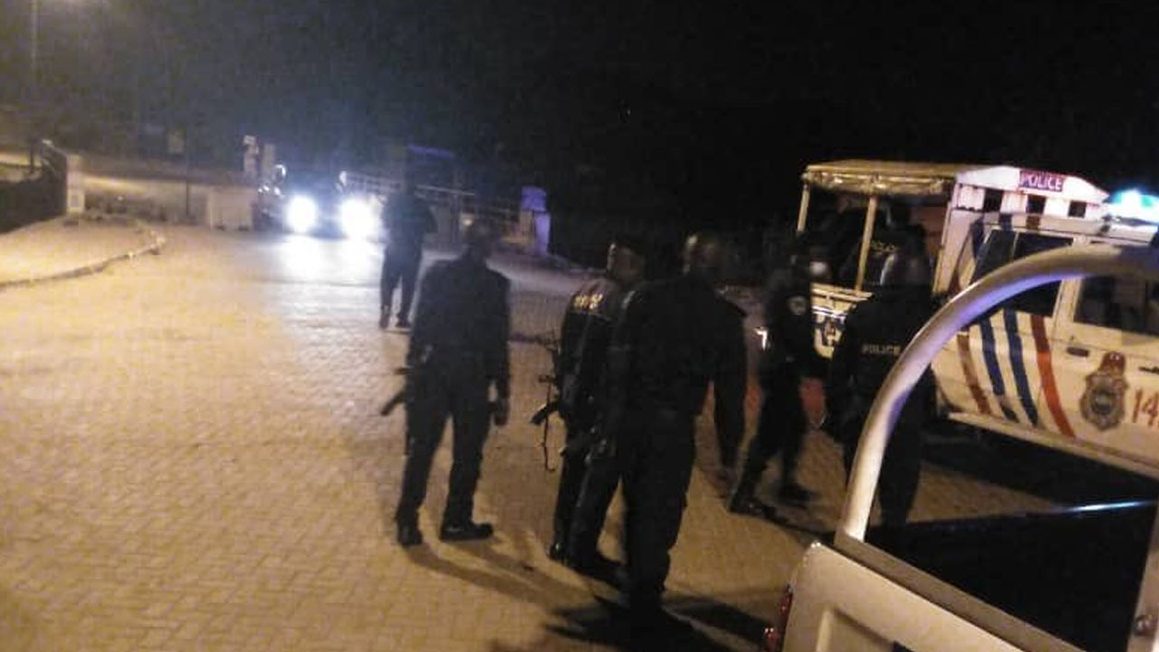
Yet, the danger on the road late at night isn’t limited to informal criminals operating in the shadows. A subtle, pervasive threat comes from law enforcement officers themselves. Standing by a bus stop after midnight often transforms an innocent citizen into an automatic target for illegal arrest. Night-shift workers, vendors, and commuters waiting for scarce transport are routinely bundled into police vans during arbitrary late-night sweeps, forced to navigate threats of detention simply because they were standing on a pavement past midnight. Instead of serving as a visible safety net for stranded commuters, patrol vehicles become another element you have to dodge, turning the simple act of waiting for a Danfo into a game of survival against both criminals and the state.
What They Say Would Help
Esther also mentioned that the walk from the salon to her home takes roughly 30 to 45 minutes, a distance she and her colleagues would be willing to cover together if the roads were properly lit.
‘If we had proper streetlights, my staff and I would feel completely comfortable just walking home together safely instead of relying on transport every night’
Aside from street lighting, Goodnews believes another thing that would improve the night transport experience is the provision of properly organised night buses with known routes, operating hours and stops, giving people who work late a public transport option they can actually plan around.
Okpala shares a similar perspective regarding municipal transit improvements. His preferred solution is a structured night-bus system with fixed routes and enough organisation that passengers would not have to fight for seats.
Ugochi addressed the severe financial exploitation that occurs when transportation options are limited. When it gets very late, and many people are trying to leave at the same time, she said drivers can increase prices because they know passengers have fewer alternatives.
She strongly advocates for a standardised pricing system that actively prevents greedy drivers from changing fares randomly just because it’s late. Furthermore, she begged the government to establish a dedicated task force to verify the true identities of these drivers. She believes that establishing random security checkpoints dedicated specifically to identifying kidnapping rings would drastically reduce the danger faced by regular passengers.
The Bare Minimum for a Moving City
Taken together, these experiences show that night transportation in the country cannot be reduced to one problem. A bar manager reading the faces inside a bus before boarding it, a DJ setting himself a midnight curfew, a market vendor guarding her day’s earnings on the ride home, a businessman weighing the risk of an unknown rider against the exhaustion of fighting for a seat, and a salon owner who could simply walk home if there were light on her street are all describing different symptoms of the same absence.
What connects them is that every single one of them has built a personal system to survive a trip the city should have made ordinary. None of these systems came from a policy document or a transport initiative. They came from their experiences, from close calls, from secondhand stories and from the daily understanding that nobody is coming to solve this for them.
Streetlights? Night Buses? Consistent fares after dark and a way to verify that the driver taking you home is who he says he is? These are requests for the bare minimum, made by people who are keeping the night economy alive. Lagos has built an identity around being the city that doesn’t sleep, but the people who make that reputation possible are not out partying like I was. They are working, and then they are standing on the road at midnight, hoping that the vehicle they enter doesn’t become their last. A city that stays awake at least owes them more than that.