
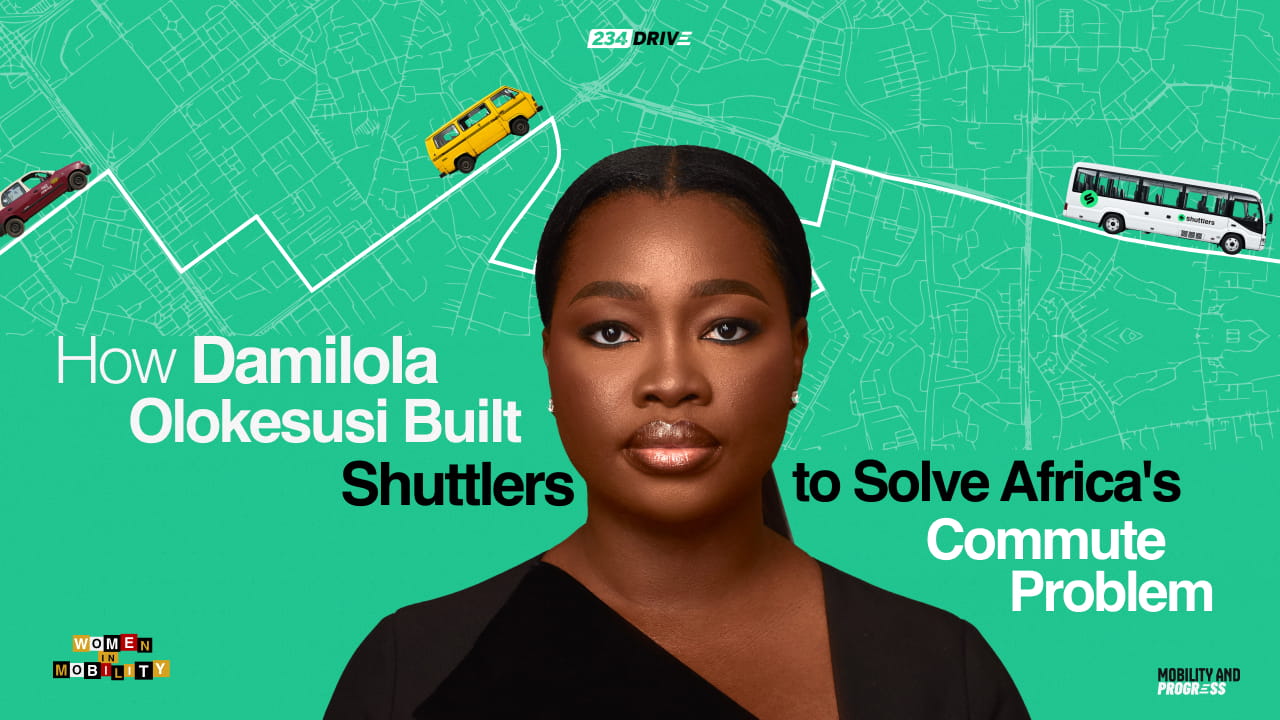
The Zoom call started a few minutes early on a Thursday afternoon, with only the PR representative on camera, easing me into small talk before the interview proper began. A Shuttlers employee joined briefly after, but the moment Damilola logged on, she lightheartedly shooed her away. ‘There’s a lot of work to do o,’ Damilola said, and the employee obliged. It was a short but enlightening glimpse into her leadership style: firm but marked with ease. Damilola’s own camera stayed off for the call, as she was having what she called ‘a chill day’. That air of relaxedness equally pervaded our seamless interaction, especially after she learnt that I was also an Ibadan girl. ‘There’s just something about us Ibadan people,’ she said playfully. For her, Ibadan is where the story begins.
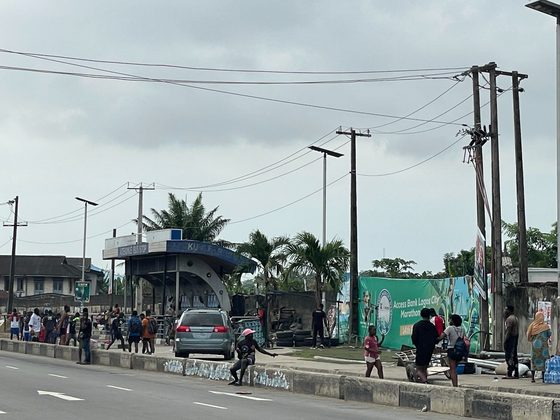
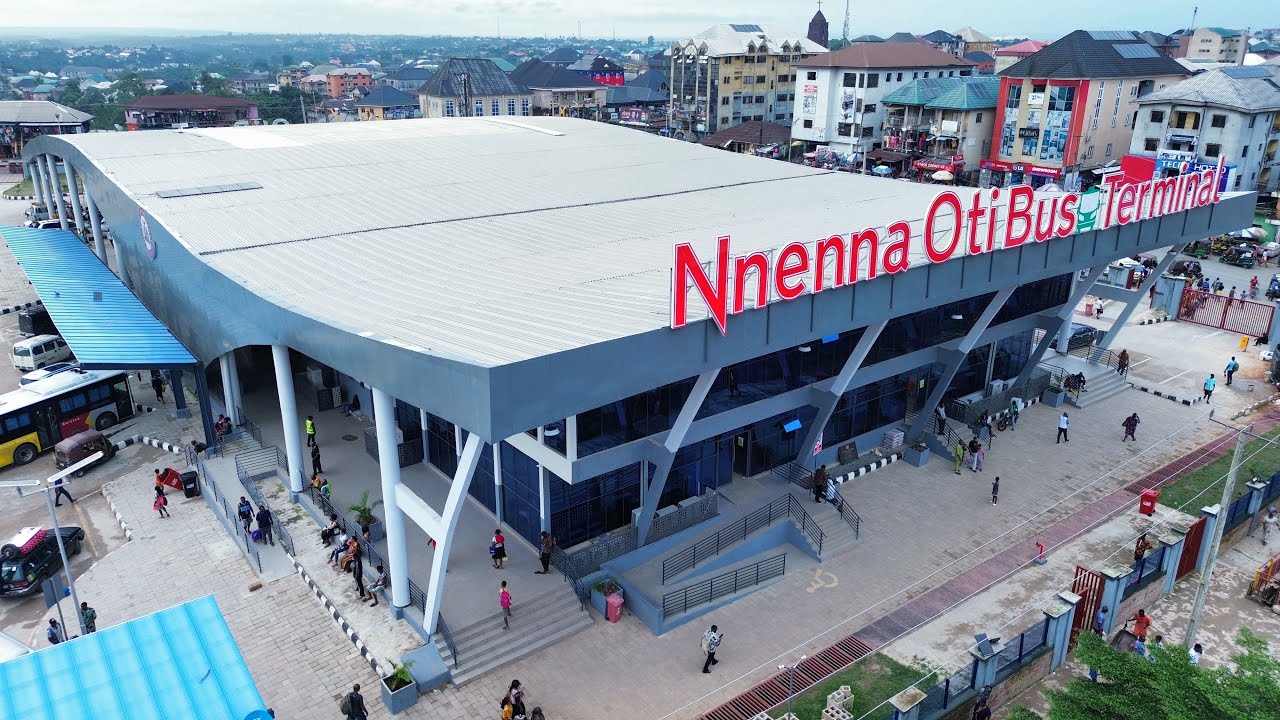
Damilola Olokesusi, the CEO and co-founder of Shuttlers, was born in Lagos but grew up in Ibadan. And for years, she did not grasp the depth of the distinction between the two cities, in how they operated and what they demanded. In Ibadan, she could make her way to her secondary school by her lonesome free of anxiety. There was no rush, to the extent that she could choose which Micra to join; if the first one didn’t feel right, she would calmly wait for the next. There was no traffic congestion to contend, no hurry-induced hostility, just the ease of commuting in a city that could actually afford to wait for you.
But Damilola would later learn, when she returned to Lagos in 2007 to study Chemical Engineering at the University of Lagos, that Nigeria’s intimidating commercial capital waited for no one. Lagos demanded a great deal of vim and knowledge of how to navigate the rat race that defined its soul. ‘If I had grown up in Lagos, I don’t think I would have felt the chaos of using public transport there as much. But transitioning from Ibadan to that was jarring,’ Damilola said.
Over time, she grew accustomed to the system, but not enough to accept it as normal. The thought that things could be better lingered, though that thought did not materialise into a plan until years later. The journey to solving one of Lagos’s most pressing challenges was a gradual one. First, an ASUU strike in 2009 led her to join the Daystar Leadership Academy (DLA) in Lagos, which she described as an ‘out-of-body experience’. There, she became convinced that entrepreneurship was her purpose; she just needed to find what shape that purpose would take on.
Then, one of her sisters survived a one-chance incident, a notorious scheme where unsuspecting passengers are robbed by criminals disguised as public transport operators. Damilola wasn’t in the vehicle, yet the trauma stayed with her and made the Lagos public transport system even more unappealing. However, it was a week-long trip to Dubai in 2014 with another sister that was the last straw of motivation for the idea that would become Shuttlers.
‘I saw what was possible. Sometimes you may recognise a problem but be unable to conceive the possibilities to solve it. But when I saw how efficient the metro system in Dubai was and returned to Nigeria, it became clear that I couldn’t continue to move that way. I needed to create something that I could use myself,’ she fondly recalled.

That something became Shuttlers, a technology-enabled mass transit platform with over 10 million completed journeys, 11,000+ daily riders and 430+ buses operating across Lagos, Abuja and Port Harcourt. The company, which became Nigeria’s first private shared mobility operator to be integrated into Google Maps Transit in June 2026, is flushing out the chaos in urban commuting one vehicle at a time.
Building Shuttlers Against All Odds
Damilola knew two other women who were frustrated by the hassle of the Lagos commute and had experienced better abroad, Busola Majekodunmi and Damilola Quadry. The three women banded together, drawing from their backgrounds in Engineering, Economics, Management & IT, to build Shuttlers. They started with months of research and a pilot run conducted from November to December 2015.
By March 2016, they had secured their first leasing partner and operated a few air-conditioned buses with WiFi. Still, the journey was not smooth-sailing from there. As the customer base expanded beyond friends and stretched to different parts of Lagos beside the initial Ajah-to-Victoria-Island route, the logistics started to crumble. Worse still, one of the co-founders relocated back to the US and the nascent company had to grapple with operational changes.
Motivated by the sense of purpose that had been lodged in her since her DLA days, Damilola kept pushing. She attended several trainings and approached bus operators directly, trying to convince them to trust a transport startup founded by a group of women. Most of the operators dismissed them, sometimes with laughs. ‘One of the reasons they laughed was because they couldn’t understand how we—as young and inexperienced as were—could solve a problem that they had tried to and failed, even with all their resources, might and experience,’ Damilola reflected.
The future of Shuttlers seemed so bleak that Damilola’s family held interventions concerning her situation and she had to convince her parents to give her a year to see her dream through. If things didn’t work out, she would start applying for jobs. But she was convinced it would work out. ‘In my mind, there was no scenario in which Shuttlers wouldn’t work. Because I knew that people were moving from point A to point B and needed a way to do it more efficiently. I just needed to figure out the right model to solve the commute problem,’ she said.
The tides changed in September 2016, when Shuttlers won the ‘Best Idea’ award at Aso Villa Demo Day, a startup competition organised by the office of the Vice President. Aside from the ₦3 million prize which they used as their pre-seed funding, the visibility that came with the win also opened doors that had previously been sealed shut. One of the operators who had turned them away called back and gave them two 13-seater buses, and more customers started to sign on, heralding their official launch in October 2016. The recognition kept building from there; Damilola went on to win the Digital & Tech Award at the Women in Africa Contest in Morocco in 2017, and by 2019, she’d been named a Forbes 30 Under 30 honouree for Technology.

Before Shuttlers became fully tech-integrated, Damilola relied on manual operations, taking attendance of passengers on WhatsApp and tracking finances in Excel spreadsheets. While the technology integration scaled the company considerably, she would not trade those initial hands-on days for anything.
‘I think that experience deepened my knowledge of maths, data analysis and matching. It made me understand the end-to-end of the business, because beyond the data, I was also on the road. I was the first bus marshal and the first customer experience person. Till now, I can leverage on that on-ground experience. The app only automated and improved the base that had already been established. This is why we’re one of the best shared transport operators in Africa,’ she stated.
Forging Connections Before Chasing Capital
Shuttlers’ earliest attempts at fundraising had not gone so well. Pitching to a group of angel investors while the company was still at the concept stage, Damilola remembers being told, in essence, to find something else to do. ‘After that, we went back to the drawing board to flesh out our idea better. Then we used the funding we got from Aso Villa Demo Day win, and another ₦500,000 funding injection from Sahara Foundation, to build while we focused on customer acquisition’, she shared. Their first ‘solid client’ was the now unicorn company Andela, which they bagged after she sent a cold pitch offering the promise of efficient transportation for its hundreds of employees.
Shuttlers was clearly on the right track in the industry, as just a couple years later, Damilola got connected to Adenike Ibirogba, the MD/CEO of Nikky Taurus Nigeria Ltd, a 31-year-old transportation and logistics company. Seeing something of herself in her, the veteran logistics executive then took Damilola under her wing, sharing tips on how to navigate the industry and establishing a partnership with Shuttlers. ‘She was not our first partner, but her partnership gave other leasing companies a signal that we were worth working with. She was also very open to receiving our payments in instalments rather than a lump sum, and she was one of our first investors,’ Damilola said.
By the time Shuttlers seriously considered raising venture capital (VC) funding, they already had their first 1,000 users and achieved profitability, based on sustainable operations and less than $80,000 in grants. They had also launched their mobile app under the technical leadership of Akachukwu Okafor, who joined the company as co-founder, CTO and COO. Through the app, customers could subscribe to any of the three available plans, including a B2B model where corporate clients could pay for their employees, and a B2C model where individuals could pay fares themselves.
In November 2021, Shuttlers raised $1.6 million in seed funding led by VestedWorld to expand beyond Lagos—part of the funding also came from Nikky Taurus. The company raised another $4 million in funding just two years later, raising its total VC to $5.6 million, though Damilola says another round is in the works.
Shuttlers’ status as a women-led company has been a double-edged sword, sometimes working in their favour and sometimes working against them. Damilola recalls moments when meetings with potential investors or logistics operators had gone sour upon the realisation that there was no man at the helm. However, in some cases, investors and transport partners bought into the vision because it was female-led. Damilola chose to focus on the latter.
The Business of Reliable Fleets
Interestingly, while Damilola’s chemical engineering background imbued her with a systematic approach to running the business, she had never really had an affinity for vehicles or in-depth knowledge on the workings of automotive systems. Shuttlers operates on an asset-light business model, meaning they do not own any buses, but rather work with tested and trusted leasing companies who know which vehicles to operate. Still, years of experience have made them identify which buses to steer clear of. Thankfully, she could also rely on the advice given to her by Mrs Ibirogba, as Damilola calls her. ‘She gave me a cheat sheet based on her experience in fleet management and vehicle imports. She told us which brands were a no-go and which ones we could bank on.’
From then on, Shuttlers settled on vehicles that were already proven in Nigeria’s bus leasing space, guided by three main considerations: second-hand value, spare parts availability and affordability, and whether a roadside mechanic could fix a breakdown within 30 minutes. It’s a pragmatic checklist, and one she believes explains why electric vehicles still face such a steep barrier to entry in Nigeria’s commercial transport sector. Building an EV that looks impressive is one thing; building the surrounding value chain, spare parts, trained mechanics, financing options and charging infrastructure that operators actually need, is an entirely different undertaking.
Damilola posits that this lack of ecosystem maturation is part of why Compressed Natural Gas (CNG) has taken off faster than EVs in the public transport space. She also cites the Presidential CNG initiative, fuelled by Nigeria’s abundance of natural gas, as a reason for its advancement. ‘We have so much excess gas that in some gas plants, they even flare the gas and waste it. So, if we have excess gas and that can be a source of fuel for engines, it’s a win-win because that can also reduce the toxic emissions from petrol vehicles. CNG is not completely emissions-free, but it’s a cleaner energy source than petrol or diesel,’ she explained.
Another deciding factor—perhaps the most pressing one—is financing. A vehicle loan from a Nigerian bank can carry an interest rate starting around 35%, an impossible proposition for most operators looking to buy a brand-new electric vehicle outright. Converting an existing Tokunbo vehicle to CNG, by contrast, is far cheaper and can, according to Damilola, cut operating costs by roughly 40%. Even more, operators can keep using the same networks of mechanics and spare parts they already rely on. ‘For the EV, it’s not accessible. You cannot use a 35% interest rate to buy an expensive brand-new EV,’ she said, adding that a secondary market for Tokunbo EVs is slowly emerging but remains in its infancy.
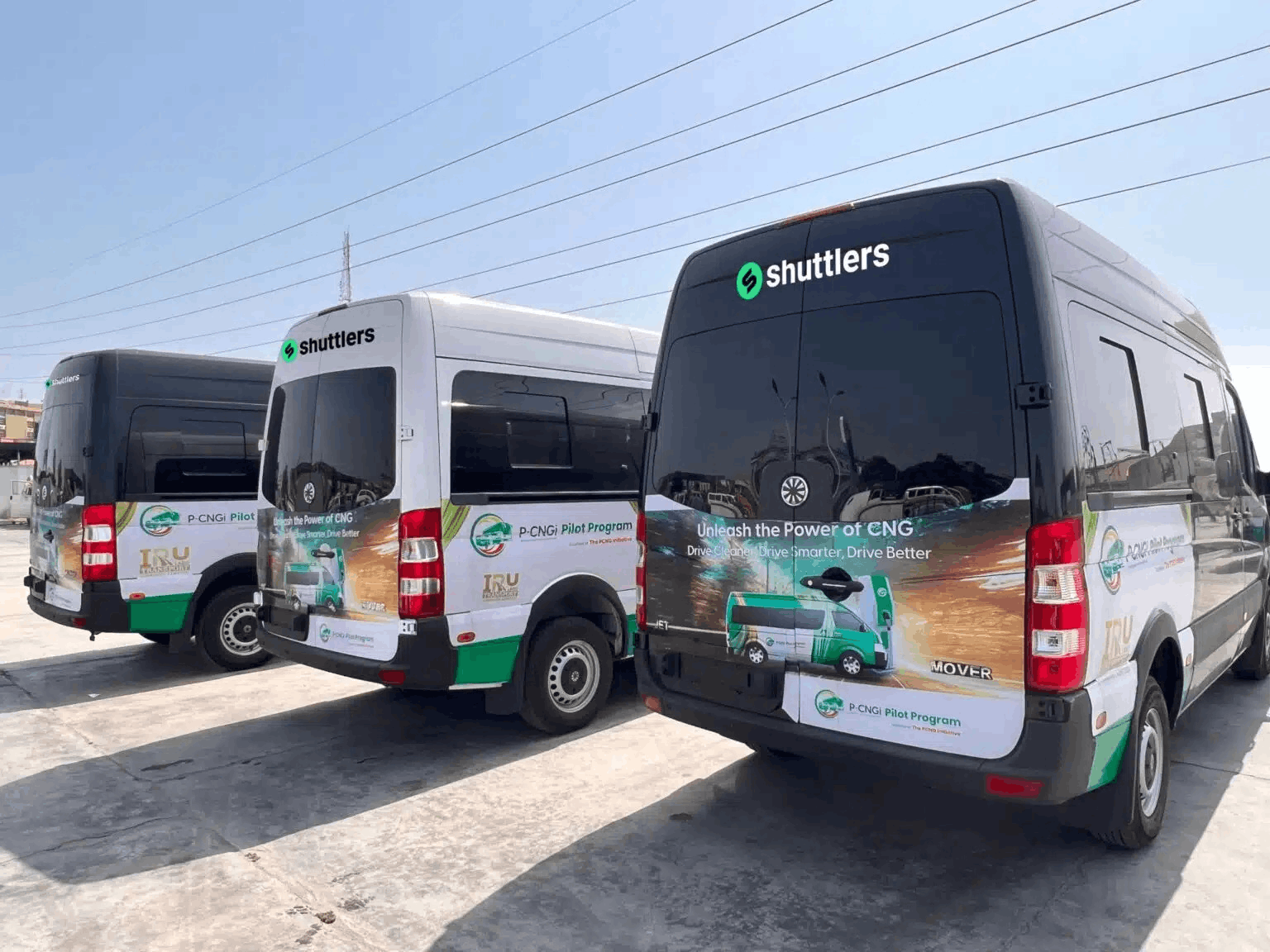
Shuttlers itself onboarded 20 CNG buses in April 2025 and has run an EV bus pilot, noting that these alternative energy buses can reduce their carbon emissions by up to 60%. This is in addition to the emissions savings that already comes from their bus-pooling model, which reduces the number of vehicles on the roads.
Underneath all of this sits a candid observation about where Nigerian commuters’ priorities lie. Asked whether environmental consciousness constitutes a primary consideration in passengers or operators’ choices, her answer was enlightening. ‘It is not there because we are still at survival mode. The primary needs, like food, healthcare and electricity have still not been solved,’ she said. She doesn’t see this as a failure of awareness so much as a matter of sequencing; countries that have already gone through industrialisation have the luxury of prioritising emissions, but Nigeria, in her view, still has to solve these foundational problems first.
‘I would say safe and efficient commuting is the first problem that Africa needs to solve when it comes to mass transit. Then, we can think of how to solve it in an affordable way. Then, we can think of how to ensure that these vehicles are good for the environment,’ she opined. Passengers, she added, don’t particularly care whether the vehicle they board runs on diesel, CNG or electricity, as long as it gets them from one point to another affordably and comfortably. Sustainability, in that framing, isn’t unimportant, but it must compete with, and often lose to, far more immediate financial pressures.
Making Space for Women in Mobility
When asked whether having more female drivers behind the wheel would make female commuters feel more secure, Damilola gave a nuanced response. Because Shuttlers mostly operates shared buses rather than single-passenger rides, the dynamic is fundamentally different from a ride-hailing trip where a passenger is alone with one driver.
Instead, she argued that the presence of other passengers, combined with live monitoring of every trip and a professional, trained driver, does more for actual safety than the driver’s gender alone would. Shuttlers runs a live operations team that tracks buses throughout each 20-hour shift, and she credits that infrastructure, more than anything else, for the trust customers place in the brand.
That said, Damilola is committed to making more room for women in mobility. The company employs a lot more female bus marshals, who verify passengers and coordinate pickups, than male marshals. Additionally, she is keen on ensuring a gender balance within the company, seeking out women for specific roles when the data—which is very much tracked—reveals an imbalance.
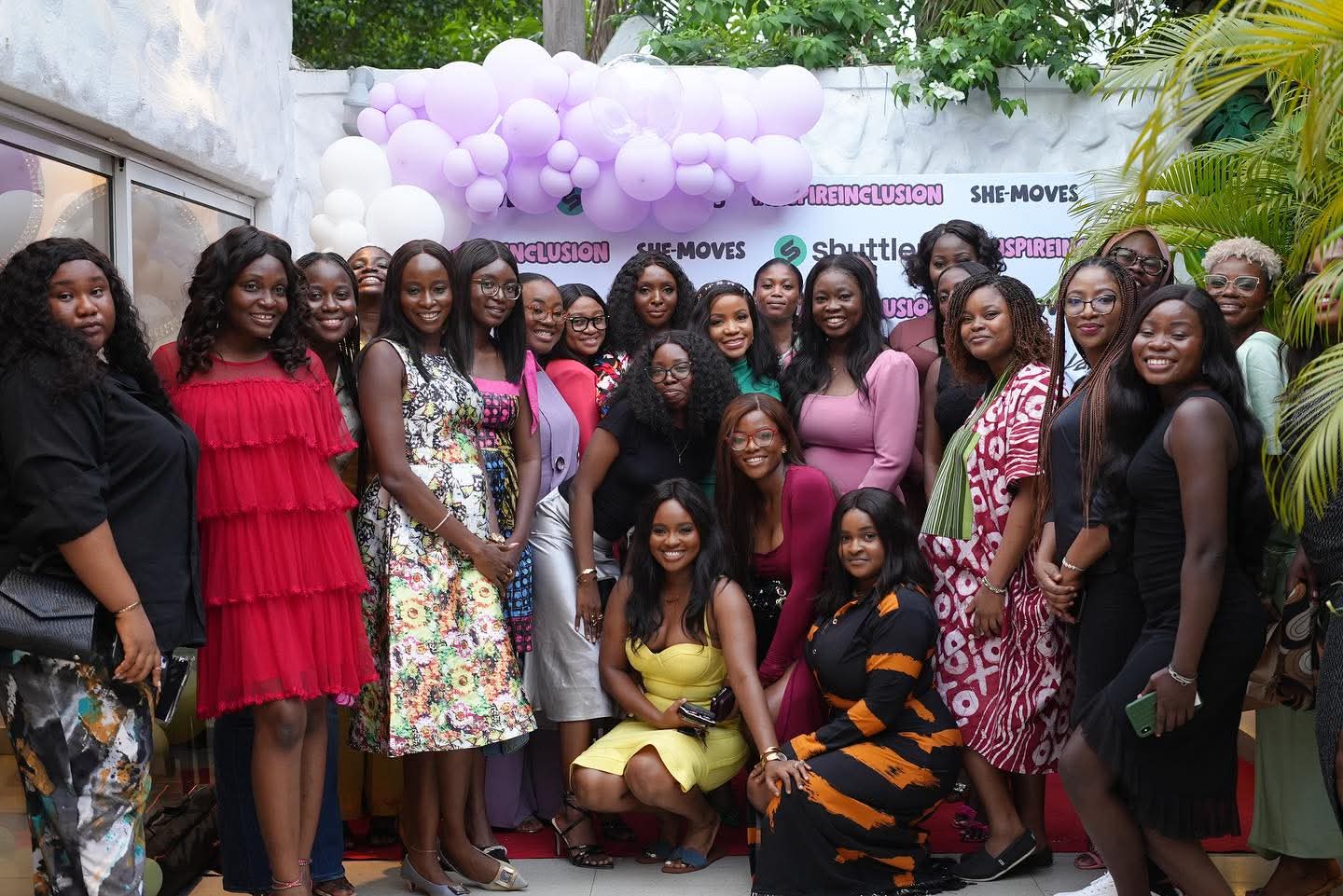
The company has largely remained female-led, with women having mostly led the VC funding rounds and three female board members out of five. ‘Recently, we had a meeting where a male executive joked that he felt intimidated by all the women present. I was very happy because it’s usually the opposite, where I am the only woman in the room,’ she remarked. Still, she recognises the need for women and men to work together for the growth of the company. She also admits that the company needs to be more intentional about seeking out female bus drivers, who appear to be very scarce.
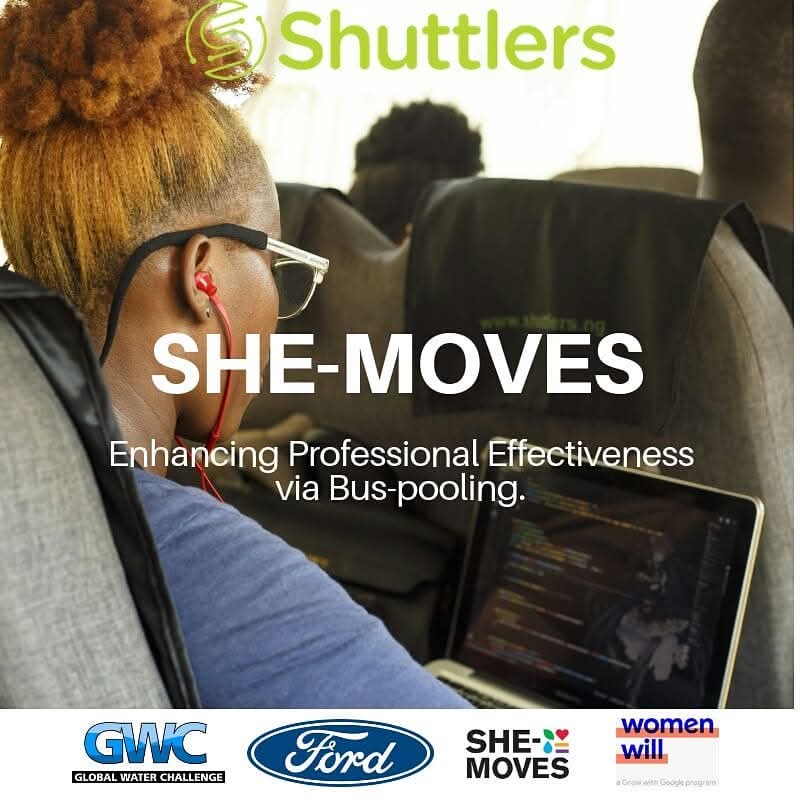
But beyond employment, Damilola has also found other ways to empower women through Shuttlers. The company launched the SHE-MOVES project in 2020, in partnership with the Ford Motor Company and Global Water Challenge. The project was established to empower female professionals by converting hours of otherwise wasted time in Lagos traffic into skill acquisition sessions. Female riders between the ages of 18-45 could learn on the go and network with mentors and trainers. Outside of Shuttlers, Damilola also served as an eTrade for Women Advocate for Anglophone Africa, under UNCTAD, supporting female entrepreneurs across the digital economy. In 2022, Vulog, the leading tech provider for shared mobility solutions, named her one of the Most Influential Women in Mobility.
The Road Ahead
Shuttlers was profitable before it ever raised VC, and Damilola expects the company to return to that footing again before the year runs out. But her ambitions sit well beyond the balance sheet. Beyond moving people, the company has expanded into vehicle financing, helping partner leasing companies access asset and working capital loans, including financing tailored specifically to CNG conversions.
She draws the comparison to Amazon, a company that started as an online bookstore and later became known for its cloud infrastructure. ‘There are so many other products that are growing off the back of commute services. I believe that Shuttlers would also be like the Amazon or the Uber of Africa,’ she said.
In five years, she wants the company to be a household name in mass transit across the continent, the platform governments and businesses think of first when they need to move people reliably at scale. Whether that eventually means a public listing or simply a private company that’s grown large enough to sit comfortably in unicorn territory isn’t something she’s fixed on. What she’s fixed on is the scale itself, and the sense that, even a decade in, Shuttlers is still only in the early chapters of what it’s building.