

On a December night, Olamide and her mother, Justina, hopped into an Uber headed to a rave. The journey was supposed to be quick, a brief ride through Lagos traffic to the venue where the night would unfold. Instead, it became an intergenerational bridge, a window into how much the city had changed and how differently—or similarly—two generations of women move through it.
Justina had been reluctant at first. ‘Why am I going to come with you to a rave?’ she’d asked, the idea of leaving the house at 11pm, arriving home at 4am, and then heading to work by 8:30am seeming like an act of self-sabotage. But Olamide had been patient, promised there was nothing to worry about, and eventually her mother relented. She got ready, followed her daughter into the car and somewhere between Yaba and the venue, the two of them began to talk about movement, about safety and about what it meant to be a woman navigating Lagos at night in two different eras.
‘Transportation wasn’t easy like this,’ her mother had remarked, as if the Uber itself was a kind of miracle. ‘You didn’t have Uber or anything. Either take a bike or you enter Molue.’ When pressed about whether she’d actually ever done this, she laughed. ‘Yes, of course. It was fun during that time. They pack us like sardines inside. The molue will fill to the entrance like this.’
The fares ranged from 20 to 50 naira, back when those naira denominations actually held any value. You packed yourself into a rickety bus with perhaps forty other people, your belongings, someone’s chicken, another person’s groceries, and whatever prayers you’d gathered for safe passage. And the traffic—oh, the traffic was mad. There was no LASTMA, no tow trucks waiting to remove a car that had broken down. A car could sit on the road for two days, blocking everything behind it, and nobody would do a thing.
Now her mother is a civil servant at Lagos State Television, a computer scientist who works regular hours and comes home to a daughter who orders rides without thinking twice. Now, she climbs into vehicles driven by strangers whose names and car plate numbers are pinned to app accounts, whose cars have tracking systems that alert her family to their location. It is a type of freedom that her own generation didn’t have, and yet, watching Olamide move through the city at night fills her with a particular kind of dread.
‘I actually like to be out late and I hate what Lagos does to us,’ Olamide shared with me in an interview following that night out with her mother. ‘I like night rides and I want to order a ride by 10pm from my location and just enjoy the silent drive’. But she also knows that her mother would freak out if she found out, so Olamide doesn’t tell her—at least not every time. The few times she has religiously updated her mother every step of the way, her mother would stay up, checking her phone for messages, unable to sleep until her daughter is safe at home.
This is the paradox of the modern Lagos night for women: more visibility, more accountability, more options and still, the same anxiety that keeps worried mothers up at night.
The Yellow Taxi Era and Its Limitations
To understand the shift, you have to imagine Lagos without the apps, without the GPS, without the strangers whose details have been shared with at least two people on your contact list. You have to imagine walking to one of the city’s farflung taxi parks. They were concentrated in specific areas, and if you needed a ride outside those zones, you had to hunt for one on the street, approaching drivers and negotiating.
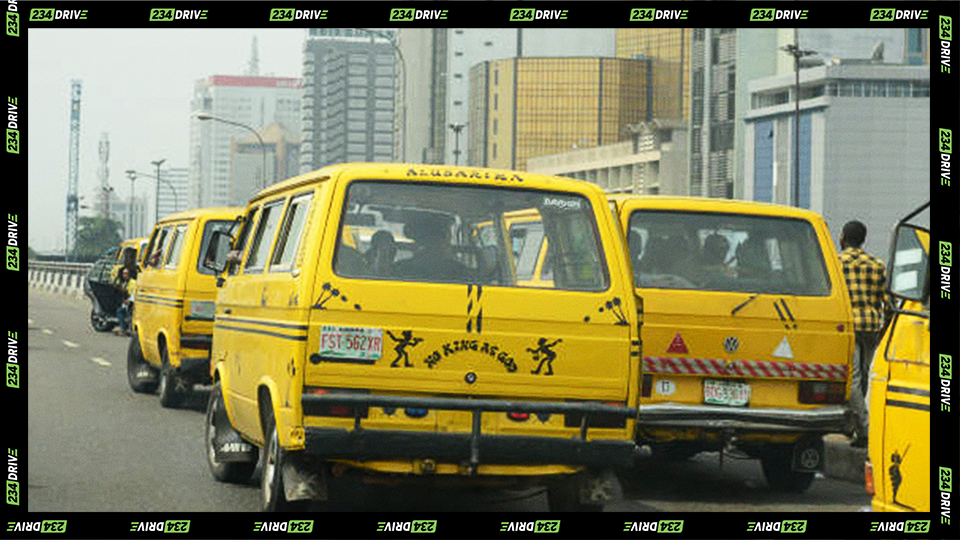
The cars themselves were yellow Peugeots and Volkswagen Golfs, painted with black stripes, the signature colour scheme of Africa’s second most populous city. These yellow cabs were reportedly the preferred ride option for anyone with a bit of money, operating from established parks during set hours, with drivers who maintained a certain social structure and routine.

Justina remembers them. She remembers jumping in and out of these cars, remembers the chaos of it all, remembers that sometimes taxi drivers would refuse certain routes. Island to Mainland at certain times? Simply not worth the risk or hassle.
There were private car hire services, of course, but they were informal, networked through word-of-mouth and neighbourhoods. You’d hear from someone that ‘Mr Tunde’ down the street rented out his car, so you’d negotiate directly with him. Twelve thousand naira for the day, maybe fifteen, and he’d come pick you up at a time you agreed on. You knew where he lived. He knew where you lived. There was a different kind of safety in that, or perhaps a different kind of risk altogether.
When Justina needed to travel early—say at 4:30am to catch a bus upcountry—the yellow taxis wouldn’t be out. So someone had to know someone. She recalls paying a neighbour who did informal car hire to take her to her destination. He was a safe bet since everyone knew him, knew whose door to knock on if anything went wrong. When you couldn’t find a yellow taxi or didn’t trust the roads at that hour, you went to someone in your community who had a car and a willingness to earn some money. It was safer in the sense that you had a personal connection, but it also meant you were limited by your network. What you had access to depended entirely on who you knew.
What’s striking is that even with all the precautions Justina’s generation could take, she still heard the stories. The ‘one-chance’ tales, the robberies, the women who disappeared. There were warnings and whispers, the kind of knowledge that passed between mothers and daughters with much ado. Be careful. Come home early. Don’t trust anyone. Not suggestions, but strategies necessary for survival.
The App Era: More Convenience, Same Anxiety
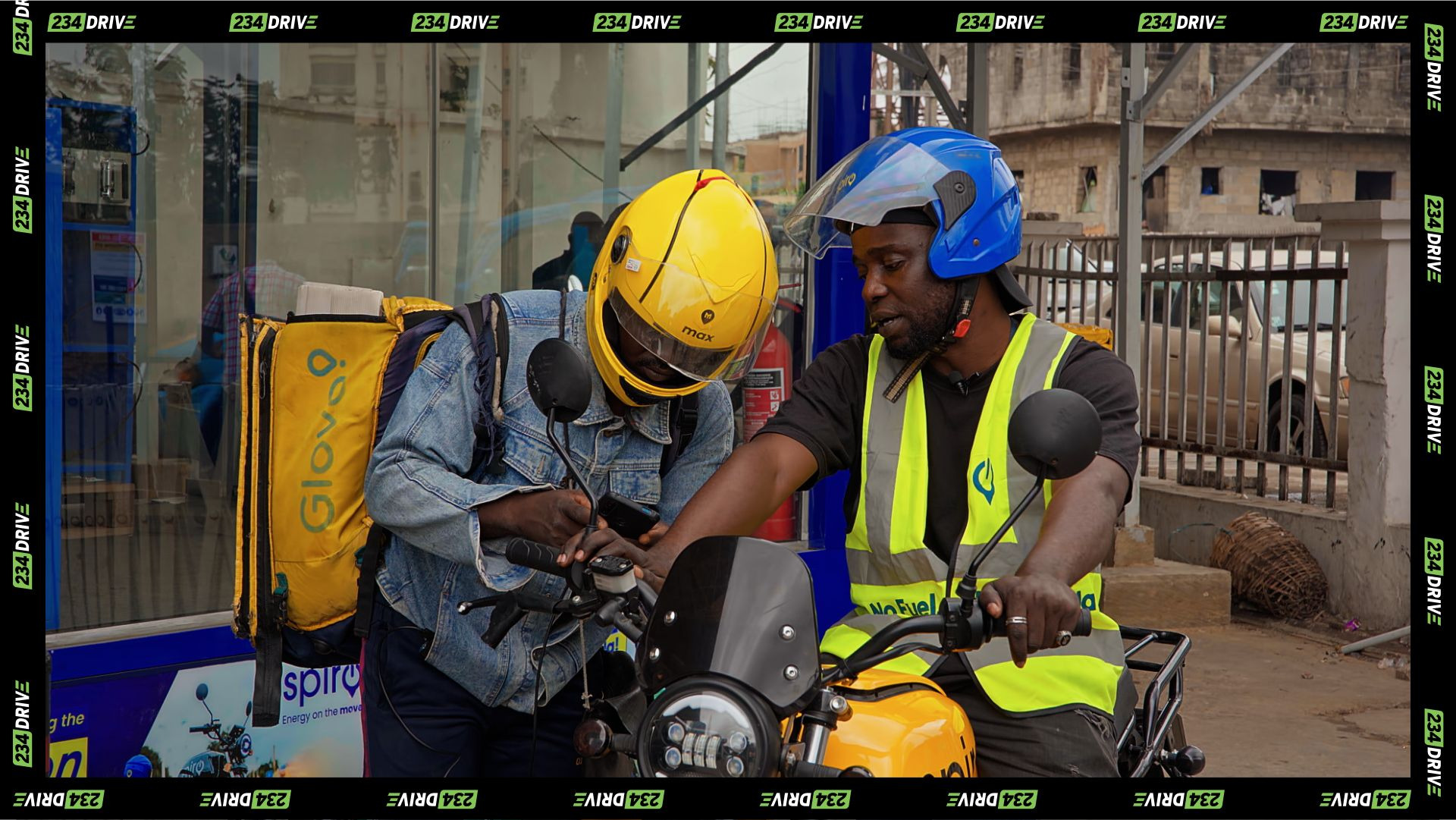
When Uber hit Nigeria in 2014, it ignited a transport revolution, heralding the likes of Bolt (then Taxify) in 2016 and later inDrive and Rida. These apps were supposed to make Nigeria’s urban hubs safer, fairer and more transparent–and in some ways, they did. Yellow taxi drivers, facing cheaper competition and losing customers, hiked their prices out of desperation. They became more rude, more dismissive. ‘It’s like all of them have the same spirit,’ Olamide’s mother said as she narrated how they priced themselves out of the market. By the time she was ready to switch to ride-hailing apps, the choice wasn’t difficult. The apps had lower rates and accountability.
But safer? That’s where the conversation becomes more complicated.
Olamide is careful in ways her mother’s generation wasn’t. When she enters an Uber, she calls someone immediately, says loudly enough for the driver to hear that she’s sharing the car details, the plate number, the driver’s picture. She’s heard too many stories. Drivers who suddenly veer off course. Cars that show up different from what’s stated on the app.
In a danfo or molue, she’s even more vigilant. She doesn’t sit in the middle if there are men on either side of her. She’s had instances where men touch her inappropriately, thinking the chaos of the crowded bus gives them cover or that proximity equals permission. ‘I don’t sit in the middle, especially if I’m sitting with men.’ she said. She’s heard stories of women getting harassed, of people stealing from passengers whilst the bus is moving, of drivers who take detours or demand extra money from female passengers they sense are vulnerable. When she’s in a bus, she’s always on edge, both literally and figuratively.
The ride-hailing apps do offer some protections. There’s a company on the other end, accountable for the driver’s behaviour. You can rate and report. You can sue, theoretically, unlike with a yellow taxi where recourse exists only in the space between your mouth and the driver’s ears. But Olamide still insists, ‘I’d say the advantage of the ride-hailing apps is more convenience than safety.’
The convenience is undeniable. You don’t have to go to a park and negotiate. You don’t have to trust your instincts about a stranger’s demeanour. You don’t have to pray. But are you actually safer? The drivers still harass. The drivers still commit crimes. Some ride-hailing companies move slowly on complaints. And the weight of caution still sits on you like an extra layer of clothing you never asked to wear.

Her mother, now using these apps herself, has adapted. She orders rides to parties, to conferences, to anywhere she doesn’t want the stress of navigating Lagos traffic or sharing a danfo with thirty other people. But there’s something in the way she checks on Olamide that suggests the app hasn’t changed her fundamental anxiety about her daughter being out at night. The technology might have shifted, but the fear—and the strategies to manage it—have mostly remained.
The Invisible Geography of Nighttime Movement
What Justina’s generation had to accept, through sheer practice of living in Lagos, is that the night is a different landscape. There are times you don’t go out. There are places that don’t make sense after dark. There are routes that are more grave than others past a certain hour.
Olamide knows this too, but she’s negotiated differently with it. She works a job that sometimes keeps her out late, until 10pm or 11pm. She likes the night. There’s something about moving through Lagos when fewer people are awake, when the city feels slightly less hostile, when you can actually hear yourself think. But she’s learnt to disguise this preference when she’s around her mother. She keeps her mother calm by keeping her in the dark about the extent of her nighttime movement. When she does send updates, she paints a picture of constant companionship and surveillance that isn’t always accurate. And in doing this, she’s inherited her mother’s strategy, even as she’s rejected its conclusion.
Neither of them sits in the middle of a danfo if men are on either side. Both of them have learnt to read the energy of a vehicle before committing. Both of them have internal maps of where it’s safe to be at what time. Both of them have been catcalled, propositioned, made to feel like their presence on public transport is an invitation for harassment. The difference is that Olamide can access private vehicles easily, while her mother had to share buses and negotiate with strangers. The difference is also that Olamide can be tracked, whilst her mother had to trust that her God would get her home.
‘When I see a bus that has only men inside, I never enter,’ Olamide said. She simply won’t board. She’d rather wait for another one, spend the money on an Uber, or find another route. This is something she’s learnt through experience, both hers and that of others. Her mother didn’t have this luxury. If the only transport available was a danfo full of men, you either took it or you didn’t go. There was no app to summon a replacement in minutes.
The Unchanging Reality
One thing the two women agree on is that the fear doesn’t really go away. ‘I think it never really goes away, especially for women.’ It’s woven into the experience of moving through Lagos at night, whether you’re in a yellow taxi or an app-based car, whether you’re sharing space with sardine-packed strangers or sitting alone in the back seat of a private vehicle.
For mothers in Lagos, watching their daughters navigate the city carries a particular weight. It carries the knowledge of what could go wrong. It carries the stories heard over decades. It carries the understanding that despite all the technological progress, despite the apps and the tracking and the accountability systems, the city itself hasn’t fundamentally changed in how it treats women after dark.
The night ride continues. The technology evolves. But what mothers teach their daughters about moving safely through Lagos ultimately stays the same.