
When an operator driving between Lagos and Ibadan feels a violent shudder travelling through the floorpan at 80 km/h, the diagnosis is rarely a mystery. It is almost always a failing shaft of a car. Everyday Nigerians rely on a vast network of imported vehicles to navigate complex urban and inter-state routes, but the local mobility infrastructure places immense, unnatural stress on driveline components.
Understanding exactly what this component is, the mechanical realities that cause its premature failure and the financial implications of replacement is critical for fleet owners and individual drivers managing mobility costs.
Defining the Shaft of a Car
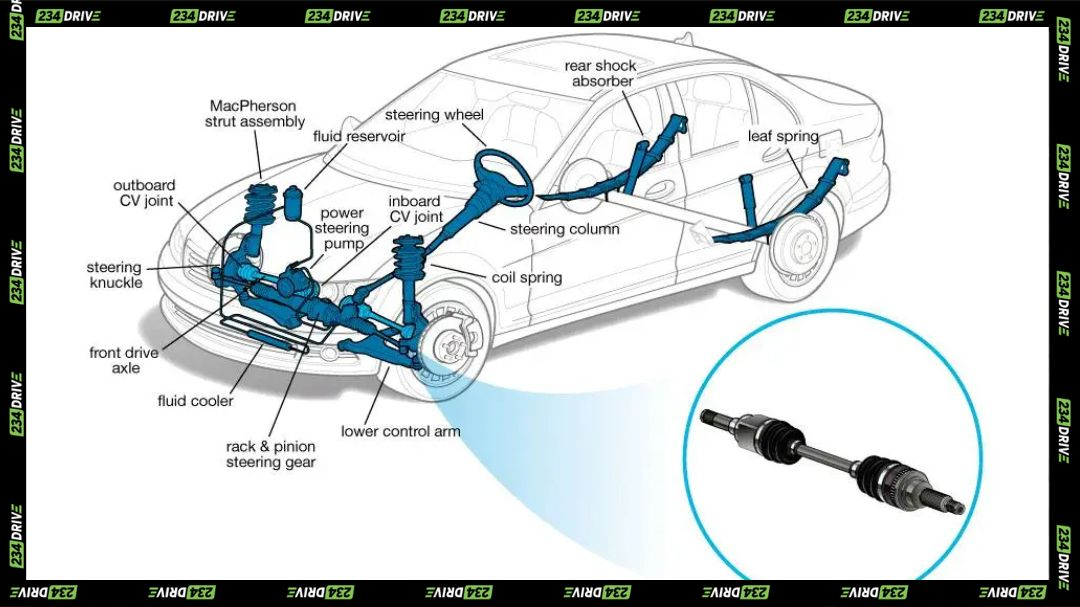
In global automotive engineering and local mechanical parlance, the ‘shaft of a car’ almost universally refers to the propeller shaft or driveshaft. It is the high-speed rotating metal tube responsible for transmitting engine torque from the transmission to the differential or directly to the drive wheels. If this component fails, the engine may generate power, but the vehicle remains completely immobile.
The specific configuration depends on the vehicle’s drivetrain:
- Rear-Wheel Drive (RWD) and 4WD: Vehicles like the Toyota Hilux, older Camrys and the majority of SUVs utilise a long propeller shaft running underneath the vehicle’s chassis.
- Front-Wheel Drive (FWD): These platforms employ shorter CV axles, or half-shafts, connecting the transaxle to the front wheels.
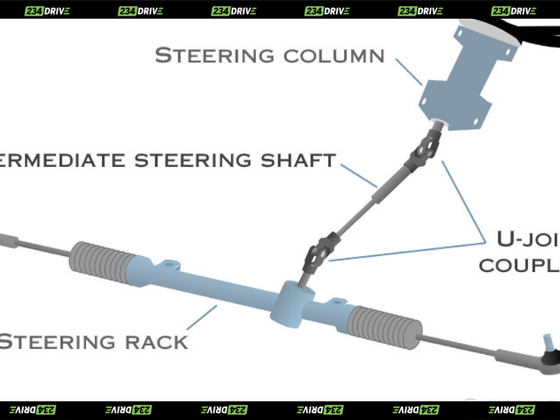
It is a distinct driveline component, separate from the engine’s internal crankshaft or the steering column.
The Mechanics of Vulnerability
The shaft of a car operates under severe dynamic conditions, spinning at thousands of revolutions per minute while simultaneously accommodating the continuous up-and-down movement of the vehicle’s suspension.
To maintain this flexibility without snapping, the shaft relies on universal joints (U-joints) or CV joints at its ends, a slip yoke to adjust its length and, in longer designs, a centre support bearing. Globally, a driveshaft operating in optimal conditions is engineered to last between 120,000 and 200,000 kilometres. Within Nigerian cities, this lifespan drops drastically.
Identifying the Symptoms of Failure
A driveshaft rarely fails without warning. Recognising the early symptoms of failure prevents catastrophic mechanical damage to adjacent components like the transmission output seal or the differential. The most reliable indicators include:
- Intense vibrations: Felt heavily through the floor, seat or centre console, particularly at speeds between 80 and 110 km/h. This points directly to an unbalanced shaft or a failing U-joint.
- Clunking or thudding: A distinct metallic knock when shifting into drive or reverse indicates excessive play in worn joints.
- Low-speed squeaking: A rhythmic chirping sound is the classic signature of a dry, unlubricated U-joint where the internal bearings are grinding.
- Shuddering: Pronounced hesitation when pulling away from a complete stop.
The Infrastructure Deficit
The primary mechanical cause of driveshaft failure is worn U-joints, but the Nigerian operating environment accelerates this wear far beyond manufacturer expectations.
The road infrastructure deficit—characterised by deep potholes, aggressive speed bumps and unfinished surfaces—forces the shaft of a car to operate at extreme, rapidly changing angles. This constant shock load places unnatural stress on driveline parts. Furthermore, environmental factors like intense heat, pervasive dust and high coastal humidity degrade rubber CV boots and dry out vital grease. When combined with the common practice of overloading commercial vehicles, driveline components fail at a highly accelerated rate.
The Economic Reality of Repair
When symptoms emerge, operators must immediately weigh the cost of component repair against total replacement. Prices in major automotive hubs fluctuate based on exchange rates and supply chains, but recent data provides a clear baseline for the informal sector.
Approximate Costs (2024–2026 Data):
- Labour: Replacing a standard propeller shaft costs approximately ₦15,000 at established technical workshops such as Asoro Automotive. Labour for a CV joint replacement is roughly ₦10,000.
- Used replacements: The market for tokunbo or used driving shafts ranges from ₦45,000 to ₦150,000. Generic models sit at the lower end, while specific platforms like the Mazda CX-9 command higher premiums.
- New replacements: Brand-new complete shafts for popular models like the Toyota RAV4 or Lexus RX350 range from ₦170,000 to ₦280,000 or more.
- Commercial solutions: Heavy-duty logistics fleets often require custom cardan shafts fabricated specifically to handle industrial loads.
Depending on the chosen route, a complete job ranges from ₦50,000 to over ₦400,000. Replacing individual components like U-joints or centre bearings is significantly cheaper, provided the main tubular body is not bent from impact.
Proactive Maintenance and Safety
The most effective strategy for managing mobility costs is strict preventive maintenance. Operators should ensure greasable U-joints are lubricated at every major service interval and frequently inspect rubber CV boots for tears. A ₦5,000 boot replacement often prevents a ₦50,000 CV joint failure.
Maintaining suspension health is equally vital. Worn bushings alter the driveline angle, forcing the shaft to spin unnaturally. Most importantly, operators must never ignore driveline vibrations. A failing shaft of a car is a severe safety hazard; in extreme cases, a severed propeller shaft can drop to the tarmac, vaulting the vehicle or severing brake and fuel lines. Proactive maintenance on the driveshaft is not merely an economic decision—it is an operational necessity.