
Spiro, Africa’s leading electric-mobility company, has raised $215 million in equity funding, giving Africa’s electric mobility market one of its biggest signals yet that investors are now backing infrastructure, not just electric motorcycles.
The round, which brings Spiro’s total funding to more than $500 million, was led by Impact Fund Denmark and Equitane. The company plans to use the money to expand its battery-swapping network, grow its electric motorcycle fleet and deepen its presence across African markets.
Spiro’s Bigger Play Is the Battery Network
For many commercial riders, the biggest issue is not whether an electric motorcycle looks better than a petrol bike. It is whether the bike helps them spend less and stay longer on the road. In markets like Kenya and Uganda, riders can earn between $10 and $15 a day, while fuel can take up 40% to 60% of that amount. For a rider whose motorcycle is also their business, cheaper movement directly increases take-home income.
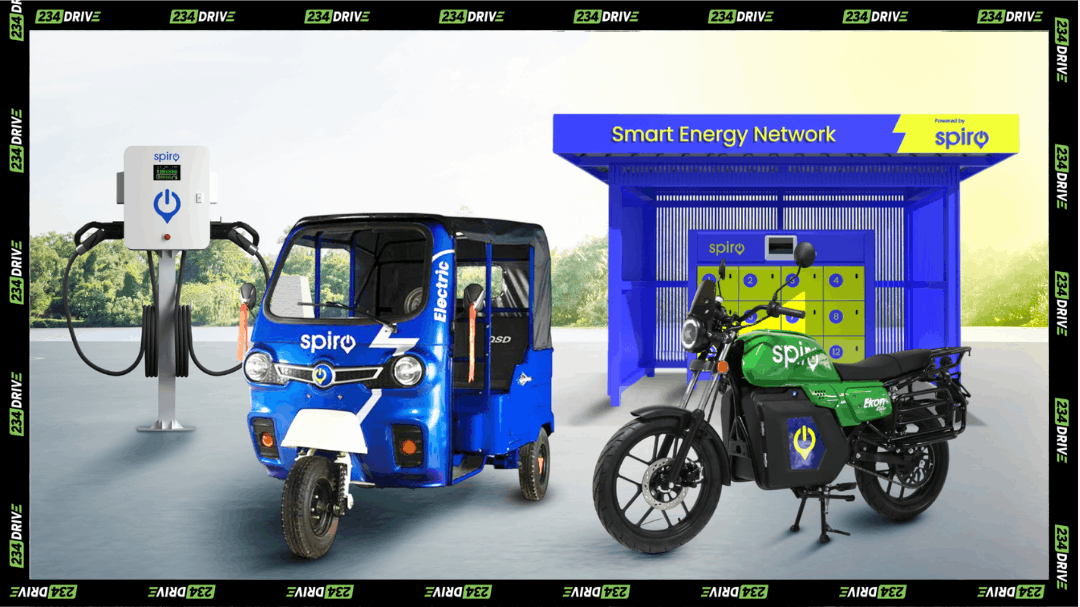
This is where Spiro’s model becomes important. Instead of selling riders a full electric motorcycle with the battery included in the cost, the company separates the battery from the bike. Riders buy the motorcycle and subscribe to the battery network. When power runs low, they swap the battery for a charged one in under two minutes. Spiro says this can cut the motorcycle price to about 40% below a comparable petrol bike and reduce daily running costs to below $2.
That structure also explains why investors are paying closer attention. Spiro does not only earn from selling motorcycles; it can also earn from providing battery energy services. Each rider who joins its network can become a repeat customer through battery swaps. The company claims it has deployed 100,000 electric vehicles, built 2,500 smart battery-swapping stations and completed more than 30 million battery swaps.
The new funding will support more stations, more bikes, manufacturing expansion and growth into markets such as Ethiopia and the Democratic Republic of Congo. Spiro also says it is building local assembly and manufacturing capacity, with operations in countries like Kenya and a battery recycling facility in Nigeria.
Spiro Is Moving Closer To Africa’s Unicorn Club
Over a period of seven months, from October 2025 to May 2026, Spiro raised about $365 million in publicly disclosed funding. The company secured $100 million in October 2025, followed by $50 million in debt financing in February 2026, and then another $215 million in May 2026. For any company on the continent, raising that much money in such a short time is impressive and shows the potential in the electric mobility space in Africa.
Africa’s unicorn list is still largely shaped by fintech and digital platforms. Flutterwave, OPay, Wave, Andela, MNT-Halan, Moniepoint, Tyme Group and Interswitch all crossed that line by solving large repeat-use problems across payments, banking, lending or talent. Spiro’s path looks different, as it is building around movement, batteries and energy access.
Nevertheless, that difference could become important. If Spiro continues to grow its battery-swapping network, the company may eventually sell more than mobility. Its stations could become part of a wider energy business, serving riders, homes and small businesses that need reliable power. That would move it beyond electric bikes and closer to the kind of everyday infrastructure that can support larger valuations.
Spiro has not reached unicorn status yet, but its funding pace, growing station network and a wider energy play make that threshold look increasingly attainable. The mobility and business world will be watching what comes next.