
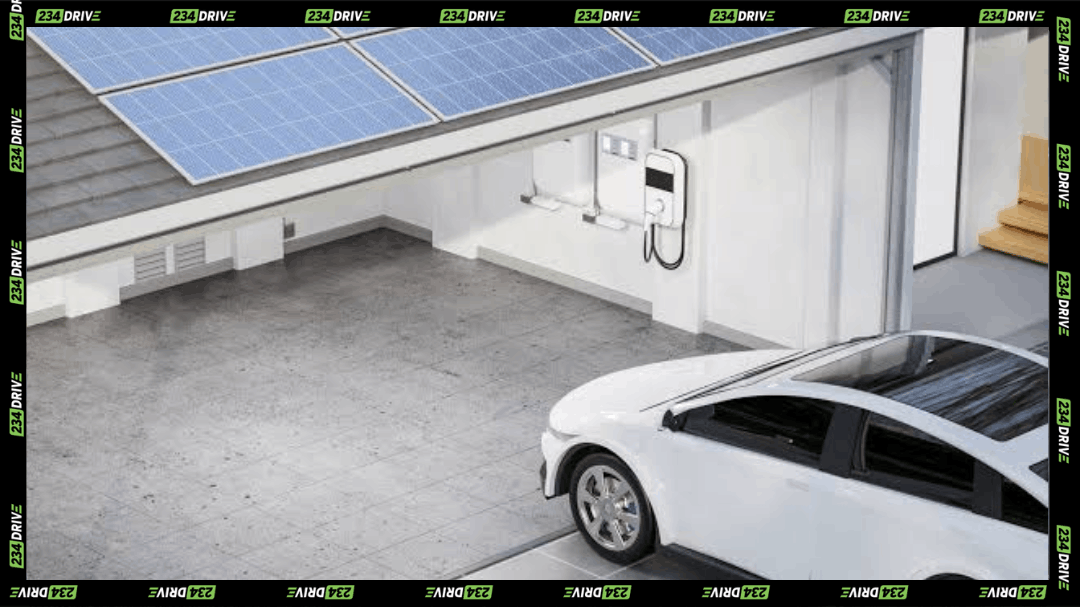
As fuel prices rise and grid power remains unreliable, more Nigerians are considering electric vehicles and solar energy. Combining both sounds straightforward: use sunlight to power the home and charge the car. The reality depends on how much power the owner needs, when they need it and what they can afford.
The idea of powering a car with sunlight has become especially appealing, blending the promise of cleaner transport with the appeal of energy independence.
Teslim and a Solar Installer Show What Home EV Charging Really Takes
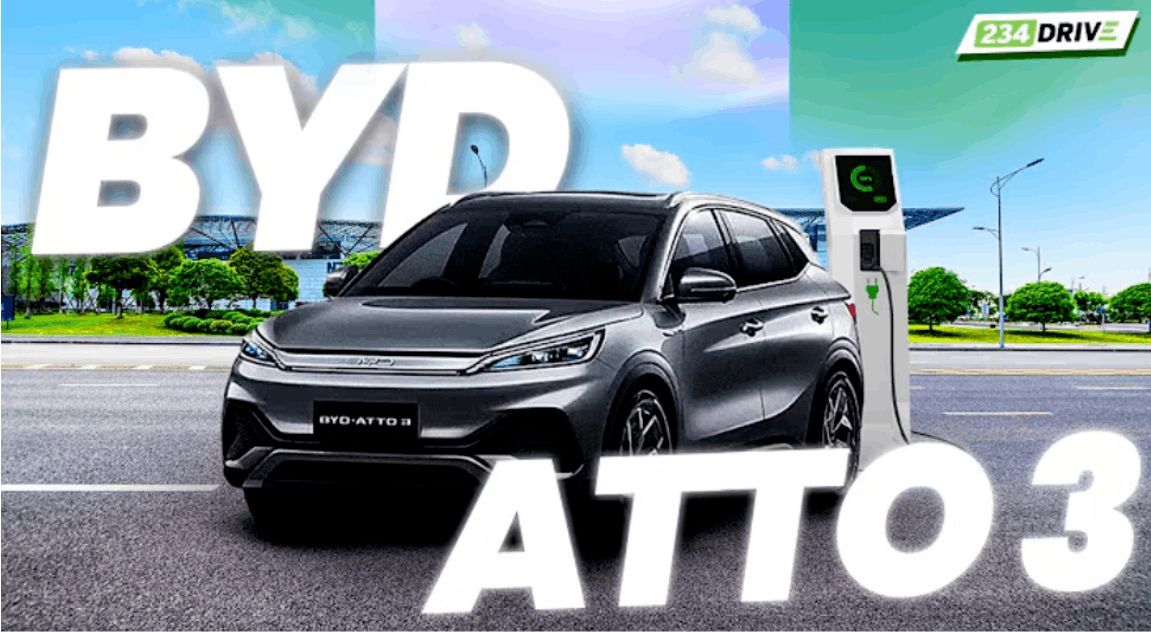
Teslim Bello-Osagie, a global chartered accountant and CEO of Sunclave Investment, talks about his EV in a simple, matter-of-fact way. His BYD Atto 3 fits into his daily routine. Most days, he charges it at home using a service-installed socket or wall box connected to the grid. When he needs a faster charge or he’s away from home, he drives to a solar-powered DC station near RSVP restaurant on Victoria Island.
It works for him, but he has thought about doing more. When we asked if he had considered setting up solar just for the car, he responded like it was something he had already thought through extensively.
“I already have an inverter and solar panels. I just need to add more panels,” Teslim revealed, adding that he was considering expanding the system before the end of the year.
Likewise, Anthony, the owner of a solar installation company called 247Techpro, believes a home solar system could charge an EV, and it would require ‘a regular installation’.
The equipment Anthony proposed, however, showed how quickly a regular installation could grow into a private power system.
According to him, such a system would require a 20kVA hybrid inverter, a 60kWh lithium battery, 65 bifacial panels rated at 650 watts each and an EV charger. The assembly could charge a car with a battery of around 49kWh from empty to full at any time of day.
That level of flexibility is technically possible, but it demands much more than a basic solar charging setup. Once the owner expects to charge regardless of sunlight or time, the installation begins to function as a complete private power system built to generate and store enough energy for the car.
BYD’s Atto 3 49.92kWh Battery Tests the Installer’s 60kWh Plan
For practical purposes, we will use the BYD Atto 3 as the standard for our EV. It comes with 49.92kWh and 60.48kWh batteries. The smaller battery needs about 50kWh of energy to charge from empty to full.
A 49.92kWh battery does not consume 49 kilowatts every hour. The figure describes how much energy it can store, much like the size of a fuel tank.
In practice, the charger must draw more than this because some energy is lost while electricity moves through the inverter and into the car. At an estimated charging efficiency of 90%, a full charge could require about 55.5kWh from the home system.
This is where the proposed 60kWh lithium battery becomes tight.
Home batteries do not usually release their entire stated capacity. If only 90% of a 60kWh battery is available, the system starts with about 54kWh. Further charging losses mean less than that would reach the car.
The setup could comfortably top up an EV that still has some charge left. However, it may struggle to take a 49.92kWh car from empty to full while also powering the home.
The installer would need to check the battery specifications and ensure enough power remains for the home after charging losses.
Teslim’s Overnight Routine Shows Why Bigger Does Not Mean Faster
Based on the setup suggested by 247Techpro, the panels would generate electricity during the day, while the battery would store some of it for later charging.
However, the size of the inverter does not determine how quickly the car charges. A 20kVA inverter can support the charger alongside other household appliances, but the Atto 3 will only accept power at the rate allowed by its onboard charging system.
BYD Nigeria states that the Atto 3 supports a 7kW home wall box. At that rate, charging takes several hours, which makes the setup better suited to overnight use than a quick daytime stop.
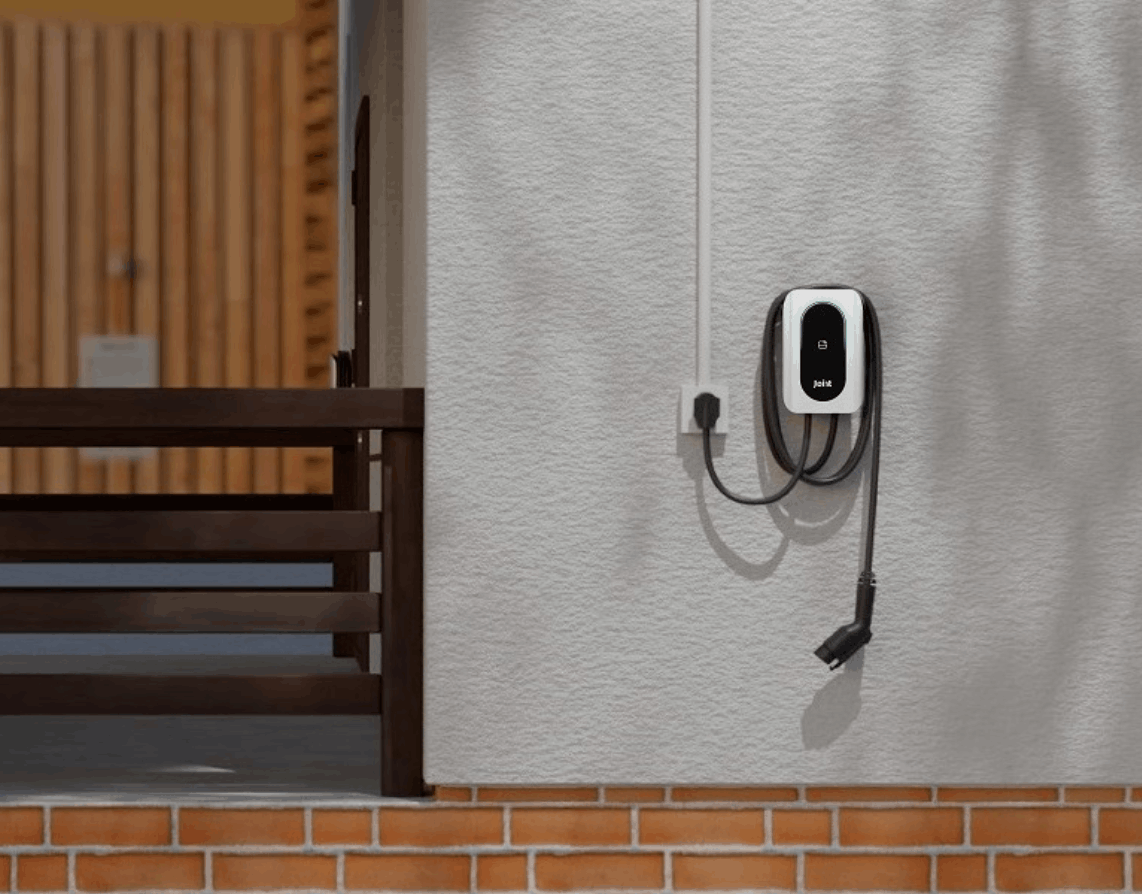
Teslim’s experience tells a similar story. According to him, he leaves the Atto 3 charging overnight and finds it full by morning. So most times he rarely needs the fast charger on Victoria Island.
The 65 panels could produce enough energy to support the car and other household needs, but they would require considerable roof space. Before installation, the company would need to check the roof strength, panel arrangement and how much solar power the inverter can safely receive.
The larger setup therefore improves energy storage and gives the owner more charging flexibility. It does not automatically make the Atto 3 charge faster.
The Equipment List Reveals What Solar Independence Really Costs
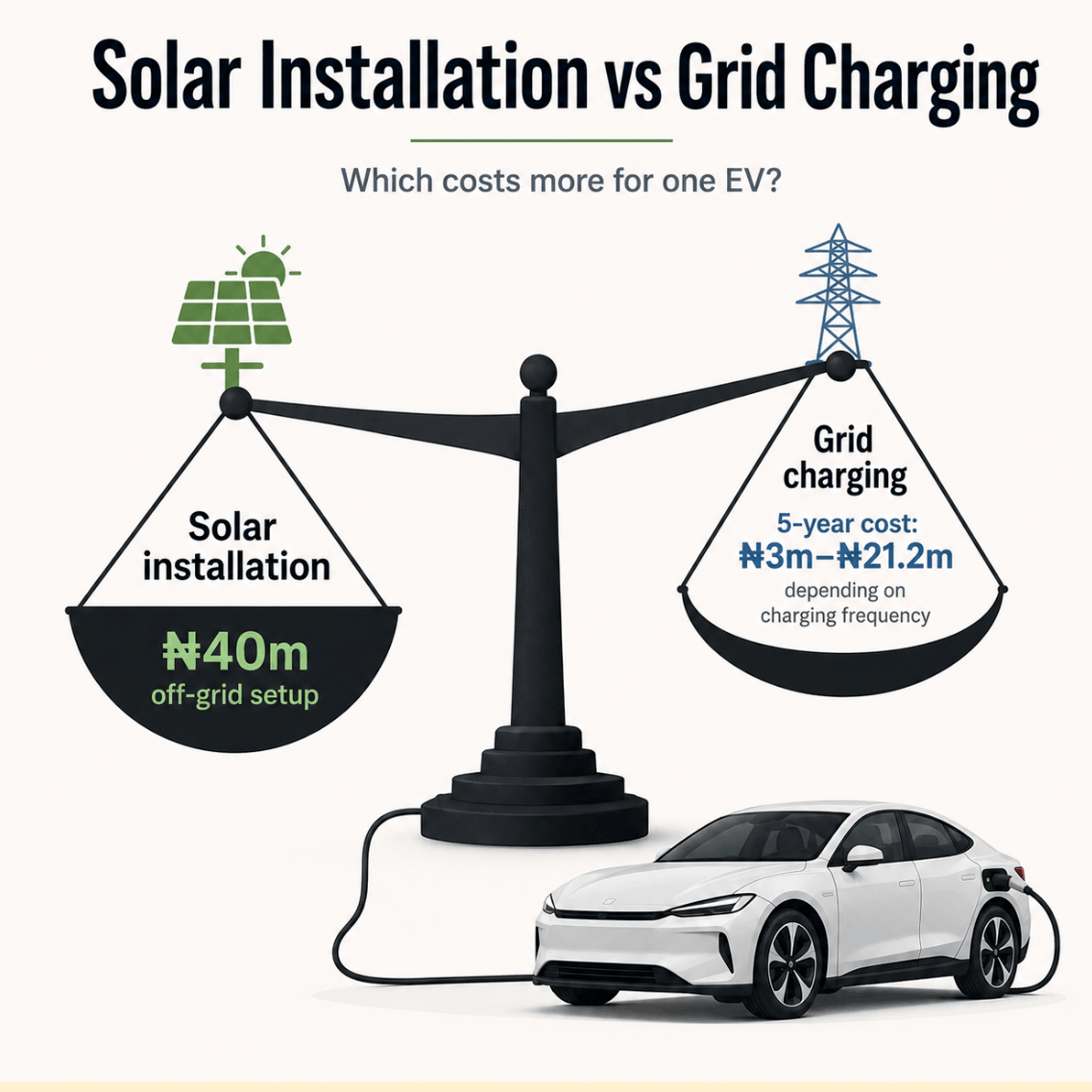
After reviewing the equipment required, 247Techpro estimated that a complete independent EV-charging solar system would cost about ₦40 million.
Current advertised prices help explain how the figure builds up. One Nigerian retailer lists a 650W bifacial panel at ₦151,000, which would place the cost of 65 panels slightly above ₦10 million. Another seller lists a similar 630W panel at ₦123,500, showing how brand and availability can affect the final amount.
A 60kWh lithium storage system is advertised between ₦14.85 million and ₦19.26 million by different solar retailers. Prices for a 20kVA inverter also vary widely, ranging from about ₦3.42 million to ₦8.15 million.
A basic 7kW portable EV charger can cost around ₦500,000. Based on these listings, the major equipment alone could cost between ₦27 million and ₦38 million. The battery would take the largest share of the budget, followed by the panels and inverter.
That estimate does not cover mounting structures, cables, protection equipment, delivery or labour. Some homes may also require roof reinforcement before installers can fit the panels safely.
Retail prices can change, but they show why 247Techpro’s ₦40 million estimate sits within a realistic range for a large off-grid system.
Nigeria Has Enough Sun, but Most EV Owners May Not Be Home to Use It
A solar charging system can power an EV without battery storage, but only when the panels are producing enough energy. That makes direct solar charging possible during the day but less dependable when clouds gather or the car returns home after sunset.
Nigeria receives enough sunlight to support EV charging. Depending on the region, solar panels can produce the equivalent of about 3.4 to 4.7 hours of full output each day. Northern areas such as Kano generally receive more solar energy than southern cities such as Port Harcourt.
With 65 panels producing a combined 42.25kWp, the proposed system could generate far more electricity in a year than one EV would normally need. The challenge is not the total amount of sunlight available. It is whether that power is available when the owner wants to charge.
Cloudy weather can reduce daily output, while Harmattan dust and shade can also affect performance. Without a battery, the car would depend mainly on daytime charging and may draw from the grid when solar production drops.
Battery storage solves that timing problem. It keeps excess energy produced during the day and makes it available for overnight charging or periods of weak sunlight.
Nigeria already has examples of this model. The University of Lagos commissioned a solar-powered EV charging station for its e-tricycles and e-buses, while the Federal Government later announced solar charging stations with battery storage for 12 public universities.
These projects show that solar EV charging already works in Nigeria. The battery is what makes it more reliable beyond the hours when the sun is strongest.
Grid Charging Wins the Five-Year Cost Test
Eko Electricity Distribution Company lists its Band A tariff at ₦209.50 per kWh. Using the 55.5kWh wall-energy estimate, one full Atto 3 charge would cost ₦11,620 at that rate.
If the tariff remains unchanged, one full charge each week would cost about ₦3 million over five years. Charging from empty three times a week would reach ₦9.1 million. One complete charge every day would cost close to ₦21.2 million across the same period.
Now these calculations exclude future tariff increases and assume the owner receives Band A supply, which will not apply in every case. Even then, the cost of charging from the grid remains relatively modest compared to the amount required to build the proposed solar system.
We asked Teslim how much he believed he had saved since switching from a petrol car to an EV. He said he had never calculated it. Since he charges mostly at home, the cost simply enters his electricity bill. He has not calculated the savings, but the increase in his electricity bill has not felt significant enough to worry him.
The gap remains wide enough to show why a ₦40 million solar system may struggle to justify itself through the electricity savings from one car within five years.
The economics change when the equipment serves more than the vehicle. The calculation changes when the system powers a large property or serves several vehicles. A commercial operator can spread the cost across more users and may earn revenue from charging.
In those cases, the EV becomes one user of an energy asset instead of serving as the only reason for buying it.
Middle Ground or Hybrid Charging May Suit More Nigerian EV Owners
For most Nigerian EV owners, solar will make more sense as support for the grid than as a complete replacement. An owner can add panels gradually, charge during strong sunlight and retain public power for nights or cloudy periods.
A fully off-grid system may suit a commercial station serving several vehicles, but its power and storage requirements would rise with demand. The operator would also need more expensive DC fast-charging equipment.
Solar can charge an EV in Nigeria. For the average owner, however, guaranteeing that charge at any hour remains difficult to justify financially.