
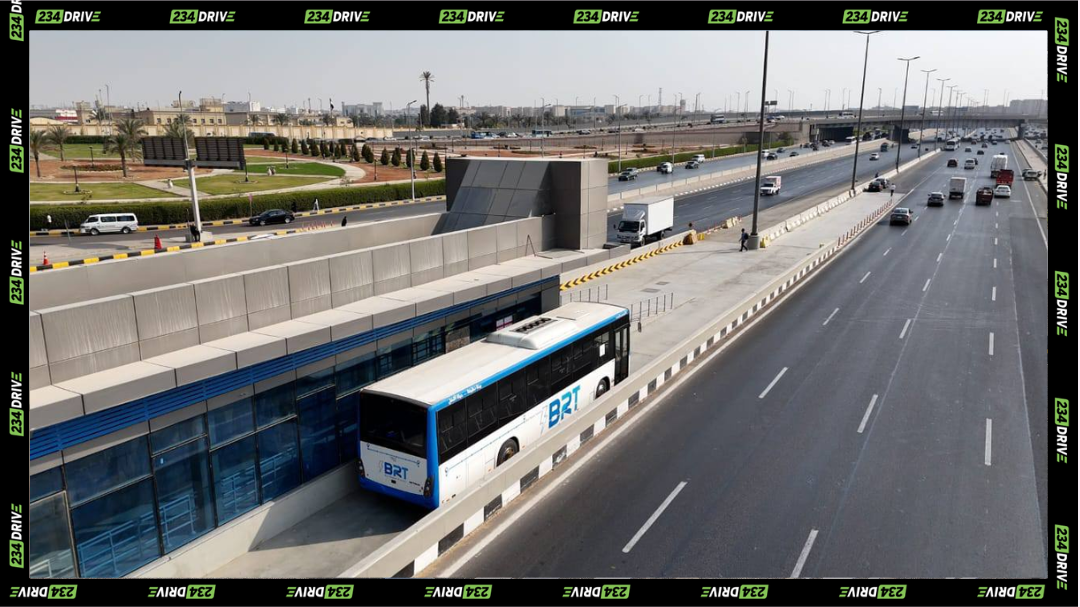
Cairo’s trial BRT buses in dedicated lane. | Source: Dailynewsegypt
Across the continent of Africa, buses are still one of the most important parts of urban transport. In most cities, they are not just a supporting transport mode but the main mode people rely on.
Let’s take a look at how well some major African cities are able to provide transport coverage for their residents based on how many buses are available.
High-Pressure Systems (Very High People per Bus)
Some cities are working with large populations and still growing their bus fleets.
Dar es Salaam (Tanzania) is home to about 8.98 million people, with roughly 151 buses under its DART BRT system. That works out to around 54,250 people per bus, showing how much demand each vehicle carries daily.
Dakar (Senegal), with a population of about 3.78 million as of 2024 operated a fleet of around 121 electric BRT buses, and there hasn’t been an announcement of a new addition to the fleet. That places it at roughly 37,836 people per bus.
Johannesburg (South Africa) has an estimated 6.56 million residents, supported by about 277 buses through the Rea Vaya BRT system. This translates to approximately 23,677 people per bus.
Cape Town (South Africa), with a population of about 5.15 million, runs around 223 buses under the MyCiTi system, giving an average of about 23,073 people per bus.
While these cities are still building capacity over time, the current fleets are carrying a significant share of daily movement. For context, Lagos (Nigeria) sits near the top of the list with around 41,000, showing just how much demand these systems face.
Moderate Coverage Systems
Some cities are in a more balanced position, with fleet sizes that match their population needs.
Rabat (Morocco), with a population of about 2.05 million, runs approximately 350 buses, resulting in about 8,281 people per bus. Additionally, there are plans and agreements to increase this number as part of a national goal to support the nation’s 2030 world cup push.
Addis Ababa (Ethiopia) is home to roughly 6.22 million residents and operates around 1240 buses through the Anbessa system. That gives an average of 6,219 people per bus.
Abidjan (Côte d’Ivoire), with about 6.93 million people, runs close to 1,500 buses under SOTRA, bringing it to around 4,621 people per bus.
Cairo (Egypt), one of the continent’s largest cities with about 23.5 million people, operates around 3,000 buses across its public transport system. That results in roughly 7,942 people per bus.
These cities show what it looks like when fleet size begins to scale alongside population, helping to spread demand more evenly. For instance, Accra (Ghana) has around 2.86 million people and operates about 245 buses under the Aayalolo system, which is around 11,678 people per bus. However, only 80 of the total are reported to be operational.
Rail Systems Supporting Mobility in African Cities
Beyond buses, some of these cities have built—and are building—rail systems to help move more people across busy urban areas.
Cairo runs Africa’s oldest metro system, with multiple lines carrying millions of passengers daily. Ongoing expansions, including a new 31.8 km line with 21 stations, are expected to serve about 1.5 million riders each day.
In Addis Ababa, a 31.6 km light rail system with 39 stations operates across two main lines. It currently moves around 56,000 passengers daily, helping ease long commutes across the city.
Then there’s the Rabat-Salé, which operates a tram network of over 20 km, with recent extensions adding new stations and routes. In nearby Casablanca, a larger system now spans about 25 km across newer lines, carrying hundreds of thousands of passengers daily while connecting with bus systems.
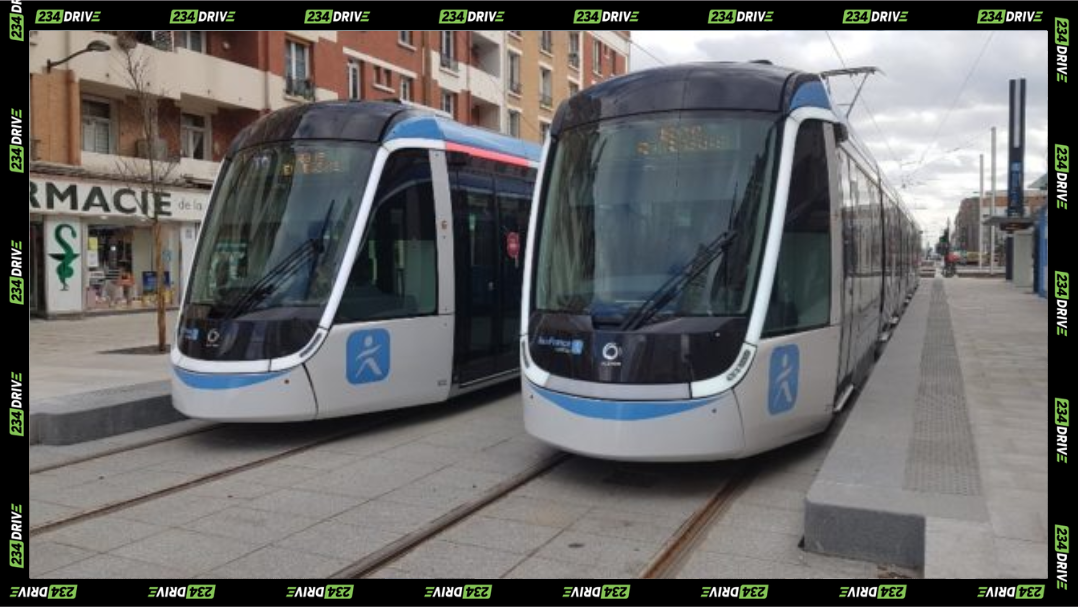
Image of a Tram in an urban area of Paris | Source: Urban Transport Magazine
In Lagos, rail is still expanding but already active. The Blue Line runs 13 km from Marina to Mile 2, with daily trips moving thousands of commuters. The Red Line stretches about 27 km and is expected to handle up to 500,000 passengers daily as capacity grows.