
Buying a used car is often an emotional rollercoaster. You’ve found the model you want, the exterior paint is gleaming under the sun, and the price is just within your budget. It’s easy to get caught up in the excitement and overlook the “small” things. But at 234Drive, we always tell our community one thing: The truth of a car isn’t in its polish; it’s under the bonnet.
One of the most significant, yet frequently ignored, warning signs during a car inspection is the presence of exposed wires in the engine bay.
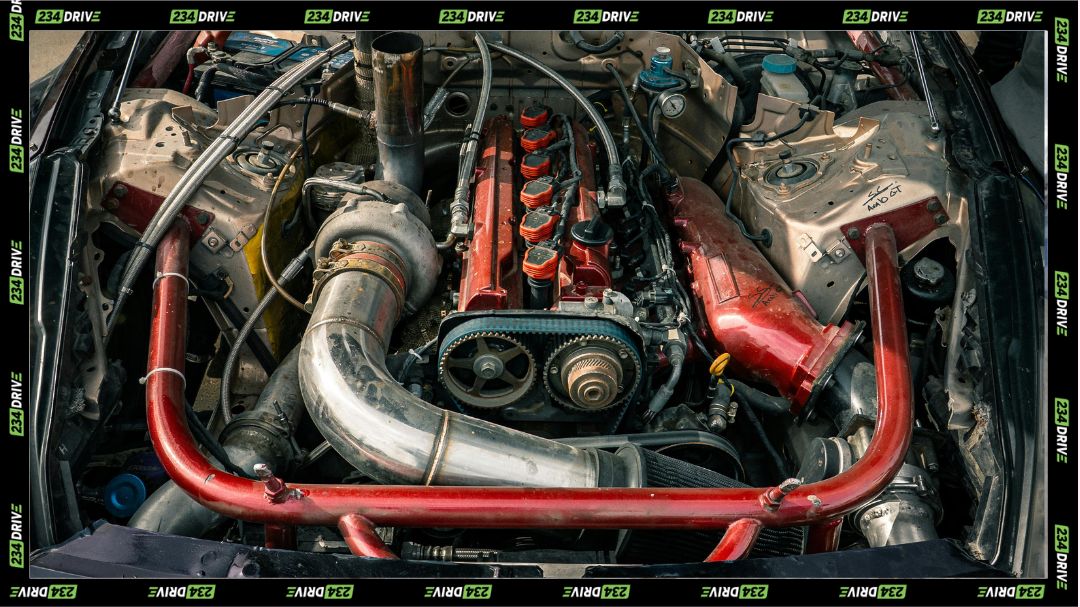
To the untrained eye, a few loose wires might look like a simple fix or a minor untidiness. To a seasoned pro, it looks like a ticking financial time bomb. Let’s dive deep into why you should never ignore “spaghetti wiring” and why it’s often a sign to walk away from the deal.
The Anatomy of a Healthy Engine Bay
Before we talk about what’s wrong, we need to understand what “right” looks like. When a car leaves the factory, whether it’s a Toyota, a Mercedes-Benz, or a Hyundai, engineers have spent thousands of hours designing the Wiring Harness.
In a healthy, well-maintained car, the wiring is:
- Bundled: Wires are gathered into logical groups.
- Protected: They are encased in plastic conduits (looms), heat-shrink tubing, or high-grade electrical tape.
- Routed: They follow specific paths away from high-heat areas like the exhaust manifold or moving parts like fan belts.
When you open the bonnet of a car that has been treated right, you shouldn’t see individual strands of coloured copper. You should see neat, black protective sleeves. If you see a mess of “spaghetti” instead, the car is trying to tell you a story and it’s usually a horror story.
Why Exposed Wires Are a Massive Red Flag
Exposed wiring is rarely an isolated issue. It is almost always a symptom of a much larger, underlying problem. Here is what those visible wires are actually telling you:
1. Poor Electrical Work and “Bypass” Repairs
The most common reason for exposed wires is a “shortcut” repair. Perhaps a sensor failed and instead of replacing the harness or the sensor properly, a previous mechanic “tapped” into a power source elsewhere to bypass the problem. This is often called “Ghetto Rigging.” While it might make the car start today, it compromises the integrity of the entire electrical system.
2. Careless Maintenance History
If a car owner or their mechanic was careless enough to leave live wires exposed to engine heat and moisture, what else did they neglect? Exposed wiring suggests that the maintenance philosophy for this vehicle was “just make it move” rather than “fix it right.” You can bet that if the wiring is a mess, the oil changes were probably skipped too.
3. Hidden “Ghost” Problems
Visible wires often lead to hidden issues. They might be covering up a parasitic battery drain, a faulty alternator, or a history of front-end accidents where the original harness was crushed and never properly replaced.
The True Cost: Why Electrical Issues are a Nightmare
You might think, “I’ll just buy the car cheap and pay a mechanic to tidy up the wires.” This is where most buyers make a very expensive mistake. Here is why electrical problems are the most difficult (and costly) to fix:
The Diagnostic “Black Hole”
Mechanical issues are often visible. A leaking strut is wet; a worn brake pad is thin. Electrical issues, however, are often invisible. A “ghost” in the system might only cause the car to stall once every two weeks. To find that one frayed wire or bad ground, a technician might have to spend 10 to 20 hours stripping the interior or the engine bay. In the world of repairs, diagnostic time is money.
ECU Damage
Modern cars are essentially rolling computers. The Engine Control Unit (ECU) expects specific voltages from every sensor. An exposed wire that shorts against the chassis can send a surge of electricity back to the ECU, “frying” the car’s brain. Replacing an ECU and re-programming it to your keys and immobiliser can cost more than the engine itself.
The Risk of Fire
Engine bays are hot. Most wire insulation is rated for high temperatures, but when that insulation is stripped or replaced with household-grade tape, the heat can melt it. A short circuit in a greasy engine bay is the leading cause of vehicle fires. Is a “good deal” worth the risk of the car burning down in your driveway?
The “Acceptable” Exception: When to Buy Anyway
Is there ever a time when you should buy a car with exposed wires? Yes, but only under very specific conditions.
As Crank of 234Drive always says, you should only proceed if the seller is 100% transparent. If the seller says:
- “The ABS module was replaced, and the technician hasn’t finished re-looming the wires yet.”
- “The car had an aftermarket alarm that I removed, which is why those wires are there.”
- “I know the wiring is bad, and I have discounted the price by $1,000 to cover a full harness replacement.”
In these cases, you aren’t being “tricked.” You are making a calculated business decision. If you are a project car builder and you plan to “wire-tuck” the engine anyway, then the messy wiring is a great tool for negotiating a lower price. But for the average person looking for a reliable daily driver? Stay away.
Final Advice: The “Bonnet Test”
The next time you go to inspect a car, follow this simple checklist:
- The Flashlight Test: Even in daylight, shine a light into the deep corners of the engine bay. Look for wires that are joined with office tape or wire nuts.
- The Colour Test: Look for “out of place” colours. Manufacturers use specific colour codes. If you see a bright house-wire (like a thick red or green wire) that looks newer than the rest of the engine, it’s a bypass.
- The Smell Test: After the test drive, open the hood and sniff. If you smell burning plastic or “ozone,” there is an electrical short happening.
Conclusion
When you’re buying a car, it’s easy to be blinded by a “clean” interior or a loud exhaust note. But remember: electrical problems are the hardest to diagnose, the most frustrating to live with, and among the most expensive to repair.
Exposed wiring under the bonnet is a deal-breaker unless you have a deep pocket for repairs and a very patient mechanic. Don’t get caught in the spaghetti trap.