
Every morning across urban hubs like Lagos and Nairobi, a silent mechanical tragedy repeats itself. A driver, hurried by the pressure of the morning commute, turns the key, shifts into gear, and immediately joins the flow of traffic. To the driver, it is a routine start to the day. To the engine, it is a high-speed battle against friction that it is currently losing.
The belief that modern engines do not need a “warm-up” period is a half-truth that costs African motorists millions in avoidable repair bills. While you no longer need to sit for ten minutes as drivers did in the 1980s, the laws of physics regarding metal and lubrication have not changed.
The Lubrication Gap
The internal components of your engine pistons, crankshafts and camshafts are a complex assembly of moving metals that must never actually touch. They are designed to “float” on a microscopic film of oil. However, when a car sits overnight, gravity pulls the vast majority of that oil down into the pan at the bottom of the engine.
The moment you start the car, the oil pump begins the process of circulating that lubricant back to the top of the engine. But this is not instantaneous. Furthermore, engine oil is designed to reach its optimum viscosity (thickness) and protective capability only when the engine has reached a specific operating temperature.
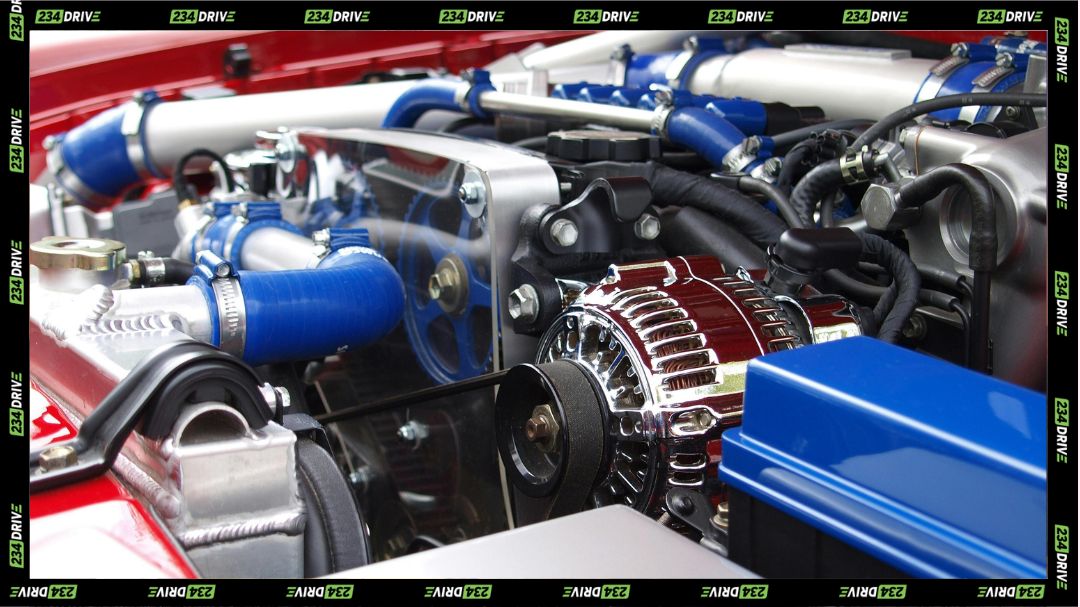
When you rev a cold engine, you are forcing these precision-engineered metal parts to move at high speeds before the oil has reached them or attained the right temperature to protect them. This results in direct metal-to-metal contact. In the world of mechanical engineering, metal hitting metal at high velocity is the definition of destruction.
The Revving Misconception
Many drivers believe that revving is something only done by sports car owners or enthusiasts looking to hear their exhaust notes. This is an expensive misunderstanding.
The moment you step on the accelerator to pull out of your compound or merge onto a highway, you are revving the engine. Whether the car is in neutral or in gear, increasing the RPM (revolutions per minute) places a load on the internal components. If that load is applied before the “lubrication gap” is closed, you are causing microscopic tears and cracks in the metal. Over time, these cracks widen, oil begins to leak internally, and eventually, the engine “knocks”, a catastrophic failure that often requires a total replacement.
The 60-Second Standard
Protecting your asset does not require a significant time investment. You simply need to allow the engine between 30 and 60 seconds to find its rhythm. You can monitor this transition through two primary indicators:
- The RPM Needle: Upon ignition, most modern engines will idle at a higher RPM (usually above 1,000). As the oil begins to circulate and the initial heat builds, the needle will settle to a steady idle, typically around 800 RPM.
- The Engine Note: There is a distinct acoustic shift. A cold engine sounds “thin” and slightly strained. Once the lubrication is at its peak, the sound becomes deeper, smoother and more consistent.
Once you observe that drop in RPM and the smoothing of the engine note, the lubrication cycle is complete. Your engine is now thermally stable and ready to handle the stresses of high-speed driving or heavy traffic.
In an environment where vehicle maintenance is one of the highest costs of mobility, a minute of patience is the most effective insurance policy you can have. Your engine is a masterpiece of engineering; give it sixty seconds to prepare for the road, and it will serve you for years.