
For the average Nigerian motorist, the act of clearing a vehicle at the Lagos ports or registering a newly acquired “Tokunbo” sedan has always been a complex financial ritual. However, as of January 2026, that ritual has become significantly more expensive. According to the official government source, the Federal Government has initiated a series of aggressive policy shifts aimed at modernising the automotive sector, reducing environmental hazards and forcing a transition toward local assembly. At the heart of this transformation are two primary pillars: a mandatory Vehicle Recycling Fee and a revised import duty structure that significantly hikes the cost of entry for used vehicles.
These changes represent the most significant overhaul of automotive taxation since the duty reductions of 2022. While the government frames these reforms as essential steps toward a “circular economy” and the protection of the local industry, the immediate reality for the Nigerian consumer is an affordability crisis. By moving the fiscal goalposts, the National Automotive Design and Development Council (NADDC) and the Nigeria Revenue Service are attempting to solve the long-standing problem of Nigeria being a “dumping ground” for unroadworthy vehicles, though the short-term impact on transport inflation remains a point of intense national debate.
The Arrival of the Vehicle Recycling Fee
Perhaps the most discussed addition to the 2026 automotive landscape is the mandatory Vehicle Recycling Fee. Managed by the NADDC, this compulsory charge is triggered at the point of first registration for all vehicles—whether they are imported new, brought in as used “Tokunbo” units or assembled locally. The logic behind the fee is the funding of the national End-of-Life Vehicle (ELV) programme. This initiative aims to formalise the currently unregulated and environmentally damaging “Belgian parts” scrap market, ensuring that vehicles are dismantled and recycled safely once they reach the end of their useful life.
While official government statements describe the fee as “modest,” the exact Naira amount remains tiered based on the vehicle’s profile. For the buyer, this represents a pre-paid disposal cost, modelled on systems used in developed European markets. The NADDC projects that this mandatory recycling fee will generate over ₦150 billion annually, which is intended to be reinvested into dismantling facilities and the logistics of part refurbishment. For the African commuter, this is a clear signal: the era of abandoning “dead” vehicles on the roadsides of Lagos or Kano is coming to a close through fiscal deterrents.
The 42% Threshold: The New Cost of Importation
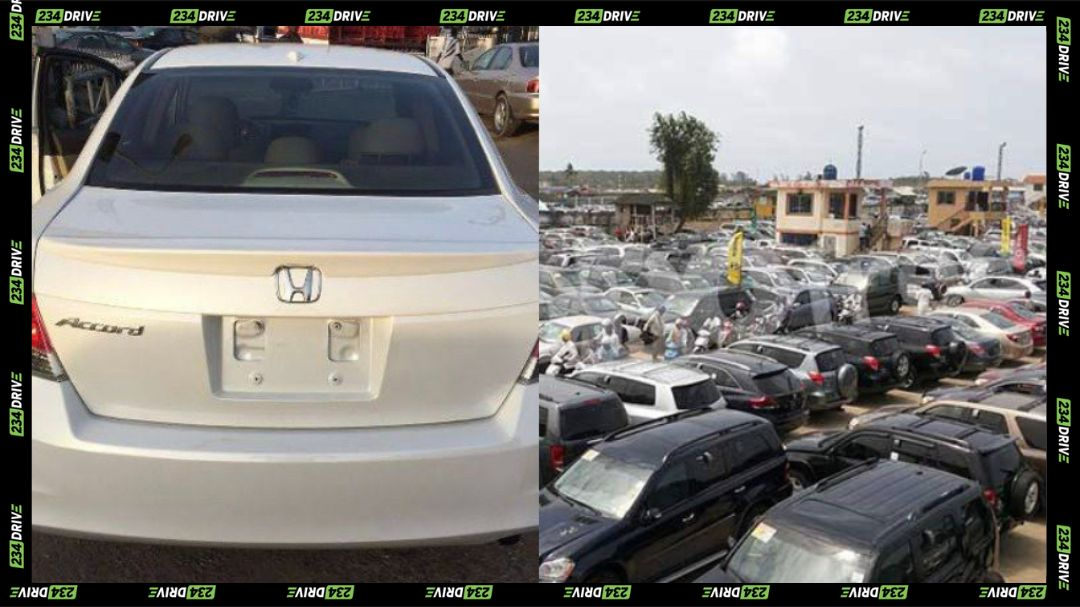
Beyond the recycling fee, the 2026 structure for import duties and levies has tightened the financial knot for importers. While the base import duty remains at 20%, the supporting levies have been adjusted under the ECOWAS Common External Tariff (CET) 2022–2026 framework. The most significant change is the introduction of a 4% Free-On-Board (FOB) levy, which replaces the previous 1% Comprehensive Import Supervision Scheme (CISS) charge. When combined with the 15% National Automotive Council (NAC) levy and the 7.5% VAT, total statutory charges result in higher clearing costs of between 42% and 45% of the vehicle’s CIF (Cost, Insurance and Freight) value.
To put this into perspective, a “Tokunbo” vehicle with a CIF value of ₦20 million now incurs an FOB levy alone of ₦800,000—a fourfold increase from the previous ₦200,000 charge. For a ₦10 million vehicle, the combined customs payments now exceed ₦4 million before shipping, terminal handling or clearing agent fees are factored in. This structure is a deliberate attempt to stabilise foreign exchange demand by discouraging the reliance on used imports, which accounted for over ₦1 trillion in capital flight in 2025.
The Pivot to Local Assembly and EVs
The 2026 policy is not solely punitive; it contains significant “carrots” designed to steer the market toward the National Automotive Industry Development Plan (NAIDP). Electric vehicles (EVs) and their components are now officially exempt from VAT, and the government has introduced tax breaks and toll exemptions for vehicles converted to Compressed Natural Gas (CNG). By making fossil-fuel vehicles more expensive to import and register, the state is effectively subsidising the transition to cleaner, locally assembled alternatives like those produced by Innoson or the growing number of Hyundai and Jet Systems assembly plants.
This industrial shift is supported by a new mandatory Vehicle Conformity Assessment for all used vehicles. From 2026, exporters in Europe and the United States must certify that a vehicle meets specific safety and environmental standards before it can be shipped to Nigeria. While the cost of this certification is borne by the exporter, it serves as a non-tariff barrier that prevents the lowest-quality, most polluting vehicles from entering the Nigerian ecosystem. It is an argument that African mobility deserves better than the world’s discarded machinery.
Ownership Reality and Economic Impact
For the individual stakeholder, the suitability of these policies for everyday use remains a complicated question. While the long-term gains in waste management and road safety are undeniable, the immediate ownership experience in 2026 is defined by higher upfront costs. Low and middle-income buyers, who have traditionally relied on affordable used imports for mobility, now find themselves priced out of the market. This creates a “mobility gap” that can only be filled if local assembly plants can scale fast enough to provide affordable alternatives under ₦15 million.
Practically, the success of the 2026 reforms depends on the transparency of the new Nigeria Revenue Service. The transition of VAT collection away from the Nigeria Customs Service is intended to reduce duplication and corruption, but the enforcement of the recycling fee at the point of registration will require a level of inter-agency cooperation that has historically been difficult to achieve. If the revenue generated is not visibly reinvested into the promised recycling infrastructure and job creation, public resistance already noted as a primary challenge by the NADDC—could undermine the entire programme.
A Continental Standard
The 2026 vehicle tax and policy changes represent a bold, if painful, pivot toward a more sustainable automotive future for Nigeria. By introducing the recycling fee and hiking import levies, the government is betting that the short-term inflation in vehicle prices will be offset by the long-term growth of a local manufacturing base and a cleaner environment. The key strengths of this policy lie in its clarity: the government has clearly identified the “Tokunbo” import as the obstacle to industrial growth and environmental safety.
We want to hear from you. Do these new fees change your plans for buying a car this year? Does the 7.5% VAT exemption make you more likely to consider a locally assembled electric vehicle? Share your thoughts in the comments below or join the conversation in our WhatsApp community!