
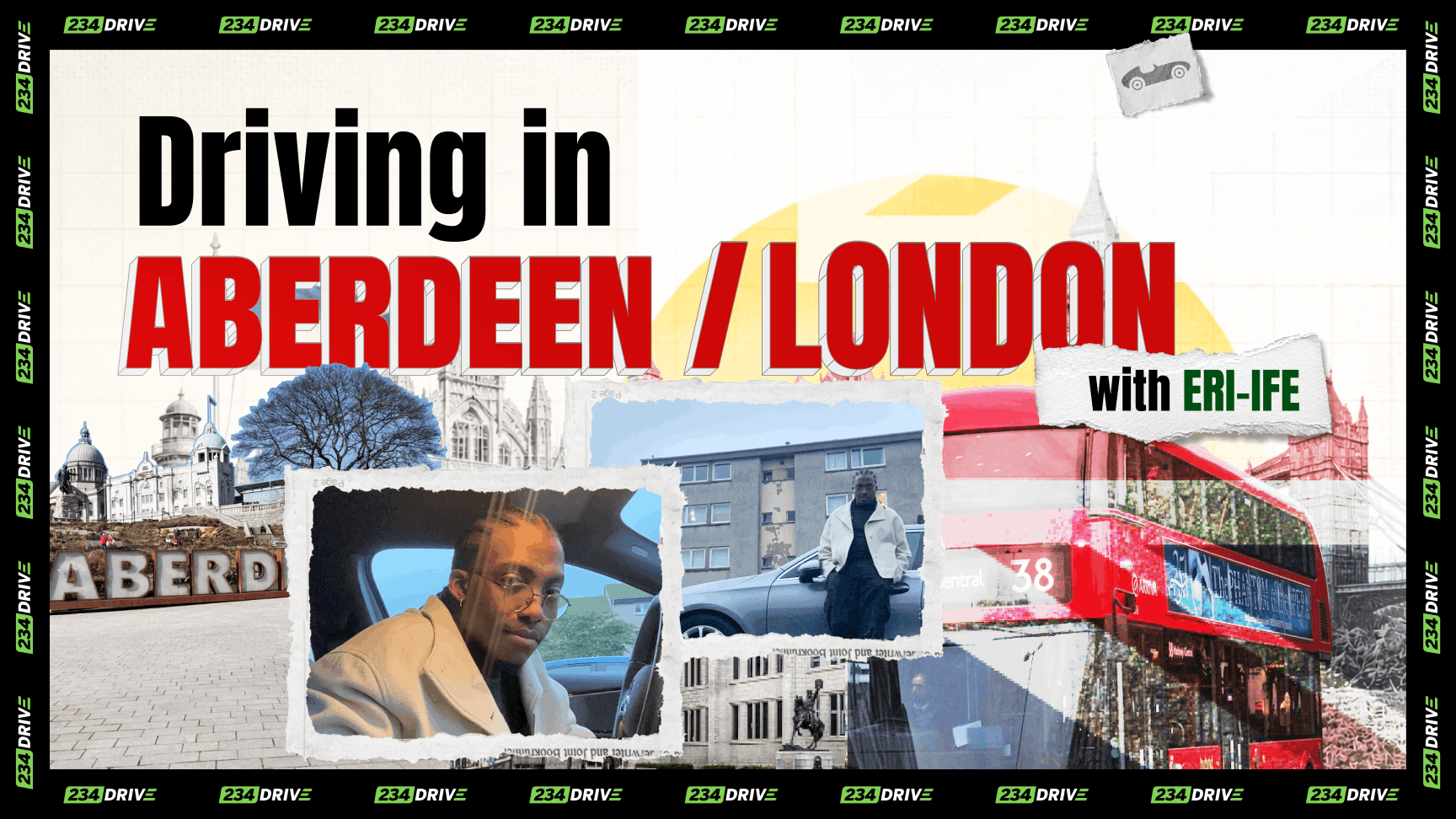
In 2022, Eri Ife, a musician and lawyer, moved from Nigeria to the UK to pursue a Master of Law degree. At first, public transport worked just fine. But marriage quickly changed that. After tying the knot with his partner, Seun, their love stretched across two countries— Eri Ife in London, England and Seun in Aberdeen, Scotland—and a car became less of a luxury and more of a necessity. They settled on a sleek 2020 Mercedes A200, but for Eri Ife, the real challenge wasn’t affording the car. It was proving, after more than a decade of driving in Nigeria, that he could actually earn the right to drive it in the UK.
It took him a year, between doing his written test and passing his practical test, to finally get it right. And now, he relishes his restored sense of empowerment, and those priceless rides with his wife where they argue about nothing and jam along to sweet music, some of which is his.
Quick-Start Checklist: How to Get a UK Driving Licence
Getting behind the wheel in the UK is a major transition. Before diving into Eri Ife’s personal experience of conquering the DVLA, use this quick-start checklist to ensure you are legally and practically prepared:
- Apply for Your Provisional Licence Early: You must secure a provisional licence from the Driver and Vehicle Licensing Agency (DVLA) before you can book any exams. This application costs £30 online and requires proof of identity and UK residency.
- Fast-Track with the Non-EU Driving Shortcut: Expats holding valid non-EU driving permits can apply for a reduced training path. While some countries allow direct swaps, Nigerian licence holders can use their foreign history to skip the standard 40-hour beginner lesson recommendation.
- Master the Theory and Hazard Exams: You must pass a two-part theory test containing 50 multiple-choice questions and a video-based hazard perception assessment. This test costs £23 and remains valid for two years.
- Aim for Under 15 Minor Faults: The practical driving test costs £62. To pass, you must complete a 40-minute driving assessment with zero major safety faults and fewer than 15 minor driving infractions.
FAQs on Navigating the UK Road System
To help you seamlessly master how to drive in the UK, we have compiled the most common questions expats face when getting behind the wheel.
Can You Drive in the UK with a Nigerian Licence?
Yes, but only temporarily. Under UK licensing regulations, visitors and newly arrived residents can drive standard cars using a valid foreign licence (such as a Nigerian licence) for up to 12 months from the date they last entered the country. After this 12-month grace period, you must apply for a provisional UK licence and pass both the theory and practical driving tests to continue motoring legally.
What is the Passing Score for the UK Driving Theory Test?
To clear the UK driving theory test, you must pass two distinct components during a single testing session. The multiple-choice section requires you to score at least 43 out of 50 correct answers. The hazard perception section, which uses video clips to evaluate your response to potential road hazards, requires a passing score of at least 44 out of 75 points.
What are the Differences Between an Automatic and Manual UK Licence?
If you pass your UK practical driving test in an automatic car, you will be issued an automatic-only licence. This legal permit strictly prohibits you from driving manual, stick-shift vehicles on public roads. However, if you take and pass your driving exam in a manual car, your UK licence automatically covers both manual and automatic vehicle classes.

Tell us about your first driving experience
I think I was about 13 or 14 years old at the time. My brother was learning how to drive and in true annoying younger sibling fashion, I said, me too, I want to learn how to drive. So one day, I tried and my mum complimented a specific turn that I made, thinking he was the one who made it. I made sure she knew that I was the one responsible for it. So yeah, that was my first experience and it was really fun. After that, I spent maybe the next year or two just driving around my estate, just to get a feeling of being behind the wheel.
And what was your relationship with driving after that?
After I got my licence at 18, driving naturally became the preferred method of transportation because public transportation in Nigeria is not the sweetest experience. But driving was pretty fun and straightforward. I mean, the Nigerian Police definitely make up several chapters in my driving story, but they were easier to deal with in Ibadan because that is my city. And since I would frequent a particular route from school (the University of Ibadan or UI) to home, they came to know me. By my second year at UI, they knew I was studying Law and they didn’t consider me to be a problematic person. But Lagos was a different ball game.
How so?
In Lagos, it wasn’t just the police, there was also the VIO (Vehicle Inspection Office). As far as I know, VIO should deal with the roadworthiness of a car while Road Safety officials deal with traffic offences and the police deal with issues like maybe stolen cars in the area and so on. But I think at the end of the day, their roles get conflated and you have these three different government bodies essentially performing the same role. There was also the issue of how most of my days were spent in Lagos traffic when I lived there.
After you finished Law School and got your NBA (Nigerian Bar Association) sticker, did dealing with the police become easier?
I’d actually always had the sticker since my dad is a lawyer. So I wouldn’t know how much influence the sticker has on dealing with these officials. But I would say that I definitely felt the influence of being part of the NYSC (National Youth Service Corps). When I served in Lagos, I would put my NYSC cap on the dashboard and sometimes just leave my khakis in the car. I didn’t have any problems with them then because they considered me an ‘Omo Ijoba’ (child of the government).
What would you say is your favourite thing about driving?
Through the years, I think it’s just been the sense of empowerment that it gives you. When I was talking with my mum after passing my driving test in January this year, one of the things she mentioned was that I must feel very empowered right now. That really resonated with me, because we got our car in September last year, but we (my wife and I) hadn’t been able to move with it until we got our licences. My wife, Seun, passed her driving test first so she got her licence shortly before I did. So I told myself I had to sit up and lock in, because after all my ‘I will take care of you’ promises, I couldn’t even give her Passenger Princess treatment. But now, I’m driving and I have so much confidence on the road. I mean I’ve always had confidence on the road because I started driving early in life. I had my first car when I was 19, a stick shift so I’m actually used to driving manual cars and I think it’s a sweet experience.
What car did you start out with?
Gosh, don’t despise my humble beginnings, but it was a 2003 Nissan Almera Tino.
And now?
A 2020 Mercedes A200.
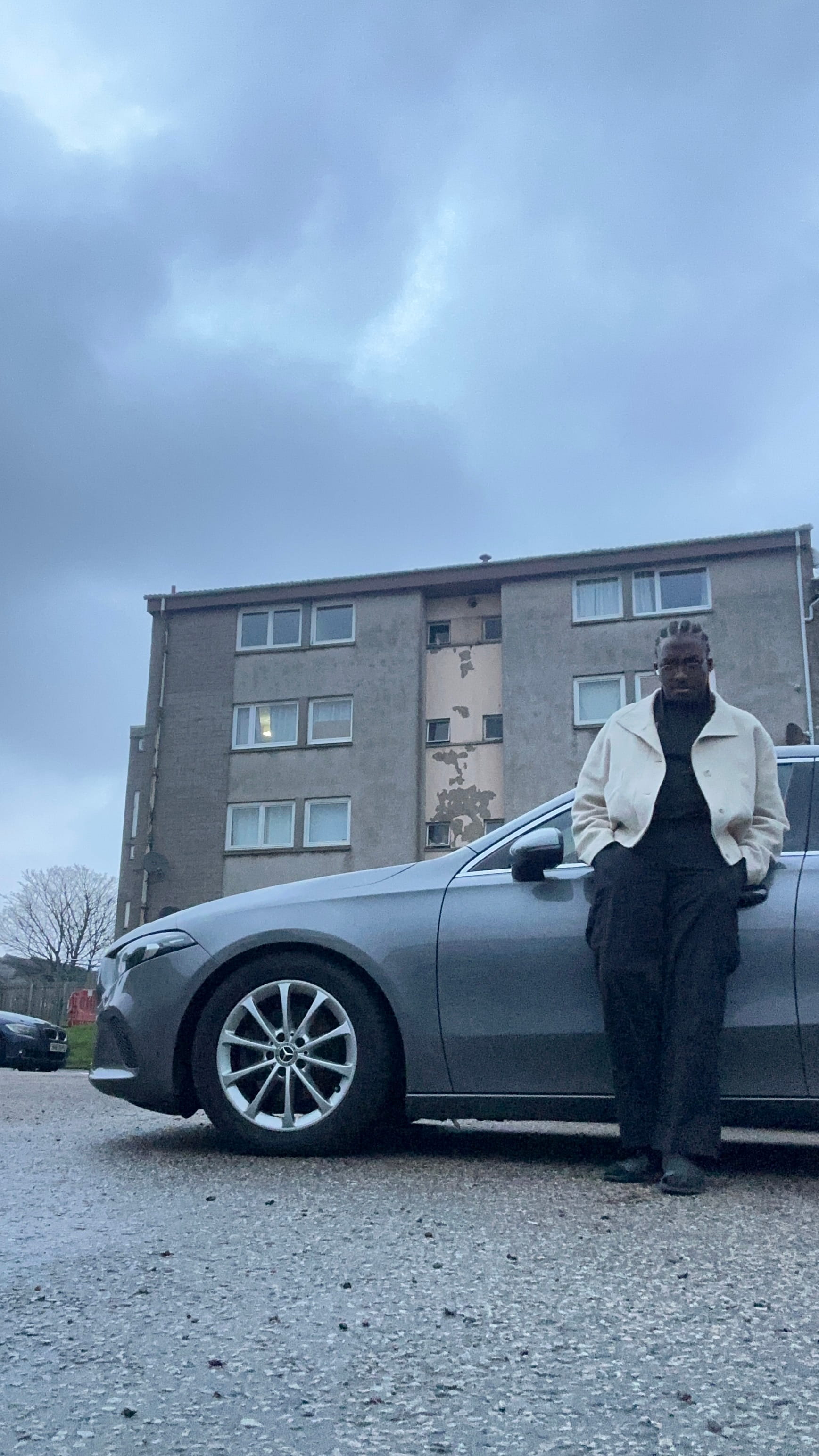
Oh, talk about an upgrade!
Yeah, it definitely feels nice. It feels nice to drive a German. It’s an AMT, so it’s auto and manual transmission. This means I have the option to change gears, which I find really exciting. Before I moved to the UK, I used to drive a Lexus IS 250 in Nigeria, which I bought after test-driving Seun’s car.
So back in Nigeria, the IS 250 was fun to drive as well. It was an IS, so it’s the sports iteration of the Lexus models and it’s pretty fast. So I was really having a lot of fun. I capped out at about 200 km/hr on Lagos-Ibadan Expressway—after they had fixed it. There was a particular stretch of the road that felt like gliding. And cars that are engineered to go fast, they do this thing where, where other cars get to that speed and start shaking uncontrollably, these fast cars hunker down and are like, LET’S GO!
What are some of the thrills of driving your current car?
My current car has four modes: Individual, which is customisable; Comfort, which prioritises comfort; Eco, which prioritises conserving energy with an interesting auto-stop and auto-start feature that controls the engine; and then there’s the Sports mode. Whoo, that Sports mode is something else. So yeah, driving it has been really fun.
One of the things I was saying earlier on was because I started driving so early, it kind of wrapped itself into my sense of self to the point that not having a licence here for that long affected me on a psychological level.
Tell us why getting a licence in the UK was so hard for you.
So the test is broken into two parts, right? It’s the theory test and then the practical test. The theory test was really easy. Seun and I passed on our first attempts, respectively. She passed and then I had to pass because I can’t be disgracing my family. But for the practical tests, there are a lot of things to consider. It’s a vastly different landscape than Nigeria. I feel like if Nigeria was serious about getting people to pass the driving test before granting them licences, it would have an immediate knock-on effect and maybe people would simply be more responsible drivers. But passing a driving test is not hard in Nigeria, because you can even pay for a passed test.
But here, they prioritise safety and a smooth driving experience. For the sake of the test, you have to drive like you’re chauffeuring somebody, not like a taxi. A taxi driver’s job is to get you from A to B as quickly as possible. A chauffeur’s task is to get you from A to B as comfortably as possible, such that you’re not even thinking about the car ride while you’re in the car. So the implication of that is that as you are accelerating or decelerating, it has to be at such a level that it doesn’t stress the assessor. You have to look at all the signs. You have to make sure that you’re on the correct lane. And you have to do that at the same time. So you have to plan ahead. You have to make sure you’re matching the speed. So if the speed limit is 30, you can’t stay at 20. You have to be between 25 and 29 ideally, right?
Balancing all of that on its own can be challenging. So when you now have years of driving experience in another city or in another country or whatever behind you, it makes it a little difficult to transition, especially if it’s a country like Nigeria where there weren’t any real driving laws, really. And then it becomes three times as difficult if it’s Lagos that you have been driving in. So yeah, a combination of all of those things didn’t really work in my favour for my first test. My first test was in December, at which time I had been driving for about 14 years, 4 of which had been in Lagos— 2018 to 2022. So there was a lot of adjusting that needed to be done.
What were some of the specific things that made you fail your first driving test in the UK?
So there are minor faults and major faults. The latter immediately disqualifies you, but with minor faults, the goal is to get less than 15. If you get 15 or more, you’re also disqualified. A major fault can look like losing control of the steering wheel if your hand mistakenly slips when you’re driving with one hand.
How many minor faults did you have in your second test?
I had only 6 this time. One of them was ‘Moving off – Safety’. Basically, when you leave, you’re supposed to look at six points: your blind spot on the left, your wing (side) mirror on the left, through the windscreen, in the rearview mirror, the wing mirror on the right and your blind spot on the right. Your instructor has to see you hit each of the six. Another one was ‘Control – Steering’; I veered off ever so slightly while trying to demist my windscreen. Another was Junctions Observation; I observed but he thought I observed too early which made me not see a particular portion of the road. There was no car coming, so it was fine, but if a car was coming, it would have been a major safety fault. There was also the Use of Mirrors fault and a Following Distance fault— for about 2-3 seconds, I was too close to a truck in front of us and he said it wasn’t safe. But Seun had only three minor faults, she’s the real pilot between the two of us.
And what do the economics of getting a driver’s licence in the UK look like?
So you first get the learner’s licence which costs about £30. It’s pretty straightforward. You pay online then print out and fill the form and mail it to them, then they’ll send you your learner’s licence. With the learner’s licence, you typically want to get in about 30-50 hours of lessons— if you’ve never driven before. At two hours per lesson, that’s about 15-25 lessons.
If you have driven before, I think about 10 lessons is fine and you watch a lot of YouTube videos where you learn what to do and what not to do to pass a test, and then, a little practice on your own here and there. The costs of hiring a driving instructor range anywhere from £15/hour to £50/hour. You could hire a personal instructor or just enrol at a driving school in your city or the city you want to do your test in, because they can take you through the sample routes. For me, the importance of hiring a driving instructor is that they can highlight what your specific shortcomings are so you work on them against the test.
You can book your test up to 6 months in advance and take lessons leading up to that date. The theory test costs £23 while the driving test itself costs £62, so that’s £85 altogether. You have to do the theory test first because it’s the reference number from it that you’ll use to book your practical test. And the theory test is only valid for 2 years, so you have to pass your practical test within that time. I passed my theory test January 2024 and I passed my theory test January this year, so one year in between.
Did you wait that long intentionally?
Yes, so I waited because I didn’t think we’re going to get a car just yet. So I just did the theory test just so I would have the option to do the driving test whenever I could. I wanted to do the driving test in the summer, but as of that time, we hadn’t bought a car yet—we even got scammed but that’s a story for another day. So, the plan was to actually get a car in time for the summer and then book a driving test in the summer and do the test. But it didn’t work out and it ended up taking much longer than we thought it would. Seun actually did her theory test in 2023, meaning hers was going to expire this year. So, it was critical that she passed her driving test.
So yeah, you do the theory test and do your practical test within those two years. Some people have passed it on their first attempt, some on their tenth…it is what it is. By the time you pass the practical driving test, they will hold on to your learner’s licence and give you a driving test certificate. Then in 20 working days, you get your permanent licence. Another important thing to note is that the licences are different for auto and manual. The one I got was for auto and Seun got an auto one as well.
A few months in, what are some of the major differences between driving in London and Aberdeen?
People are not trying to kill you in Aberdeen. No, London is not that crazy, I’m joking. I don’t have a lot of experience driving in London, just to be super clear, because before we brought our car up to Aberdeen, I had the car with me in London for maybe two weeks. But from my observations about London at least, is that driving is slower in London. It’s a bigger city so a lot of people have cars, traffic is busier and moves more slowly. There’s just a lot more going on. Insurance is also higher in London because it’s London. Aberdeen, by comparison, is pretty chill. It’s like driving in Lagos versus driving in Ibadan.
What do you look out for in cars?
First, reliability. I would rather spend more money on a car upfront than buy a cheaper car that I would have to spend a lot of money on repairs for later. I also have a preference for cars that can go fast if I need them to. And of course, as a musician, the sound insulation has to be solid. Here, I prefer cars with less than 50,000 miles on them as of the time I’m buying them, but in the Nigerian context, I would say less than 100,000 miles. I also prefer Euro 5 or 6 cars in terms of emissions standards, because you don’t have to pay the ULEZ charge. I also look out for previous ownership; my ideal is just one previous owner but I can do two, especially if the mileage is still fair and it means they haven’t extracted that much value from the car. I also look out for if the car has been accidented, if it was stolen—you can check all those things here. So I’d say just go for a reputable garage.
What was the financing structure for buying your car like?
We got it on a PCP (Personal Contract Purchase). Hire purchases are usually more expensive and there’s no balloon payment at the end. But for your PCP, if you want, there’s a balloon payment at the end. With the PCP for me now, I would be looking to sell this car after owning it for maybe a year or two and replace it with a car that’s more recent, nicer and so on. The PCP option came highly recommended and to be honest, if we had gone for a PCP earlier, we wouldn’t have gotten scammed.
Have you noticed a difference between fuel prices in Aberdeen and London?
I don’t drive as much in London, so I haven’t really noticed a difference. What I can tell you is that I spend more on transport in London because in Aberdeen, I spend about £55/month on fuel, but in London, I spend about £100 on my Oyster card and rail card. I travel to Aberdeen twice a month and work in London, so I still need to spend that money on the train.
Editor’s note: As of the time of publishing this interview, Eri Ife has moved fully to Aberdeen and now spends about £100/month on fuel.
What’s the best and worst part of driving in Aberdeen?
For the worst part, I recently realised that when the road is wet and it is sunset or sunrise, the sun shines on the road and BLINDS me. In Nigeria, the sun is shining from up, so the wet ground doesn’t reflect the sun per se. But because here, the sun is shining at an angle, it just feels like it’s directly hitting my eyes. My best part is just driving itself because I love driving. If I had the means, I would get a second car in London so that I can drive there and my wife can drive here. Since uni, I’ve always been the guy with the car, so it sucks a bit to not have a car in London to be honest. But Seun needs it more because the public transport system, while reliable, is very time consuming. Going from our house to work takes over an hour with public transport, but it’s just a 13-minute drive. That’s another thing I love about Aberdeen; the road network is excellent so everywhere is between 5 to 15 minutes drive away.
What’s your favourite route to drive in Aberdeen and why?
Any route that allows me to drive at least 5 minutes without stopping at a traffic light or turning off the main road, because again, I enjoy driving. Even back in Nigeria, driving was a way for me to clear my head.
Interestingly enough—and this isn’t really tied to any question that you’ve asked, but it’s worth mentioning—one of the things I love about driving is it’s a way to bond with my partner. I find it really enjoyable when we go grocery shopping and just run any errands together. And the bus trips aren’t as great for that as much as driving your own car. I love being in the car with my wife and lightheartedly arguing about random things, playing music and just having that sort of shared experience. I’m not saying this very seriously o, but lowkey, I think having a car is very essential to the health of your relationship.
What’s your dream car?
My ideal day-to-day car is either a Mercedes E Class—because driving my current Mercedes A Class has been sweet—or a BMW 5 or 3 Series. They’re German and I love German cars. But my ultimate dream car is a Bentley or a Rolls Royce Cullinan. When it comes to luxury cars, I don’t like supercars. But I love the executive, classy looking cars. They’re not flashy, but they still scream ‘that guy has bastard money’. But as a Christian, there’s a tension for me, especially as I’ve grown in the faith, where I’m trying not to be so attached to the concept of owning a nice car and that being a part of my identity. While I would like to own one, if it’s not God’s will for my life, I don’t want one.