
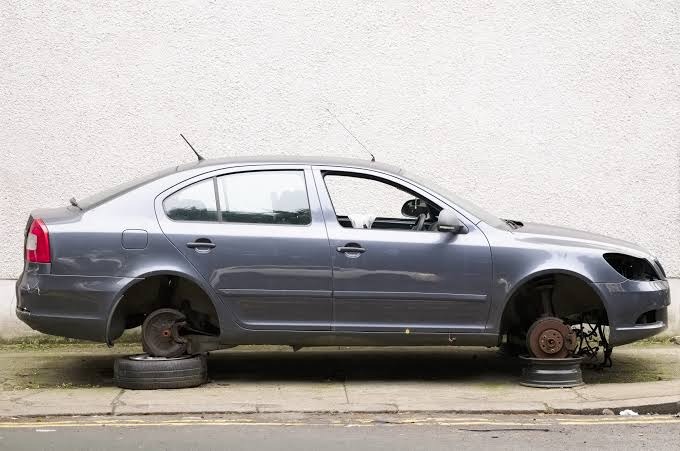
A driver parks a saloon car outside an event centre, locks it and walks away. An hour later, the vehicle is still exactly where they left it. It has not been towed, and nobody has hot-wired the ignition. But it is no longer intact. The driver’s-side mirror has been torn from its housing, while the front bumper hangs loose after someone removed the costly LED headlight with little more than a pocket knife and screwdriver.
In many Nigerian cities, the greater everyday risk is not that a thief will drive off with the whole car, but that pieces of it will disappear. Parts are taken while owners shop, eat or sleep. As a result, ordinary street parking has become a gamble: motorists may return to find a mirror, light, wheel or other component missing, sometimes in broad daylight.
The Speed of the Harvest
This kind of theft requires little equipment and only a basic knowledge of how vehicle parts are fitted. Those involved can conceal small tools in a jacket or pair of trousers. On some modern cars, a ten-millimetre socket wrench and a plastic trim tool are enough to remove valuable exterior components on an open street.
Side mirrors are common targets because their housings may contain electronics, indicator lights and sensors. Someone familiar with the fittings can remove both mirrors from a luxury SUV in seconds. Headlights and taillights can be similarly exposed. Modern laser and LED assemblies often come as sealed units, and an official replacement may cost more than ₦1 million. That price makes the parts attractive to thieves and difficult for owners to replace.
Tyres and alloy wheels are another profitable part of the trade. Leave a car overnight on a poorly lit residential street, and it may be sitting on concrete blocks by morning, its wheels removed before local guards complete their rounds. Catalytic converters are also vulnerable. A thief can slide beneath a high-clearance vehicle with a battery-powered saw and cut out the emissions-control device in minutes, then sell it for the precious metals it contains.
Consider how quickly one stolen headlight can change hands. It is taken from a car in Ikeja one evening and slipped into a backpack. Within hours, it may be in the boot of a commercial vehicle leaving Berger motor park. A day or two later, cleaned and displayed in a regional spare-parts market, it is ready for a customer who may be replacing a light stolen from another car the previous week.
The Economic Engine of the Grey Market
The trade survives partly because new, original parts brought in through official channels are beyond the budgets of many car owners. When a mechanic quotes the equivalent of a month’s salary for one replacement headlamp, the cheaper option becomes difficult to ignore—even when its origin is unclear.
That price gap sustains a large informal market, although reliable figures for its value are hard to find. Parts removed from parked cars enter an existing demand for affordable spares. Motorists want to keep their vehicles running without emptying their accounts, while mechanics face pressure to offer manageable repair bills. When buyers accept suspiciously cheap components without asking where they came from, they can end up financing the same networks that prey on them.
Moving the Goods Across Regional Hubs
Once a mirror, headlight or set of tyres is taken from a street corner, it can enter a much wider distribution network. The goods do not necessarily remain in the neighbourhood where they were stolen. They may be packed into sacks or concealed in the boots of commercial buses and carried to busy markets elsewhere in the country.
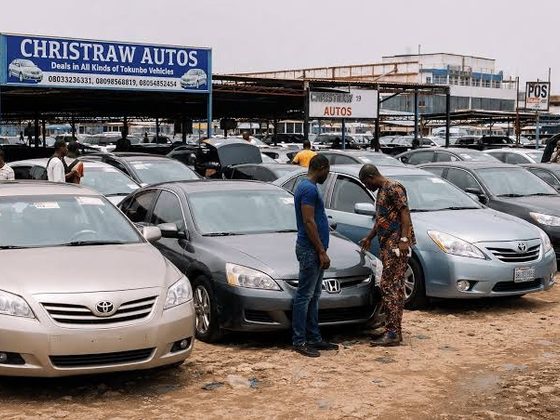
Open-air spare-parts markets provide ready outlets for such goods, mixed among legitimate stock. Lagos has major centres such as Ladipo and Owode Onirin, while Zuba serves buyers in Abuja. Farther north, Panteka markets in Kaduna and Kano trade in used spares and heavy vehicle parts. In the south, Ikoku in Port Harcourt and Ugwuagba in Obosi, near Onitsha, supply repair shops with bodywork and collision components. Their size and brisk trade can make the origin of any single item difficult to establish.
On the tables, stolen components can be almost indistinguishable from legally imported or salvaged stock. Traders clean them, arrange them neatly and offer them at appealing prices. In a bitter twist, someone who loses a side mirror on Tuesday could visit a market on Wednesday and unknowingly buy back the same part. Market receipts are issued to buyers, giving a thin layer of paperwork that protects both the seller and the customer from immediate suspicion.
When Whole Vehicles Vanish
The stripping of parked cars is a daily nuisance, but it also overlaps with more organised vehicle theft. When a gang targets a high-value car, the aim may not be to resell it intact. Breaking it down can be quicker, less conspicuous and, in some cases, more profitable.
A car stolen from a driveway at midnight may never be driven across a state border in one piece. Instead, it can be taken to a concealed yard or makeshift chop shop on the edge of town. There, workers remove the engine, cut the frame for scrap and sort the electronics into boxes. A mirror taken from the street and a vehicle hauled away at night therefore share a destination: both are converted into parts that re-enter ordinary commerce, serving a repair market in which owners struggle to keep ageing vehicles on the road.
The Cost of Constant Vigilance
Many motorists now organise everyday routines around the risk of losing a component. Some pay informal parking attendants steep fees simply to keep an eye on their cars. Others fit metal cages around catalytic converters, add locking wheel nuts or weld security brackets onto spare tyres. These precautions cost money, alter vehicles and still cannot guarantee protection.
Such precautions address the immediate danger, not the economics behind it. As long as authorised replacement parts remain unaffordable for many owners, a ready market for cheaper—and sometimes stolen—alternatives will persist. Each missing mirror or headlight is more than an isolated annoyance: it reflects a supply chain connecting street theft, informal transport, traders, mechanics and customers. Until buyers can get affordable parts with traceable origins, parking a car on a Nigerian street will remain risky, and no lock can fully remove it.