
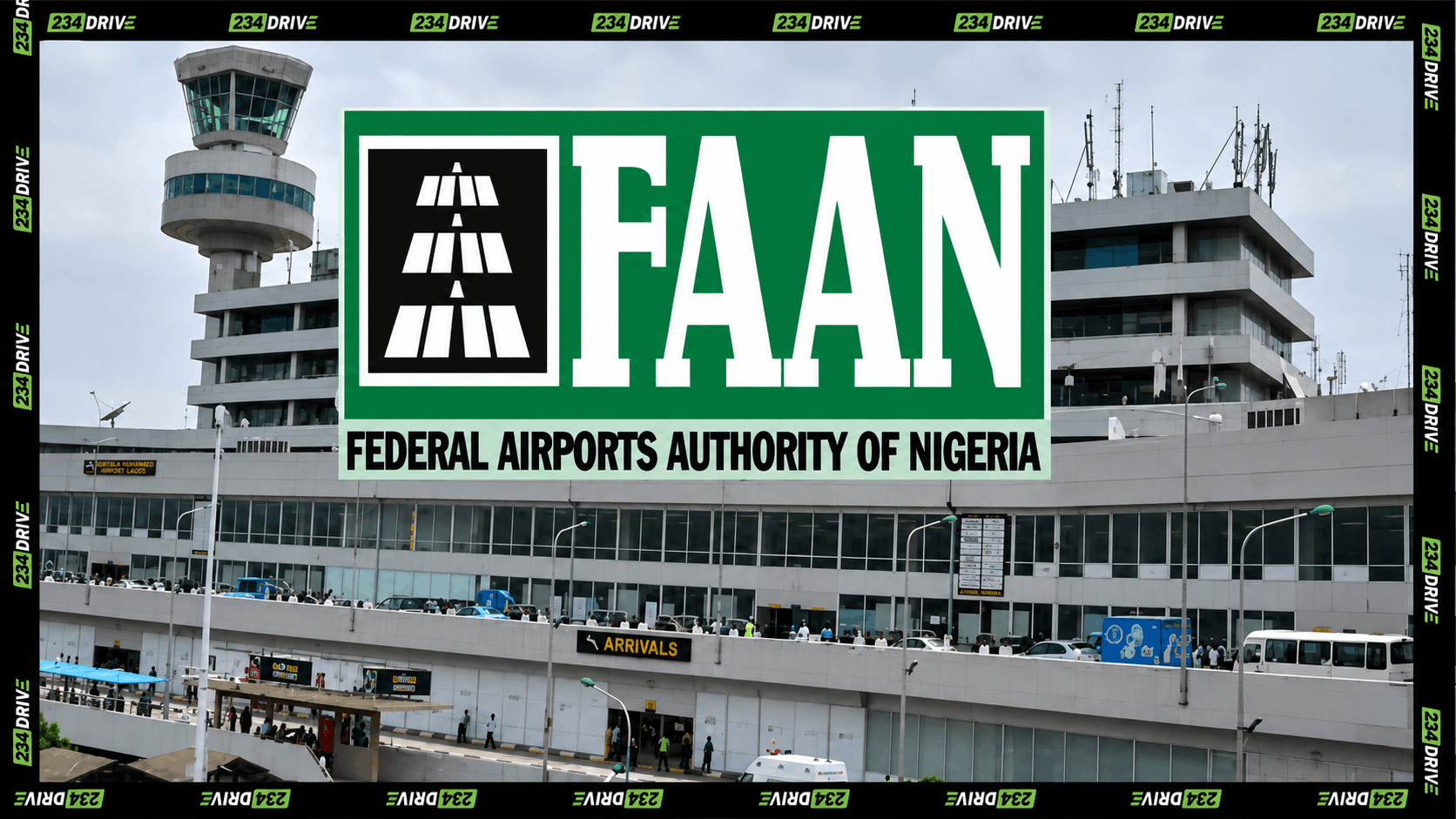
Landing in Lagos or Abuja now costs more for the last part of the trip. Passengers say airport transport fares have gone up by over 50% after the Federal Airports Authority of Nigeria (FAAN) stopped Uber and Bolt from picking up passengers inside FAAN-run airports.
FAAN says the change is meant to better organise airport transport, improve safety, and make sure approved operators are properly managed and pay the right fees. The rule has left fewer ride options, pushed more people to use official airport taxis, and made some e-hailing users meet their drivers outside the airport space.
FAAN Moves Airport Transport to ACHRAMS Registration System
The Airport Car Hire Revenue Management System (ACHRAMS) is FAAN’s new system for bringing airport car-hire operators under one digital platform, with driver registration, identification and revenue collection built into the process. The ACHRAMS began its pilot phase at Murtala Muhammed International Airport on 1 July, before FAAN issued a 30 July directive suspending some e-hailing operations pending the completion of new licensing agreements.
FAAN says the system will register commercial drivers, improve identification and help the authority capture revenue from airport transport services. It has also introduced vehicle-age and registration requirements for airport car-hire operators.
That transition has changed the cost and process of leaving the airport. One Bolt driver in Abuja told Leadership Newspapers that e-hailing fares of about ₦18,000 to ₦20,000 now compete with airport cab fares starting around ₦35,000. He added that drivers risk a ₦40,000 fine for unauthorised airport pick-ups.
A frequent traveller said an airport-operated trip from Abuja airport into the city could cost ₦30,000 or more, compared with roughly ₦20,000, sometimes even less, previously paid through e-hailing services.
In Lagos, the same traveller said a Bolt trip from MMA2 to Festac displayed about ₦13,000 on the app, but the driver requested ₦25,000 after arranging an outside pick-up and factoring in enforcement and parking risks. He revealed that authorised airport cabs could charge ₦35,000 to ₦40,000 for Festac and ₦50,000 or more for Ajah or Lekki.
For now, this is the current reality of last-mile travel at both airports, with limited options and higher fares persisting until an agreement by FAAN and the e-hailing companies is reached.
Better Airport Experiences Could Change How African Passengers Feel About Flying
FAAN says its new transport system should make airport movement safer and more organised, but the passenger experience does not end when travellers leave the terminal.
Airport and terminal quality across Africa has also come under scrutiny, with passengers questioning facilities, boarding gates and overall service standards on international routes.
Beyond this, IATA data shows aircraft serving routes to and within Africa are, on average, about five years older than the global fleet, a gap that continues to shape the travel experience explored in our full story on why some African passengers feel they get a different flying experience.