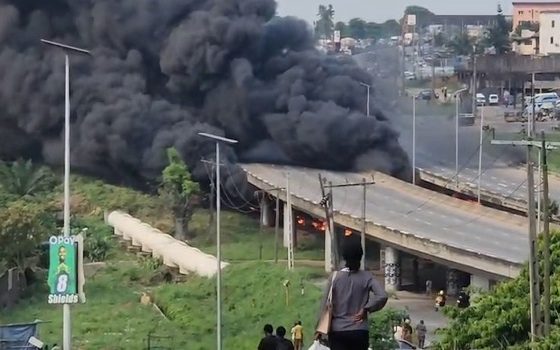

Uber’s exit from Nigeria is no longer just a market story but now also a regulatory one. The Federal Competition and Consumer Protection Commission (FCCPC) has opened an investigation into the manner of Uber’s withdrawal, with FCCPC Chief Executive Officer Tunji Bello confirming the probe in a text message to Bloomberg on Sunday, 6 September, four days after Uber shut down its Nigerian operations without warning.
‘We are looking into the manner of their exit, particularly in respect of unfulfilled services to the customers,’ Bello said.
The Probe Isn’t About the Exit Itself
It is worth being precise about what the FCCPC is and isn’t investigating. The commission isn’t questioning whether Uber had the right to leave Nigeria because companies exit markets all the time, and that decision alone isn’t a regulatory matter. What the FCCPC is examining is what Uber owed the people still inside its system when it pulled the plug: active in-app wallet balances, pre-funded ride credits and trips riders had booked but never completed at the moment the app went dark on 2 September. Enterprise clients under Uber for Business reportedly got no advance notice either.
That distinction, the how, not the why, gives the FCCPC a narrower but sturdier legal footing. Sections 120, 123 and 124 of the Federal Competition and Consumer Protection Act 2018 give the commission authority to penalise unfair commercial conduct, including abrupt service shutdowns that leave consumers without recourse. Winding down a business in Nigeria doesn’t erase the obligations it incurred while it was still operating, and the FCCPC appears to be testing exactly how far that principle extends.
What’s On the Table If Uber Is Found in Breach
The commission hasn’t announced a specific remedy yet, but its options are meaningful. If the FCCPC finds Uber in breach, it can impose administrative fines of up to 10% of the company’s prior-year turnover in Nigeria, alongside directives requiring Uber to resolve outstanding consumer claims, or mandates to maintain support infrastructure in the country until affected accounts are audited and settled.
For riders with unresolved balances, the practical hope is simpler: that the FCCPC’s focus on ‘unfulfilled services’ pushes Uber to properly account for and return whatever was still sitting in the system when it shut down.
The Backdrop: A Shutdown With No Notice
Uber’s exit was unusually abrupt by its own standards. The company announced on 2 September that it would wind down operations in both Nigeria and Uganda, effective the same day. There was no phased transition, no public warning period, and customers and drivers found out through brief in-app notifications and emails on the day service stopped.
The timing wasn’t incidental to Uber’s business either. The Nigeria and Uganda exits landed the same day Uber disclosed a global restructuring that cuts more than 3,000 jobs worldwide as the company reduces management layers and redirects spending, reportedly toward its push into autonomous vehicles, a technology that has no near-term path onto Lagos roads. Uber has said the Nigeria and Uganda decisions are isolated and won’t affect its operations in Egypt, Ghana, Kenya or South Africa, where it says its commitment to the continent remains intact.
It’s also not Uber’s first abrupt African exit. The company left Côte d’Ivoire in 2025, handing Abidjan to Russia’s Yango, and exited Tanzania on 30 January, 2026, following a standoff with regulators there. What sets Nigeria apart, notably, is that this time no regulator forced the decision; Uber just walked away on its own terms, only to find itself under regulatory scrutiny anyway for how it did so.
Drivers Are Getting a ‘Goodwill Gesture’, With Conditions
While the FCCPC examines Uber’s obligations to riders, the company has already started settling with some drivers directly, separate from any regulatory process. Uber has been crediting eligible drivers’ accounts with roughly ₦40,000 each, tagged in the app as ‘Promotion – Goodwill Gesture.’ One driver told Techpoint Africa the payout landed on 4 September for disbursement on 7 September.
The payment isn’t universal. Eligibility requires three to six months of recent activity on the platform, and drivers who owed money on their in-app balance reportedly saw it deducted from the payout before it landed, meaning some received less than the stated amount, and some active drivers received nothing at all. Uber has said the payment sits outside normal earnings, doesn’t affect a driver’s status as an independent contractor, and comes with a confidentiality condition attached.
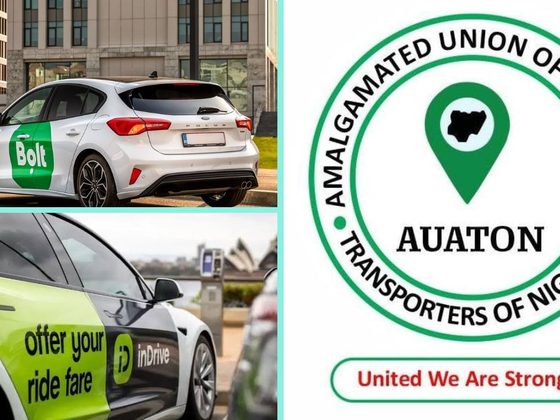
For scale: Nigeria’s displaced Uber driver fleet is estimated at more than 20,000, with Bolt and inDrive absorbing the bulk of them and local platforms like LagRide picking up whatever share remains.
The Longer History Behind the Exit
The FCCPC’s probe is landing on top of a relationship that was already strained. Uber’s Nigerian drivers had staged protests over fares, commission rates, and working conditions multiple times, in 2017, 2023, and again in 2025. Part of the underlying tension was economic: Uber’s global average gross booking value sits at roughly $14.26 per trip, but Nigerian trips have been generating gross driver earnings closer to $5–7 per ride before commissions, which is less than half the global figure, putting sustained pressure on drivers to chase volume just to make the math work.
None of that history factors directly into the FCCPC’s current investigation, which is scoped specifically to the exit itself. But it’s the context in which regulators, drivers and riders are all reading Uber’s final days in Nigeria, not as a clean corporate wind-down, but as the ending of a relationship that had been fraying for years, capped by a shutdown that gave almost no one time to prepare.
Uber’s Help Centre is expected to remain accessible in Nigeria until 23 September, giving affected users a narrowing window to resolve outstanding issues before that support disappears entirely, with or without the FCCPC’s investigation being concluded.