

Lagos State has asked transport workers to help stop residents and traders from dumping refuse on roads, medians, bus stops, garages and lay-bys. The state has set up a special task force that will work with transport unions and waste officials to monitor illegal disposal across the city.
The decision came as support to Dr Muyiwa Gbadegesin, managing director of the Lagos Waste Management Authority, revealing Lagos generates about 13,000 tonnes of waste daily.
Lagos Waste Task Force: How New ‘Waste Police’ Will Track Illegal Refuse Disposal
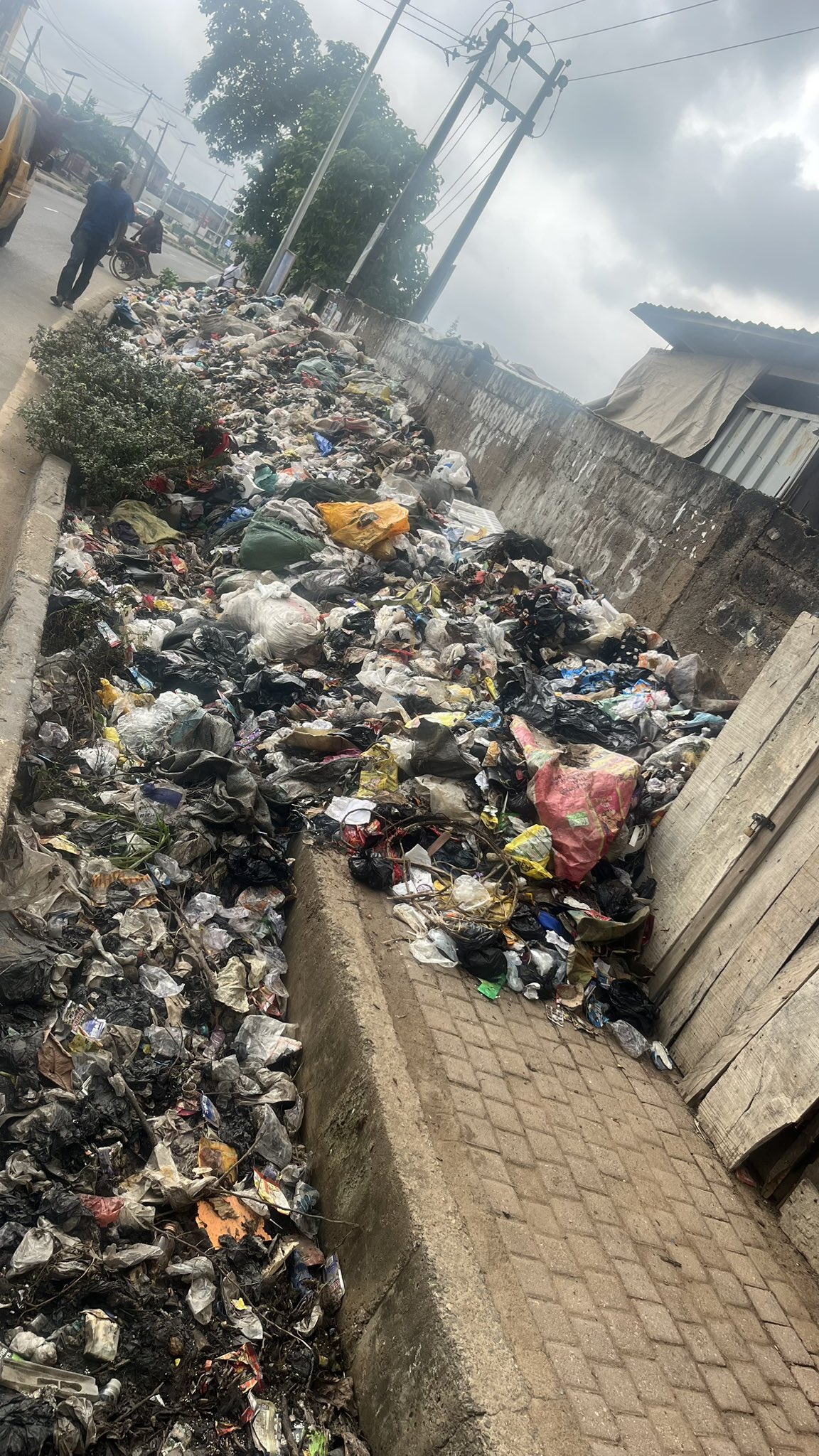
Roadside dumping in Ponle, Lagos state. | Source: Oluwanifise13 via X
Residents, commuters and almost everyone who moves around Lagos can see how unpleasant piles of waste can make roads and public spaces unpleasant to use. Videos of refuse piled by roadsides, social media posts about dirty bus stops and public comments on the state of some major roads have kept the issue in view. The concern is not the amount of waste Lagos produces but that it ends up in the wrong places.
Officials say people now carry refuse from homes, shops and markets to roadsides, bus stops and lay-bys. These areas then become illegal dumping points, especially around busy transport corridors.
At the inauguration meeting of the task force at the state secretariat in Alausa, the commissioner for transportation, Oluwaseun Osiyemi, said the government needs closer support from transport unions because it cannot watch every road all day. He said selected members of the National Union of Road Transport Workers (NURTW) and the Road Transport Employers Association of Nigeria (RTEAN) will work with the Lagos Waste Management Authority (LAWMA) as ‘waste police’.
Their role is to help monitor garages, bus stops and parks, report illegal dumping and discourage people from turning public spaces into waste points. Osiyemi warned that offenders would face consequences, adding that the state wants transport workers to take better control of their own spaces first.
He also told union leaders to stop indiscriminate trading in parks, remove makeshift structures and keep garages clean. According to him, these activities add to waste, disorder and environmental abuse.
The Deputy Chief of Staff to the Governor, Sam Egube, said transport workers also play a role in public order and security because they see much of what happens on the roads, inside vehicles and around parks. He urged them to report suspicious activity and support efforts to keep the city safe.
The issue has also triggered political pushback. Former Lagos gubernatorial aspirant Gbadebo Rhodes-Vivour accused the Commissioner for Environment, Tokunbo Wahab, of failing on plastic, environmental and waste management policies. Wahab rejected the claims and said he would remain focused on the state’s environmental work.
Why Waste Collection Trucks Could Be Lagos’ Refuse Problem’s Pressure Point
Lagos Waste Management Authority Site at Olusosun landfill area. | Source: Punch
The bigger question is what happens after waste leaves the roadside. Tokyo shows that a city can handle heavy waste better when collection, sorting and treatment work as one system. Residents sort their waste into clear categories, trucks pick them up on fixed schedules, and burnable waste goes to incineration plants. Some of that process is also used to generate electricity and heat, while only the leftover residue moves to landfill.
Nevertheless, what might be the current pressure point for Lagos’s waste system is movement. Waste has to be carried from homes, markets, estates, bus stops and roadsides before it can be treated, recycled or dumped properly. That makes trucks a major part of the waste story.
This is where the shortcomings of Private Sector Participation (PSP) systems come in. Their operations depend on diesel, vehicle repairs, spare parts, drivers and loaders. In recent months due to the oil crisis, PMS prices have increased by nearly 50%, while diesel prices have almost doubled, pushing up the cost of running waste collection fleets.
As fuel and maintenance expenses rise, some operators may reduce how often they service certain areas or struggle to keep ageing trucks on the road. Once collection slows, bins fill up and spill over, waste begins to accumulate in public spaces and roadside dumping grows into illegal disposal sites.
The new ‘waste police’ may help reduce roadside dumping. But the bigger issue is whether Lagos can support the waste transport system behind the scenes. Cleaner roads will depend not just on enforcement but also on trucks that work and collection routes that run consistently.