
The landscape of metropolitan mobility in Abuja is undergoing a rapid, structural transition. As the Federal Government drives public-private initiatives to reduce fossil fuel dependence, Nigeria’s administrative capital has emerged as a key testing ground for public electric vehicle (EV) infrastructure. While the city was planned with wide boulevards and modern layout corridors, the electricity grid remains a critical bottleneck. Consequently, the public charging network is developing as a highly concentrated grid, relying heavily on solar-integrated hubs and corporate partnerships to bypass traditional power supply limits. Today, public charging is concentrated in central, high-activity districts, but recent multi-million dollar infrastructure rollouts are laying the groundwork for a broader regional expansion.
This guide provides the definitive mapping of the Abuja EV charging ecosystem, breaks down the technical differences between charging speeds, analyses the operational economics of public versus private power, assesses grid reliability and outlines the strategic plans aimed at closing the city’s significant geographical coverage gaps.
The Public Grid: Current Charging Locations in Abuja
Public and semi-public EV charging in Abuja is highly concentrated within high-income commercial corridors, premium retail spaces and administrative headquarters. The infrastructure is currently dominated by emerging private sector pioneers like Possible Electric Mobility (Possible EVS) and CAAS Charging, alongside institutional pilots and major fuel retail networks. An active directory of stations confirms that public and semi-public EV charging in Abuja is highly concentrated:
| Cluster | Functional Public Station Location |
| Central | Wuse 2 Super-Charging Hub (7 Hombori Street, Adetokunbo Ademola Crescent) |
| Central | Jabi Lake Mall Fast-Charging Hub (Bala Sokoto Way, Jabi) |
| Central | Energy Commission of Nigeria (ECN) Headquarters, Central Business District |
| West | Wuye District Commercial Fleet Hub (CAAS Technology Hub) |
| West | Mbora District solar-powered hub (A.Y.M Shafa Energy Filling Station) |
1. The Possible EVS and CAAS Charging Network
Possible EVS and CAAS Charging operate the most visible public charging footprint in Abuja. Their flagship installation at 7 Hombori Street, Adetokunbo Ademola Crescent (Wuse 2) was launched as the first dedicated public super-charging station in Nigeria. Verified through CAAS digital updates, the Wuse 2 facility features four ultra-fast DC superchargers capable of delivering up to 350kW of power.
Additionally, Possible Electric Mobility has deployed a 1,000-capacity charging hub in Abuja, engineered with the capacity to support massive daily turnover. This facility is designed to support the rapid transition of public commercial fleets, mass transit buses and private electric vehicles, utilising integrated fleet maintenance depots to manage vehicle uptime.
2. The Jemag Energy Footprint
Jemag Energy has focused on destination charging within high-volume retail centres. They pioneered early public charging in Abuja with the installation of a fast-charging station at the Jabi Lake Mall along Bala Sokoto Way. According to the Jemag Energy services technical documentation, the system employs proprietary smart lithium battery packs assembled locally at their mini-factory in Jos to bypass national electricity grid deficits.
3. The NNPC and Shafa Energy Solar Hubs
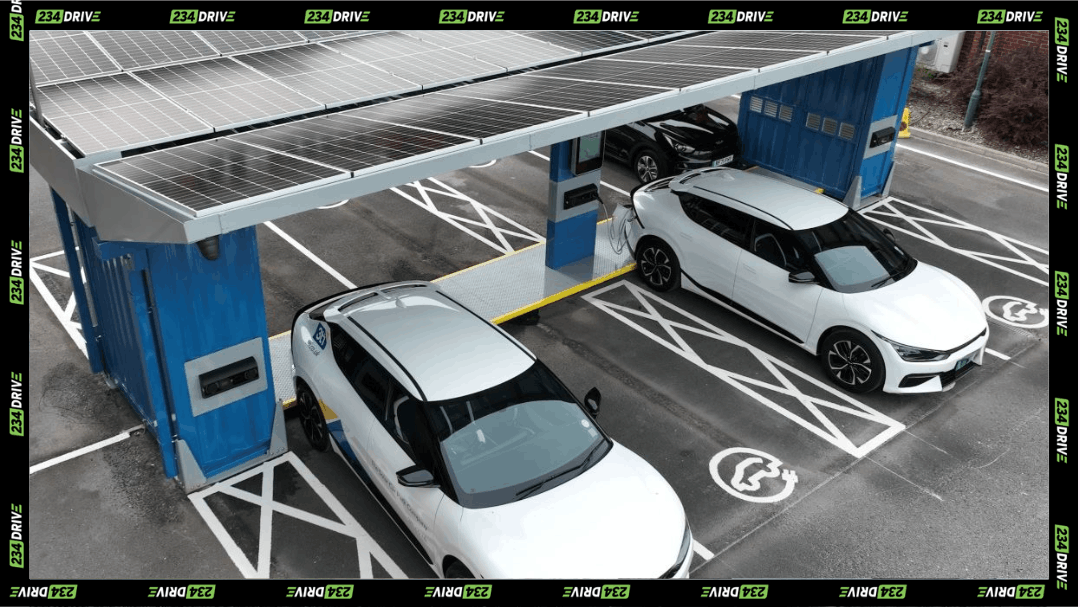
In a major public-private partnership, NNPC New Energies Limited (NNEL), Shafa Energy and Nigus International have launched solar-powered EV charging points integrated directly into traditional retail filling stations. The pilot station is situated at the A.Y.M Shafa Energy Filling Station in the Mbora District. Because these installations use a 75kVA off-grid solar generator, they are completely insulated from grid failures and can simultaneously deliver fast charging to electric passenger vehicles, commercial tricycles and local micro-mobility fleets.
4. Institutional & Public Sector Stations
The Energy Commission of Nigeria (ECN) operates a solar-hybrid fast EV charging station at its national headquarters in the Central Business District. The installation serves as both a public charging point and a research hub for measuring renewable energy integration in municipal transport.
Types of Chargers: Standard AC vs. DC Fast Charging
Operating an electric vehicle in Abuja requires a clear understanding of the technical differences between charging systems, as they directly dictate dwell times and route planning.
| Attribute | AC Standard (Level 2) | DC Fast (Level 3) |
| Power Output | 7kW to 22kW | 50kW to 350kW+ |
| Current Type | Alternating Current (AC) | Direct Current (DC) |
| Conversion | Onboard Vehicle Charger | External Charger Cabinet |
| Dwell Time | 6 to 8 Hours (Full) | 20 to 30 Mins (10-80%) |
| Primary Use | Home, Hotel, Workplace | En Route, Fleet Hubs |
Standard AC Charging (Level 2)
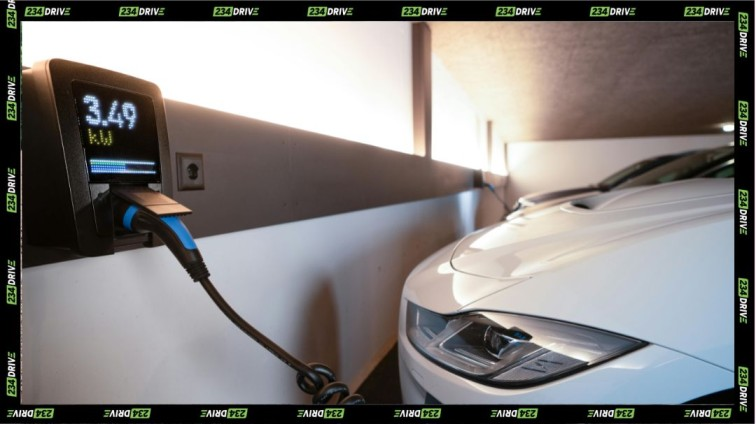
Level 2 AC chargers supply alternating current directly to the vehicle’s onboard charger, which converts it to direct current. Constrained by the limits of the vehicle’s internal converter, charging is slow, requiring six to eight hours to fully replenish a standard 40kWh to 60kWh battery. These are highly efficient for homes, hotels and office parks.
DC Fast Charging (Level 3)
Level 3 DC fast chargers convert utility power inside an external cabinet to supply high-voltage direct current directly to the battery. Bypassing onboard limits allows outputs of 50kW to 350kW+, replenishing a depleted battery from 10% to 80% in 20 to 30 minutes. This makes them vital for fleets and emergency en-route top-ups.
Costs to Charge: Public vs. Private Economics
The financial case for transitioning to electric mobility remains compelling despite the volatile state of electricity tariffs in Nigeria. The operational cost per kilometre for an electric vehicle is significantly lower than that of a comparable petrol-powered vehicle.
| Energy Source / Charging Type | Cost Basis / Consumption | Cost per 100km |
| ICE (Petrol) | ₦1,000/L @ 10L/100km | ₦10,000 |
| Public DC Fast Charging | ₦500/kWh @ 18kWh/100km | ₦9,000 |
| Public AC Charging | ₦300/kWh @ 18kWh/100km | ₦5,400 |
| Home Charging (Band A Grid) | ₦210/kWh @ 18kWh/100km | ₦3,780 |
Public Commercial Tariffs
Public commercial operators employ tiered pricing structures. AC public charging averages ₦300 per kWh, costing roughly ₦12,000 to fully replenish a 40kWh battery. High-speed DC fast charging averages ₦500 per kWh, raising a full charge to ₦20,000. Public transactions are self-service; commuters scan an on-charger QR code to pay via bank transfer, debit card or mobile operator wallets.
Private Residential Tariffs
Home charging on Band A grid tariffs offers the highest economic yield. Under current Multi-Year Tariff Order updates, Band A rates range between ₦150 and ₦230 per kWh. A 40kWh home charge on a ₦210/kWh rate costs ₦8,400 for a 220-kilometre range. An equivalent petrol vehicle travelling the same distance requires 22 litres, costing ₦22,000—representing over 60% savings.
Reliability: Operational Realities and Grid Integration
The operational viability of a public EV charging network in Abuja is tied directly to the reliability of the local energy grid. Because of frequent grid collapses and localised distribution faults, charging stations cannot rely solely on standard utility power.
Power Backups and Decentralised Generation
To guarantee consistent uptime, commercial operators must integrate secondary energy sources. Stations located within premium corporate parks and shopping centres leverage the host institutions’ robust industrial generators and automated transfer switches. Independent stations, such as the Possible EVS hub, increasingly utilise localised hybrid systems combining rooftop solar photovoltaic (PV) arrays, high-capacity hybrid inverters and stationary lithium-ion battery energy storage systems (BESS).
Physical Constraints and “ICE-ing”
Beyond electrical reliability, physical management of charging bays is a persistent operational challenge. A frequent issue is ‘ICE-ing’—the parking of internal combustion engine vehicles in dedicated charging slots. Because premium parking bays are highly sought after, traditional drivers often ignore EV signage. Operators have worked with host facility security to enforce strict spatial rules, utilising physical bollards and painted bays to keep slots clear.
Additionally, metropolitan planning factors, such as high peak afternoon temperatures in Abuja, pose significant risks to high-voltage, ground-mounted electrical infrastructure. Consequently, modern charging pads are shaded, elevated on reinforced concrete plinths and equipped with heavy moisture-sealed insulation compliant with international ingress protection standards.
Coverage Gaps: The Suburban-Central Disparity
The geographic distribution of charging infrastructure reveals a highly polarised ecosystem. A significant majority of functional public chargers are clustered in the central business districts, leaving major metropolitan residential and suburban mainland districts drastically underserved.
| Region / Cluster | Major Areas | Share (%) |
| Central Cluster | Wuse 2, Jabi and Central Business District | 60% |
| North-West Corridor | Gwarinpa, Kubwa and Dutse | 20% |
| South-West Corridor | Wuye, Lugbe and Airport Road | 15% |
| Outer Satellite Suburbs | Gwagwalada, Kuje and Karu | 5% |
Geographical Deserts
- The Outer Suburbs: High-density residential satellite towns like Kubwa, Lugbe, Gwagwalada, Kuje and Karu possess very few public fast chargers. Residents in these districts who transition to EVs must depend entirely on private home installations.
- Interstate Corridors: Furthermore, there is a critical absence of high-speed charging infrastructure along the primary regional transit arteries, specifically the Abuja-Keffi Road and the Abuja-Kaduna Highway. This technical deficit prevents EV owners from undertaking long-distance travel, effectively confining electric vehicles to metropolitan commuting boundaries.
Future Infrastructure Plans: Scaling the Network
To unlock mass market adoption, the public charging network must transition from isolated commercial hubs to a continuous, interconnected regional grid. Several private sector and state-backed projects are underway to achieve this scale.
Private Sector Scaling
Industrial scaling is accelerating local assembly and infrastructure deployment. Hybrid Motors has committed 95 million dollars to establish local electric vehicle manufacturing hubs coupled with 110 fast-charging stations across Lagos and Abuja. Concurrently, as detailed during the launch of the largest EV hub, CAAS Charging and Possible EVS are executing a rapid deployment programme to roll out 120 ultra-fast DC charging stations across major metropolitan areas to address gaps in outer residential suburbs.
Legislative and Policy Support
Policy support has strengthened with the progression of the National Electric Vehicle Development Plan. The proposed legislation introduces zero-percent import duties on electric vehicles and mass transit buses, while outlining tax incentives for corporate entities that invest in public charging infrastructure. The long-term policy objective, driven by initiatives like the Abuja Compact on Electric Mobility, aims to encourage the systematic integration of solar-powered EV charging docks into existing retail fuel stations nationwide, paving the way for traditional petrol stations to transition into comprehensive, dual-use energy hubs.