
The landscape of metropolitan mobility in Lagos is undergoing a quiet, structural transition. As global fuel and energy prices pressure traditional logistics pipelines, the economics of public transport are beginning to pivot towards electrification. While there are thousands of retail petrol stations operating across the metropolitan area, the infrastructure supporting electric vehicles (EVs) is still in a nascent, concentrated development phase. Today, public EV chargers are measured in dozens rather than thousands. However, as battery capacities scale and commercial fleet operators accelerate adoption, a coordinated public charging grid is emerging across the city’s key commercial and residential nodes.
This guide provides the definitive mapping of the Lagos EV charging ecosystem, breaks down the technical definitions of available charging speeds, analyses the operational economics of public versus private power, assesses grid reliability and outlines the strategic plans aimed at closing the city’s significant geographical coverage gaps.
The Public Grid: Current Charging Locations in Lagos
Public and semi-public EV charging in Lagos is highly concentrated within high-income commercial corridors and major lifestyle hubs. The infrastructure is currently dominated by three key commercial operators—Qoray Mobility, SAGLEV and Siltech—alongside emerging fleet operators like MAX and regional research pilots. A comprehensive directory of active hubs shows that public and semi-public EV charging in Lagos is highly concentrated:
| Cluster | Functional Public Station Location |
| Mainland | Sheraton Hotel, Ikeja (30 Mobolaji Bank Anthony Way) |
| Mainland | Lagos Marriott Hotel, Ikeja GRA (22 Joel Ogunnaike Street) |
| Mainland | Herbert Macaulay Way, Yaba (Tech Hub Corridor) |
| Mainland | Awolowo Way Arterial, Ikeja (78 Obafemi Awolowo Way) |
| Mainland | UNILAG Pilot Station, Yaba (Julius Berger Hall) |
| Island | Mega Plaza Shopping Mall, Victoria Island (Rooftop Parking) |
| Island | Adeola Odeku Commercial Hub, Victoria Island (300 Adeola Odeku) |
| Island | Bourdillon Road Station, Ikoyi (12 Bourdillon Road) |
| Island | Marina Road Station, Lagos Island (20 Marina Road) |
| Island | Hakeem Dickson Hub, Lekki Phase 1 (No. 1 Hakeem Dickson Street) |
1. The Qoray Mobility Network
Qoray Mobility operates the most extensive multi-connector network in the city, supporting Type 2 (AC) and CCS2 (DC) standards. Verified details on Qoray station locations include core terminals situated at Sheraton Lagos Hotel (Ikeja), Lagos Marriott Hotel (GRA Ikeja), Adeola Odeku Street (Victoria Island), Bourdillon Road (Ikoyi), Marina Road (Lagos Island), Herbert Macaulay Way (Yaba) and Ilupeju (Plus Code H948+6HF), alongside dedicated Mainland arterial fast-chargers at Opebi Road and Awolowo Way.
2. The SAGLEV Footprint
SAGLEV focuses on lifestyle centres to utilise passive dwell time. Key active terminals include the Mega Plaza car park in Victoria Island—engineered to scale up to 50 active points—and destination charging bays at The Palms Shopping Mall in Lekki.
3. The Siltech and MAX Networks (Charging & Battery Swapping)
Siltech and MAX combine traditional plug-in docks with rapid battery-swapping stations for commercial two-wheelers, three-wheelers and dispatch fleets. Active hubs operate at Akin Olugbade Street (Victoria Island), Hakeem Dickson Street (Lekki Phase 1) and Alfred Rewane Road (Ikoyi). Mainland fleet hubs operate in Yaba, Egbeda and Surulere.
4. Institutional & Public Sector Stations
The National Automotive Design and Development Council (NADDC) operates a solar-powered pilot charging installation at the University of Lagos (UNILAG) campus in Yaba.
Types of Chargers: Standard AC vs. DC Fast Charging
Operating an electric vehicle in Lagos requires a clear understanding of the technical differences between charging systems, as they directly dictate dwell times and route planning.
| Attribute | AC Standard (Level 2) | DC Fast (Level 3) |
| Power Output | 7kW to 22kW | 50kW to 150kW+ |
| Current Type | Alternating Current (AC) | Direct Current (DC) |
| Conversion | Onboard Vehicle Charger | External Charger Cabinet |
| Dwell Time | 6 to 8 Hours (Full) | 30 to 45 Mins (10-80%) |
| Primary Use | Home, Hotel, Workplace | En Route, Fleet Hubs |
Standard AC Charging (Level 2)
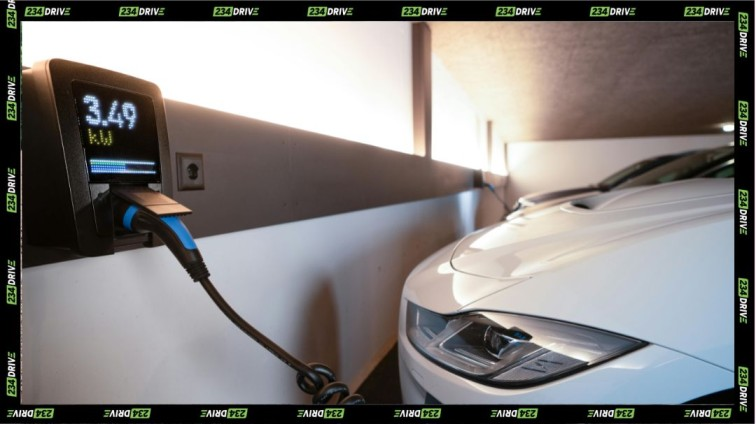
Level 2 AC chargers supply alternating current directly to the vehicle’s onboard charger, which converts it to direct current. Constrained by the limits of the vehicle’s internal converter, charging is slow, requiring six to eight hours to fully replenish a standard 40kWh to 60kWh battery. These are highly efficient for homes, hotels and office parks.
DC Fast Charging (Level 3)
Level 3 DC fast chargers convert utility power inside an external cabinet to supply high-voltage direct current directly to the battery. Bypassing onboard limits allows outputs of 50kW to 150kW+, replenishing a depleted battery from 10% to 80% in 35 to 45 minutes. This makes them vital for fleets and emergency en-route top-ups.
Costs to Charge: Public vs. Private Economics
The financial case for transitioning to electric mobility remains compelling despite the volatile state of electricity tariffs in Nigeria. The operational cost per kilometre for an electric vehicle is significantly lower than that of a comparable petrol-powered vehicle.
| Energy Source / Charging Type | Cost Basis / Consumption | Cost per 100km |
| ICE (Petrol) | ₦1,000/L @ 10L/100km | ₦10,000 |
| Public DC Fast Charging | ₦500/kWh @ 18kWh/100km | ₦9,000 |
| Public AC Charging | ₦300/kWh @ 18kWh/100km | ₦5,400 |
| Home Charging (Band A Grid) | ₦210/kWh @ 18kWh/100km | ₦3,780 |
Public Commercial Tariffs
Public commercial operators employ tiered pricing structures. AC public charging averages ₦300 per kWh, costing roughly ₦12,000 to fully replenish a 40kWh battery. High-speed DC fast charging averages ₦500 per kWh, raising a full charge to ₦20,000. Public transactions are self-service; commuters scan an on-charger QR code to pay via bank transfer, debit card or mobile operator wallets.
Private Residential Tariffs
Home charging on Band A grid tariffs offers the highest economic yield. Detailed breakdowns of how owners charge show that under current Multi-Year Tariff Order updates, Band A rates range between ₦150 and ₦230 per kWh. A 40kWh home charge on a ₦210/kWh rate costs ₦8,400 for a 220-kilometre range. An equivalent petrol vehicle travelling the same distance requires 22 litres, costing ₦22,000—representing over 60% savings.
Reliability: Operational Realities and Grid Integration
The operational viability of public charging is tied directly to grid stability. Frequent outages and localised distribution faults mean stations cannot depend solely on grid power. Stations in premium corporate parks leverage robust host generators and automatic transfer switches. Standalone stations, such as SAGLEV’s Mega Plaza hub, employ localised hybrid solar setups, combining rooftop solar photovoltaic (PV) arrays and stationary battery energy storage systems (BESS).
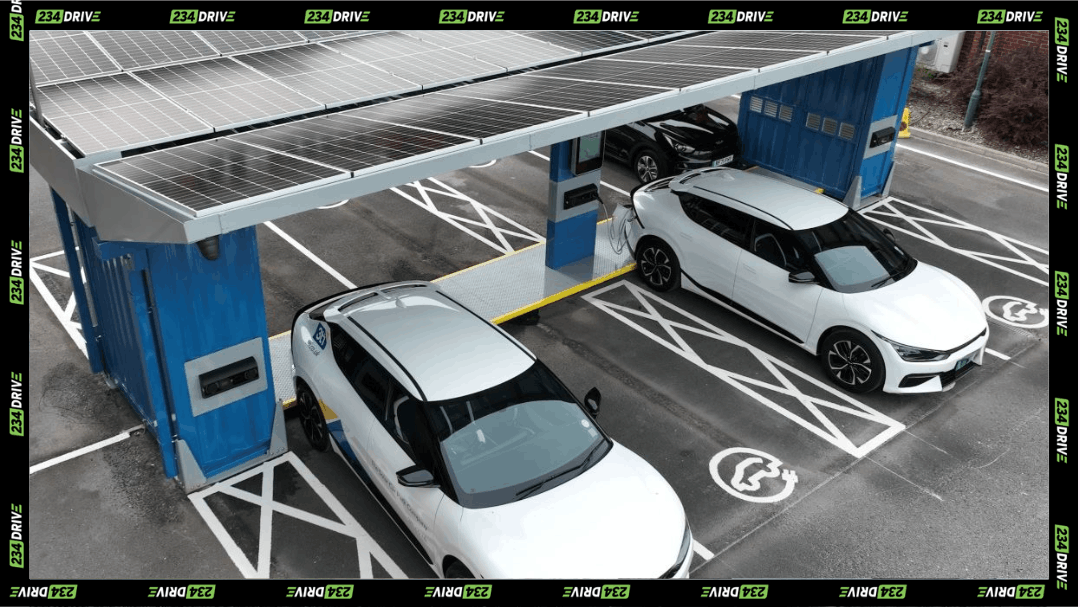
Physical space management presents another challenge. A frequent issue is ‘ICE-ing’—the unauthorised parking of petrol vehicles in dedicated charging slots. Operators enforce compliance using painted bays and physical bollards. Additionally, Lagos’s heavy seasonal rainfall requires that electrical charging pads be raised on elevated concrete plinths and engineered with moisture-sealed insulation compliant with international ingress protection (IP66) standards.
Coverage Gaps: The Mainland-Island Disparity
The geographic distribution of charging infrastructure reveals a highly polarised ecosystem. A significant majority of functional public chargers are clustered on the Island, leaving major metropolitan residential and commercial mainland districts drastically underserved.
| Region / Cluster | Major Areas | Share (%) |
| Island Cluster | Victoria Island, Lekki, Ikoyi | 65% |
| North Mainland | Ikeja, GRA, Opebi, Oregun | 20% |
| West/South Mainland | Alimosho, Egbeda, Festac, Surulere | 10% |
| Central Mainland | Yaba, Ebute Metta, Ilupeju | 5% |
Geographical Deserts
- The Mainland West and South: The Mainland West and South contain vast high-density residential zones almost entirely devoid of public charging docks, forcing residents to rely strictly on private overnight charging.
- Interstate Corridors: Furthermore, there is a critical absence of high-speed chargers along the primary regional highways, such as the Lagos-Ibadan and Lekki-Epe Expressways. This infrastructure deficit prevents EV owners from taking intercity journeys, restricting electric mobility to city bounds.
Future Infrastructure Plans: Scaling the Network
Unlocking mass adoption requires scaling isolated nodes into a seamless regional network. Industrial scaling is underway, supported by a bilateral memorandum of understanding (MoU) between the Federal Government and South Korea’s Asia Economic Development Committee (AEDC) to establish local EV assembly and charging hubs. Additionally, CFAO Mobility’s LOXEA division is coupling BYD vehicle distributions with corporate maintenance bays, while SAGLEV’s Ikorodu plant expands local electric bus assembly.
To completely bypass grid limitations, off-grid solutions are emerging. This is accompanied by commercial partnerships, such as a high-profile charging network expansion at the Federal Palace Hotel, which aims to integrate more high-capacity stations in strategic commercial centres. Innovators like LUG West Africa are deploying plans for 250 off-grid, solar-integrated roadside smart stations that combine municipal solar street lighting with direct vehicle charging.
Policy integration has advanced with the progression of the Electric Vehicle Transition and Green Mobility Bill. The legislation targets zero-percent import duties on electric vehicles and offers tax offsets to corporations deploying charging networks. The ultimate policy goal is the systematic integration of EV chargers into traditional retail fuel stations, converting petrol outlets into dual-use municipal energy stations.