
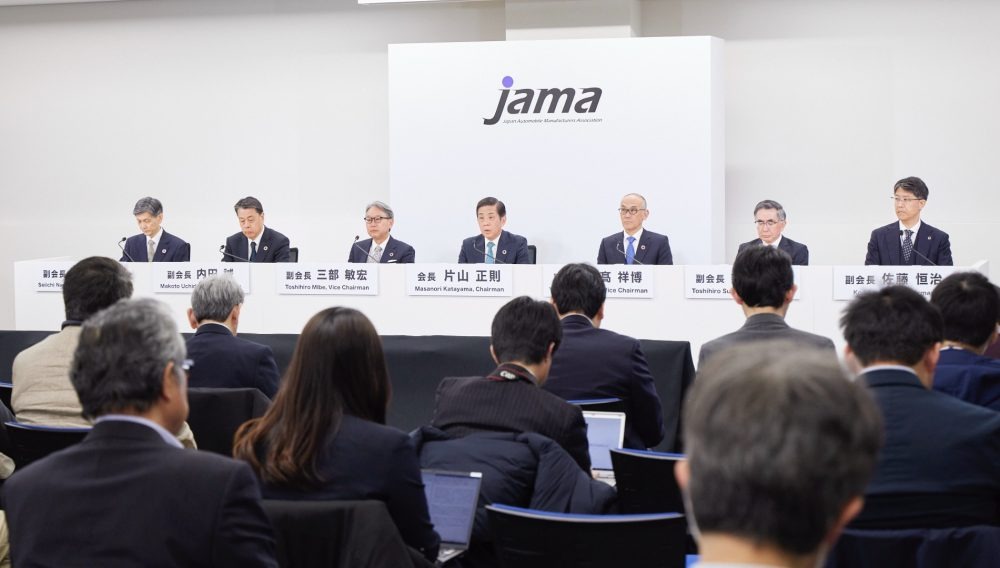
Japan’s car industry has agreed to begin using common specifications for some of the materials and parts that go into its vehicles, which is the clearest response so far to the pressure Chinese manufacturers are putting on Japanese brands. The Japan Automobile Manufacturers Association (JAMA) announced the plan at a press conference in Tokyo on 19 November, and it will start with steel, resins and wire harnesses.
Some headlines have described the move as Japanese carmakers joining forces, and it is easy to read that as a merger. A closer description is a shared rulebook. Toyota, Honda and Nissan are among the companies backing the plan, each of them remains an independent business, and the agreement covers materials that buyers never see instead of the cars they choose in a showroom.
For Nigerians, the story matters for two reasons. Japanese brands, Toyota above all, remain the backbone of the country’s roads and its spare parts market, and Chinese brands are now competing for the same buyers. Whatever happens to the cost and complexity of building a Japanese car will eventually reach showrooms and repair shops here, even if the effect takes years to appear.
What JAMA Announced
JAMA’s chairman, Koji Sato, who is also Toyota’s vice chairman, presented the plan and said the association will work with the Japan Auto Parts Industries Association (JAPIA). For steel, the carmakers will standardise the types of sheet steel they use. Resins, they will align the recycling-related evaluation criteria that currently differ from one company to the next. While for wire harnesses, the bundled cabling that carries power and signals around a vehicle, the industry will address a situation in which there are around 70,000 different types. Sato said the starting points reflect concerns raised by people working on the ground, and that the aim is to let carmakers put more management resources into the areas where they can build a real advantage over rivals.
The working group includes all 14 JAMA member companies, but taking part in the discussions does not oblige anyone to use the result. According to The Auto Wire’s report on the announcement, Japanese competition guidance treats a trade association’s standards as voluntary, so each company will decide for itself whether to adopt them.
Specifics are still thin. At the time of that report, the exact steel grades and resins involved, and a date for the first common specification, had not appeared in any JAMA document that the publication could find, so the detail of what will change is still to come.
Why Steel, Resin and Wire Harnesses
All three items are invisible to the buyer and expensive for the industry to produce in many versions. Each automaker adds its own test procedures and acceptance criteria on top of the national standards that already exist, which means a supplier that makes the same connector or plastic part for several customers has to prove it in several different ways. At a July briefing, JAMA and JAPIA gave an example involving the appearance of wire-harness connectors. The rule was vague enough that workers could toss out a connector with a tiny black speck even though it worked normally, and clarifying the rule reduced both scrap and inspection time, according to The Auto Wire’s reading of the slides.
Wire harnesses are the item Sato has spoken about most. In an interview with Automotive News in July, reported by GoAuto, he said that suppliers currently make about 70,000 harness variants, which makes large-scale automation difficult, and that standardising the basic architectures would let them automate assembly work that workers now do largely by hand. He put the possible productivity gain at more than tenfold, which is his estimate and has not been independently tested.
Resin has a regulatory deadline attached to it. Japan’s revised resource-use law took effect on 1 April 2026 and requires carmakers selling more than 10,000 vehicles to plan and report their use of recycled plastic. In Europe, the end-of-life vehicles regulation that Parliament adopted in June requires new vehicle types to contain at least 15% recycled plastic within six years and 25% within ten. JAMA has already published targets for recycled polypropylene, the most common plastic in cars, with at least 25% post-consumer content. The supply of recycled material is limited, at roughly 21,000 tonnes a year recovered from scrapped vehicles according to JAMA’s own figures as reported by The Auto Wire, so a common grade would let one qualified batch go to any member instead of being tested separately for each customer.
The Groundwork Behind the Announcement
The 19 November announcement follows months of preparation. JAMA set out its ‘New Seven Priority Challenges’ at a press conference in March, where Honda’s Toshihiro Mibe, a JAMA vice chairman, said the industry cannot stay competitive without speed and that the relationship between carmakers and their suppliers has to change. Toyota had run its own programme to trim unnecessary quality criteria since the end of 2017, handling about 7,500 cases between 2018 and 2025 and adopting roughly two-thirds of them. Suppliers told Toyota that the benefit of one company acting alone was small, because they still had to meet the stricter specifications of other customers on the same production line, and that complaint is the business case for an industry-wide standard.
Automakers and suppliers have built the machinery for doing this at scale over the past year. A session at Mazda’s headquarters on 2 July drew 48 companies, made up of 12 carmakers and 36 suppliers, and 222 people who examined physical parts and ruled on supplier proposals in the room. An April guideline sorted vehicle surfaces into zones from S, which is very noticeable, to D, which is not visible in normal use, so that carmakers can agree on how strict an appearance standard needs to be. JAMA says it keeps the discussions to non-competitive areas and does not discuss purchase prices, procurement strategy, contract terms or production volumes.
The Pressure Behind It
The commercial pressure is not hidden. Chinese brands outsold Japanese brands in Europe for the first time in May, and they are taking market share from Japan in South-east Asia and Australia, according to Autofile. ThisDay, citing the International Energy Agency, reports that Chinese car exports rose 65% year on year in the first half of 2026, as China pushes more petrol and diesel vehicles into African markets.
Sato has described the situation as a ‘once-in-a-century’ storm for Japan’s carmakers. He rejected the suggestion that China’s rise prompted JAMA’s change of direction, while saying Japanese manufacturers must learn from the speed of Chinese engineering.
Two other stories are easy to confuse with this one. Toyota’s restructuring in China is separate: on 9 October, it signed a three-way alliance with China FAW and Guangzhou Automobile Group (GAC), under which GAC will buy FAW’s 50% stake in FAW Toyota. Honda and Nissan called off merger talks in early 2025, and no new tie-up between major Japanese carmakers has been announced at the time of writing.
What it Could Mean in Nigeria
Drivers, dealers, car enthusiast and analysts widely treat Toyota as the market leader in Nigeria, pointing to durability, fuel efficiency, affordable spare parts and resale value as the reasons. Parts availability is a large part of why Japanese cars dominate the roads here, so any change to how those parts are specified deserves attention from Nigerian owners and mechanics.
The possible benefit is on the repair side. The Auto Wire notes that Kyodo’s report names the wire harness as a target without saying which pieces of it are covered, and that if connectors and terminals are included, a repair shop could eventually stock one replacement that fits more than one brand. That would be a gain for mechanics and parts traders, but it is a possibility and not a commitment. Because the standards apply to how parts are designed and tested, the first effects are more likely to appear in new vehicles that factories build after members adopt the specifications than in the used cars arriving at Lagos ports today.
Price is a separate question. Kyodo’s account, as relayed by The Auto Wire, describes the savings as money freed for developing next-generation vehicles and does not describe them as a reduction in sticker prices, so buyers should not expect a cheaper Corolla or Civic because two companies now share a steel specification.
The competitive background is why the cost savings matter. BusinessDay reported in September 2025 that Chinese brands such as GAC, Geely, Changan, Chery and Jetour were gaining ground in Nigeria’s new-car market, particularly with companies buying for official use. At that time, a new Toyota Camry cost ₦48 million for the 2.5-litre and ₦53 million for the V6, while Chery’s Tiggo compact SUVs ranged from ₦15.4 million to ₦29.4 million. Those are last year’s prices and the naira has moved since, so they illustrate the gap and should not be read as current. The same report said that used-car prices had risen by around 30% since 2022 because of import duties and foreign exchange shortages, and it quoted the chief executive of one Chinese-backed distributor, TIM Motors, who said he wanted to replace 10% to 20% of used cars bought in Nigeria with new Chinese vehicles. The wider shift of Chinese manufacturers into African markets is something 234Drive has covered in more detail, and the question of whether cars can be built or assembled closer to buyers is part of the debate around Peugeot and Dangote’s industrial plans.
Shared components also concentrate risk. The Takata airbag recalls, which the US safety regulator NHTSA said in 2017 involved 19 vehicle manufacturers, show how a defect in a widely used part can spread across brands. A common harness connector would carry the same exposure, although it would also mean that one fix and one supply of replacement parts could serve every affected brand.
What Is Still Unknown
Several basic questions remain open. JAMA has not said which harness components will be covered, which steel grades and resins will be chosen, or when the first common specification will be ready. Sato told Automotive News that the association aimed to make progress on an initial batch within one to two years, and that a list of Japan standard parts could eventually extend to components made by suppliers overseas for Japanese carmakers worldwide. A separate JAMA effort to standardise how finished vehicles are secured on car-hauling trailers has a target date of the end of 2028, according to Mibe.
For Nigerian drivers, the practical test will be whether any of this reaches the parts counters at places like Ladipo in Lagos, and whether it does so in a way that lowers repair costs or widens the choice of replacement parts. Until Japanese carmakers say which components are involved and which companies will adopt the common specifications, readers should treat the announcement as a statement of intent from an industry that has decided its old habit of writing separate specifications for every customer no longer matches the speed of its competitors.