
Volkswagen has confirmed it will end production of the ID.4 electric crossover at its Chattanooga assembly plant by mid-April 2026. In a move that underscores the growing friction between corporate electrification targets and consumer reality, the facility will be retooled to increase output of the gasoline-powered Atlas and Atlas Cross Sport SUVs.
While VW maintains that the ID.4 remains a global success—with nearly 1 million units sold across Europe and China—the decision to stop making its top electric vehicle in the U.S. signals a strategic retreat in a market where “EV fatigue” has moved from a talking point to a line-item reality.
The Math of Displacement
The shift is a cold, data-driven calculation. Despite being the face of VW’s post-Dieselgate redemption, the ID.4 has consistently struggled to find its rhythm in the American heartland.
In 2025, VW moved 22,373 ID.4 units—a 31% increase year-over-year, but still a fraction of the volume generated by its internal combustion engine (ICE) siblings. The Atlas family, by comparison, regularly exceeds 100,000 annual sales. When the federal $7,500 EV tax credit expired on September 30, 2025, the ID.4’s momentum hit a wall; Q4 sales cratered by over 60%.
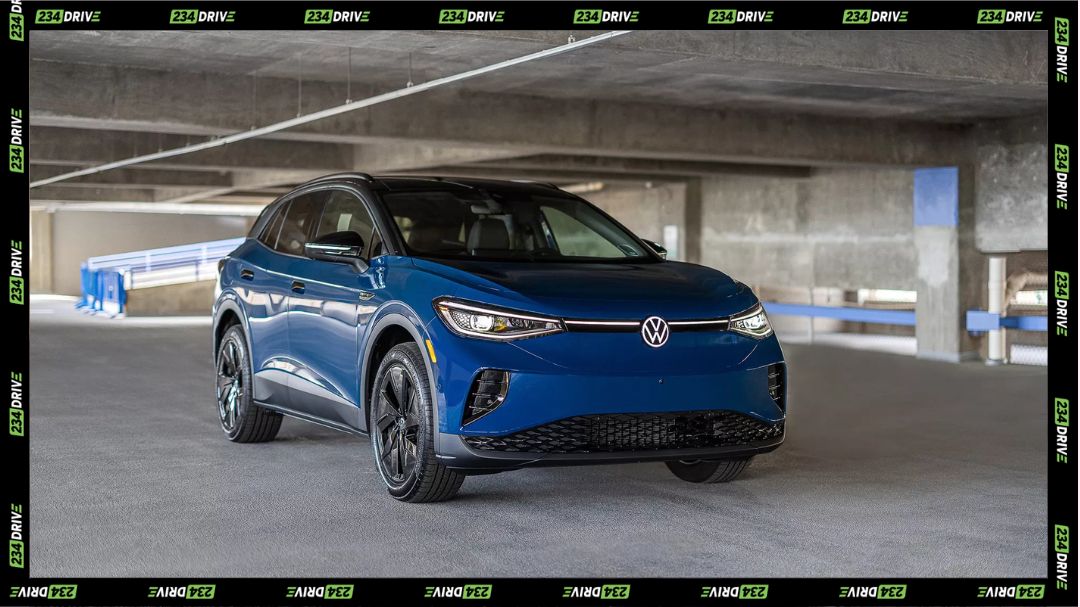
ID.4. Source: VW
“The EV market continues to challenge the industry, requiring measured decisions to navigate this unpredictability,” the company stated. For Chattanooga, “measured” means shifting capacity to the upcoming 2027 Atlas refresh—a vehicle that matches the American preference for size and range without the “premium” price tag of electrification.
The “EV Winter” and Policy Shocks
VW’s exit from domestic ID.4 production is a symptom of a broader structural shift in the U.S. market. Average EV transaction prices in early 2026 hovered near $52,000, roughly $6,500 higher than the average gas-powered vehicle. With high interest rates pushing monthly payments to $760 for many EV buyers, the financial logic for the middle-class consumer has evaporated alongside government subsidies.
This “EV Winter” is defined by a paradox: technology is improving and battery costs are falling, yet the pivot back to gas-powered SUVs reveals an underlying fragility in demand.
What This Means for Global Mobility
For the 234Drive reader, this move provides a critical lesson in the “un-evenness” of the energy transition. While Europe and China continue to scale, the U.S. is entering a phase of pragmatic recalibration. Hybrids are increasingly being viewed not as a compromise, but as the necessary “bridge” for a continent where infrastructure and affordability remain the primary hurdles.
VW is not abandoning EVs entirely. The company has confirmed it is developing a future North American version of the ID.4, potentially incorporating software and hardware architecture from its $5.8 billion partnership with Rivian. However, that future is likely years away, and production may not return to Tennessee anytime soon.
The Bottom Line
Volkswagen’s decision preserves jobs in Chattanooga and boosts near-term profits by leaning into what Americans actually want to buy: large, reliable, gas-powered SUVs. For the global automotive industry, it is a reminder that while the future might be electric, the present still runs on gas.
The ID.4’s exit from Tennessee is a cautionary tale for emerging markets. It proves that even the most aggressive electrification mandates can be undone by a lack of infrastructure and the sudden removal of subsidies. As African nations look toward their own mobility transitions, the “Atlas Pivot” suggests that flexibility—rather than rigid adherence to a single fuel source—will be the hallmark of successful manufacturers in the late 2020s.