
The Toyota Raize represents a fascinating anomaly in the South African automotive landscape. While it has become a dominant force in urban mobility across Asia and the Middle East, this subcompact crossover remains an “unofficial” contender in Mzansi, available exclusively through grey-market parallel imports. Built on the Daihatsu New Global Architecture (DNGA) platform, the Raize is the spiritual successor to the compact, rugged Toyotas of old, offering a high-riding SUV aesthetic within a footprint that is smaller than the locally available Corolla Cross or the now-discontinued Urban Cruiser.
Despite its lack of official presence in local showrooms, the Raize has garnered a significant following among young South African professionals and city commuters who prioritise fuel efficiency and modern tech over traditional warranty structures. It fills a crucial gap for buyers who find the Starlet too low and the RAV4 too cumbersome or expensive for daily urban navigation. As the market shifts toward smaller, more efficient powertrains, the Raize’s reputation as a peppy, tech-forward urban crawler has made it a frequent sight in major metropolitan hubs like Johannesburg and Cape Town, where its agility and frugal nature are most appreciated.
Design and Visual Presence
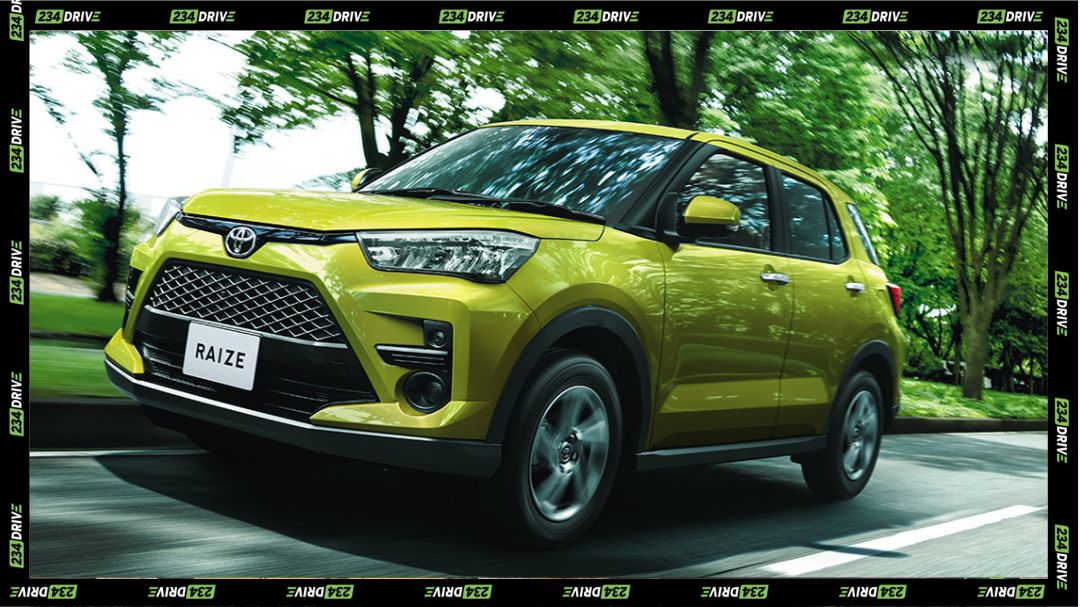
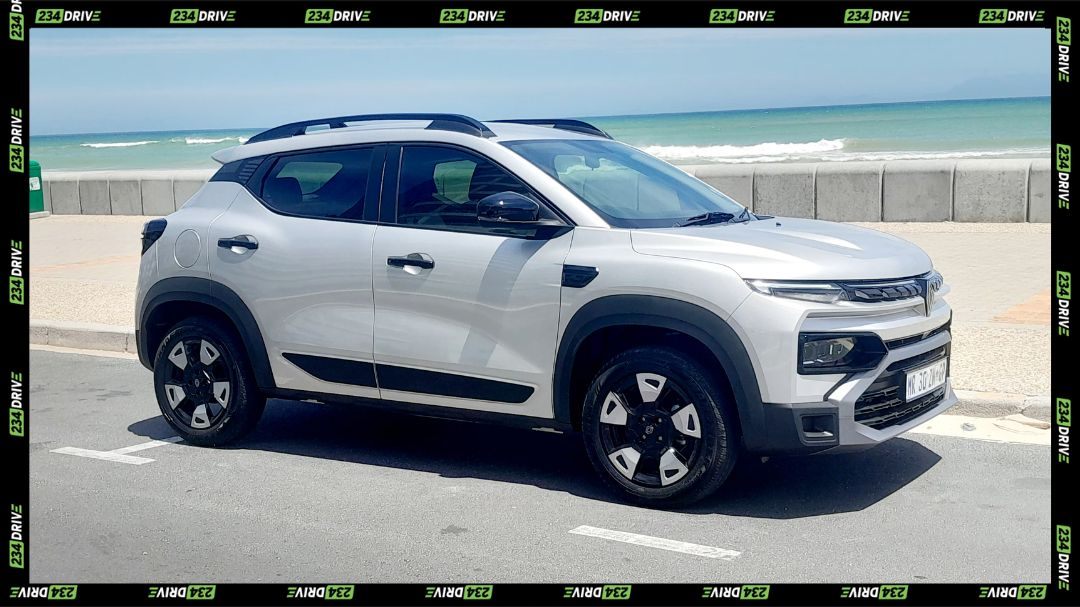
The Toyota Raize commands a surprising amount of road presence for a vehicle measuring just under four metres in length. Its exterior design is defined by a “bold and active” philosophy, featuring a prominent trapezoidal lower grille, sharply angled LED headlamps, and a squared-off silhouette that mimics the more expensive RAV4. The high ground clearance of 200 mm is not merely for show; it gives the Raize a purposeful, miniature-SUV stance that is often accentuated by two-tone paint options and 17-inch alloy wheels in higher trims.
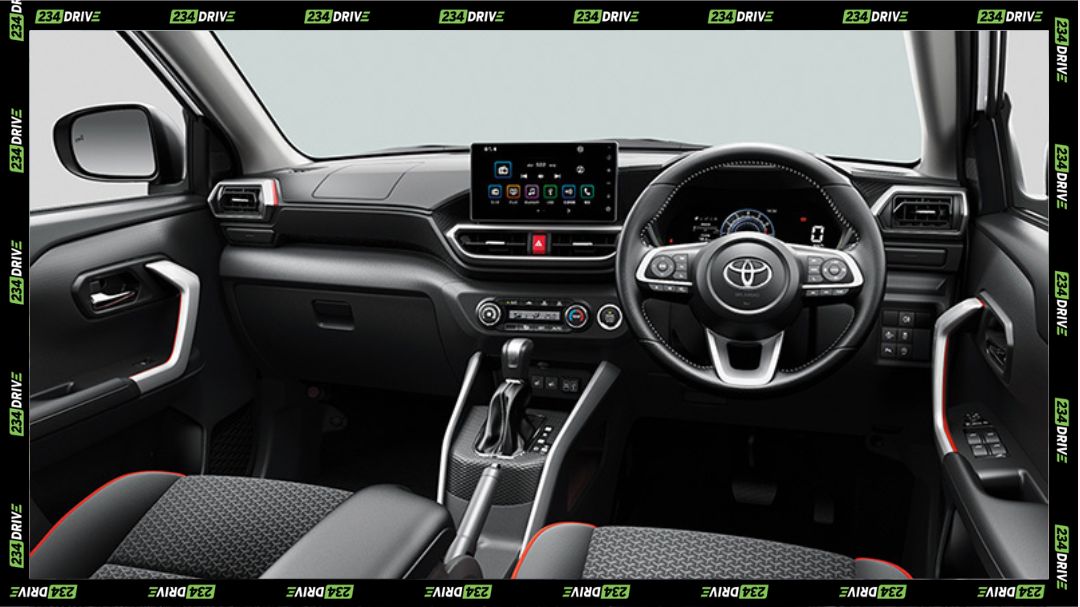
Inside, the Raize continues the youthful theme with a cabin that is remarkably spacious for its dimensions. The interior is focused on utility and modern connectivity, featuring an 8-inch or 9-inch floating touchscreen with full Apple CarPlay and Android Auto integration. The driver is treated to a 7-inch digital instrument cluster that offers customisable displays, a feature usually reserved for much more expensive segments. Despite its compact exterior, the clever DNGA packaging results in a class-leading 369-litre boot, providing enough versatility for small families or weekend getaways.
Powertrains and Performance
Under the bonnet, the Raize is most commonly found with a 1.0-litre three-cylinder turbocharged engine (1KR-VET), delivering 72 kW and 140 Nm of torque. This powertrain is paired with a D-CVT (Dual-mode Continuously Variable Transmission) that uses both belt and gear drives to improve acceleration and high-speed efficiency. The result is a peppy driving experience that feels significantly more responsive than many naturally aspirated 1.5-litre rivals. For budget-conscious buyers, a 1.2-litre naturally aspirated engine is also available, prioritising simplicity and raw economy over turbo-induced torque.
Driving dynamics are tailored for the city, with light steering that makes navigating tight parking spots effortless. On the open road, the Raize remains surprisingly composed, though the short wheelbase can lead to a slightly firm ride over rougher tarmac. Fuel economy remains its strongest selling point; real-world testing frequently yields figures between 5.2 and 5.8 L/100 km, making it one of the most efficient crossovers for the current economy.
The South African Reality: Pricing and Support
Prospective owners must navigate a unique set of challenges given that the Raize is not officially supported by Toyota South Africa. As of mid-2026, current grey-import listings show 2025 models priced at approximately R316,700, making them a tempting alternative for those willing to forego a traditional dealership experience. This puts it in direct price competition with the official Toyota Starlet Cross, though the Raize offers a more modern turbo engine and a higher seating position.
The lack of an official Toyota warranty means that maintenance relies on the reputation of the importer and the availability of third-party service plans. While basic service parts are often shared with other Toyota models, specific body panels or electronic components for the DNGA platform may require sourcing from overseas, potentially leading to longer repair times. However, for many, the trade-off is worth it for a vehicle that feels more premium and agile than the “badge-engineered” models currently filling the local entry-level SUV segment.
Comparative Market Analysis
When compared to the official Toyota SA line-up, the Raize offers a more sophisticated powertrain than the entry-level Starlet Cross but lacks the peace of mind provided by a nationwide dealer network. The Starlet Cross utilizes a tried-and-tested 1.5-litre naturally aspirated engine that is easier to maintain but lacks the low-end punch of the Raize’s turbo. Furthermore, the Raize’s 200 mm ground clearance significantly outclasses the 170 mm offered by the Starlet Cross, making the imported model a better choice for those who frequently deal with poorly maintained urban infrastructure and high kerbs.
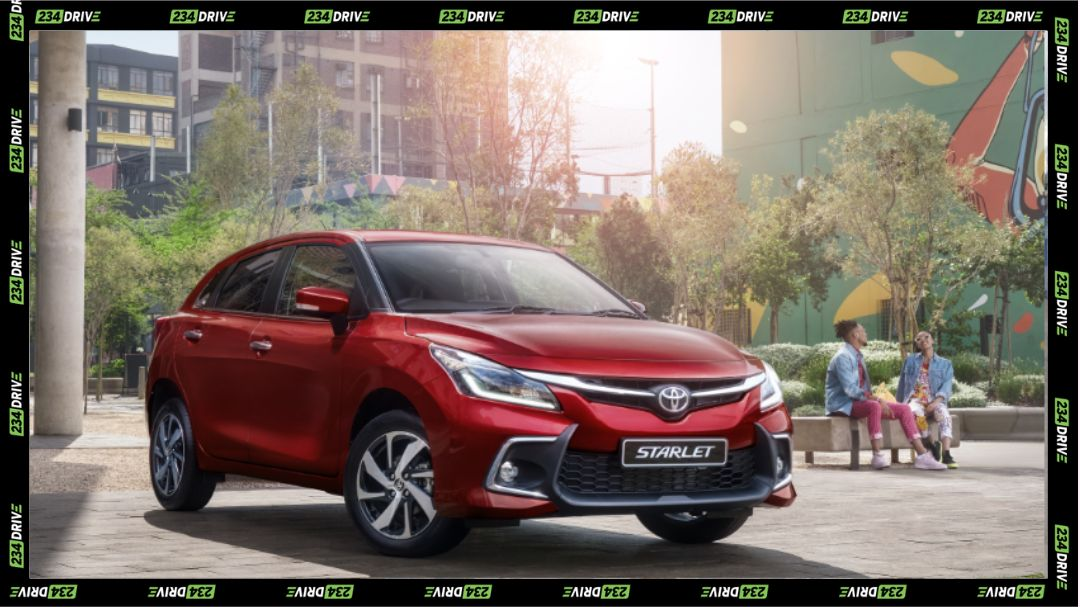
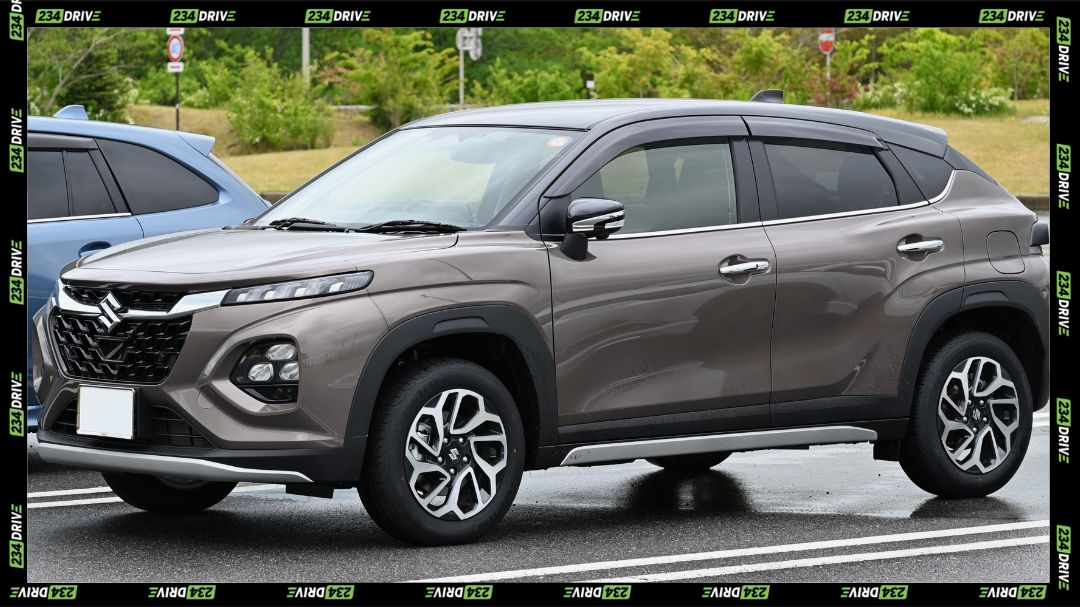
Against other segment rivals like the Suzuki Fronx or the Renault Kiger, the Raize holds its value remarkably well due to the strength of the Toyota brand. While the Starlet Cross remains the pragmatic choice for the average buyer, the Raize remains the enthusiast’s pick. It offers a level of build quality and standard safety features—including Toyota Safety Sense in top trims—that often exceeds the local competition, provided the buyer is willing to manage the logistical hurdles of grey-market ownership.
Summary
The Toyota Raize is a compelling glimpse into what the future of affordable urban mobility could look like in South Africa. Its blend of striking SUV looks, class-leading efficiency, and modern technology makes it a standout choice, even if it requires stepping outside the traditional dealership model. While Toyota SA hints at future plans that could see the Raize or its twin, the Rocky, officially arrive under the Daihatsu banner, the current imported models remain a high-quality alternative for those who refuse to wait.
Would you risk a grey import for the Raize’s turbo performance, or do you prefer the safety net of an official South African warranty? Share your thoughts on this pocket-sized SUV in the comments below.