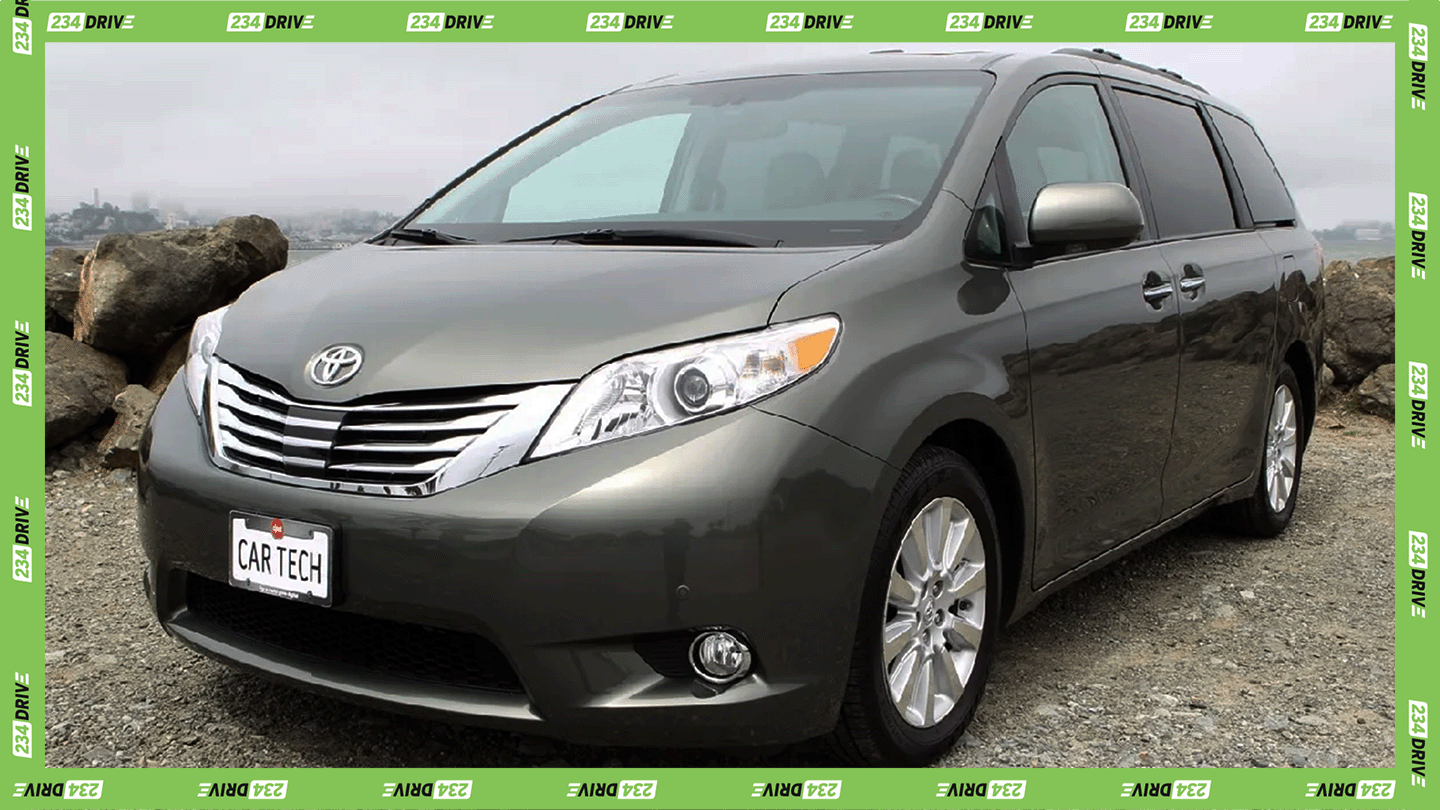

For agricultural distributors, logistics operators and farmers in Nigeria, transporting produce from rural farm gates to urban markets is a high-stakes logistical challenge. Nigeria’s road infrastructure deficit is severe, meaning the journey from farm to table is often a grueling test of mechanical endurance.
In this landscape, choosing a transport vehicle is not about aesthetic appeal or modern tech features—it is a critical financial decision. When capital is tight, interest rates are high and downtime means the immediate spoilage of perishable goods, your vehicle choice directly determines whether your agribusiness survives or goes under.
This guide provides a comprehensive, data-driven analysis of the best vehicles for agricultural distribution across Nigeria, evaluating them by scale, road durability, fuel economics, maintenance ecosystems and total cost of ownership (TCO).
Vehicle Types by Distribution Scale
Agricultural transport demands vary based on volume, product type and the nature of the transit routes. Vehicles generally fall into three distinct scales.
1. Small-Scale (Payload under 1.5 tonnes)
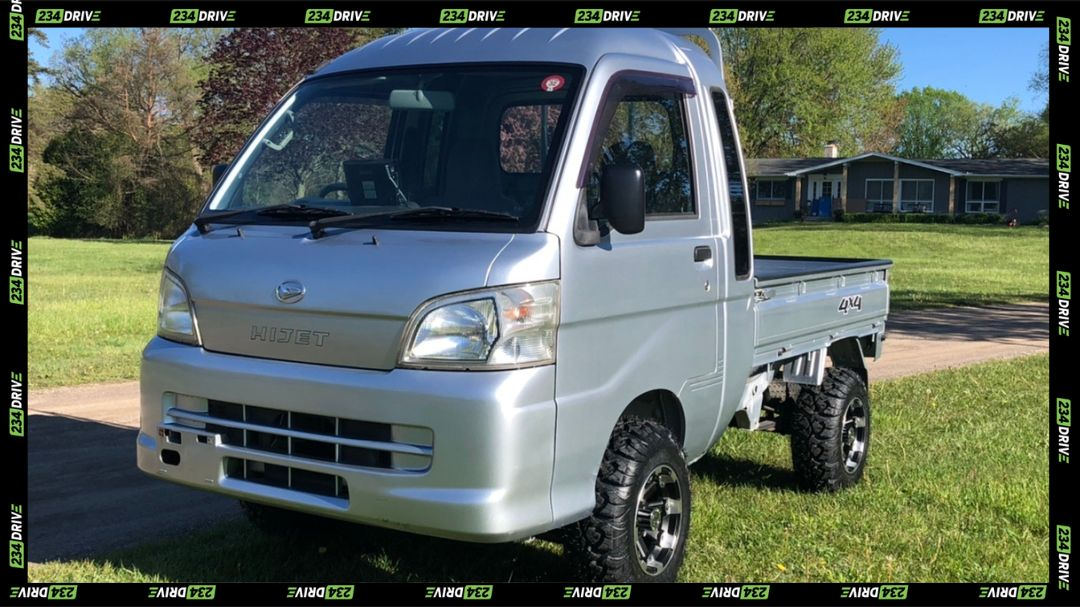
This segment comprises mini-trucks, small cargo vans and heavy-duty cargo tricycles (popularly called cargo Keke variants). The dominant players here are Japanese imported micro-trucks like the Daihatsu Hijet and Suzuki Carry. For operators seeking entry-level solutions, reviewing affordable mini-truck options highlights how these vehicles balance price with basic utility.
- Ideal for: Short-distance, village-level haulage, poultry feed transit, moving small batches of leafy vegetables or navigating extremely narrow, unpaved bush paths where larger vehicles cannot fit.
- Pros: Outstanding manoeuvrability in tight spaces, very low initial acquisition cost and low base fuel consumption.
- Cons: Extremely limited cargo volume and payload weight. While operators frequently overload these mini-trucks beyond their designated design limits, doing so on rough terrain causes rapid mechanical wear and chassis cracking.
2. Medium-Scale (Payload between 1.5 and 5 tonnes)
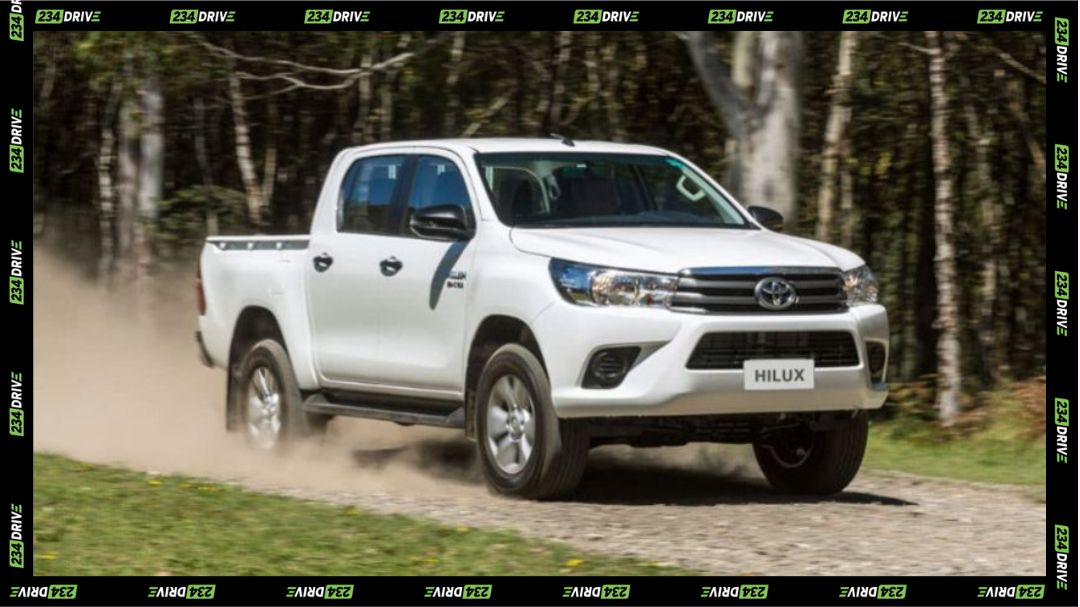
This category is dominated by mid-size pickup trucks, led decisively by the Toyota Hilux, followed by the Ford Ranger and Isuzu D-Max.
- Ideal for: Farm-to-market transit, transporting sacked grains, tubers (yams, cassava), bags of cocoa or crated tomatoes directly from rural production hubs to regional and urban wholesale markets.
- Pros: High ground clearance, reliable four-wheel drive (4×4) options, structural robustness to absorb severe potholes and high speed on major highways.
- Cons: High initial purchase price for both foreign-used (Tokunbo) and brand-new models.
3. Large-Scale (Payload above 5 tonnes)
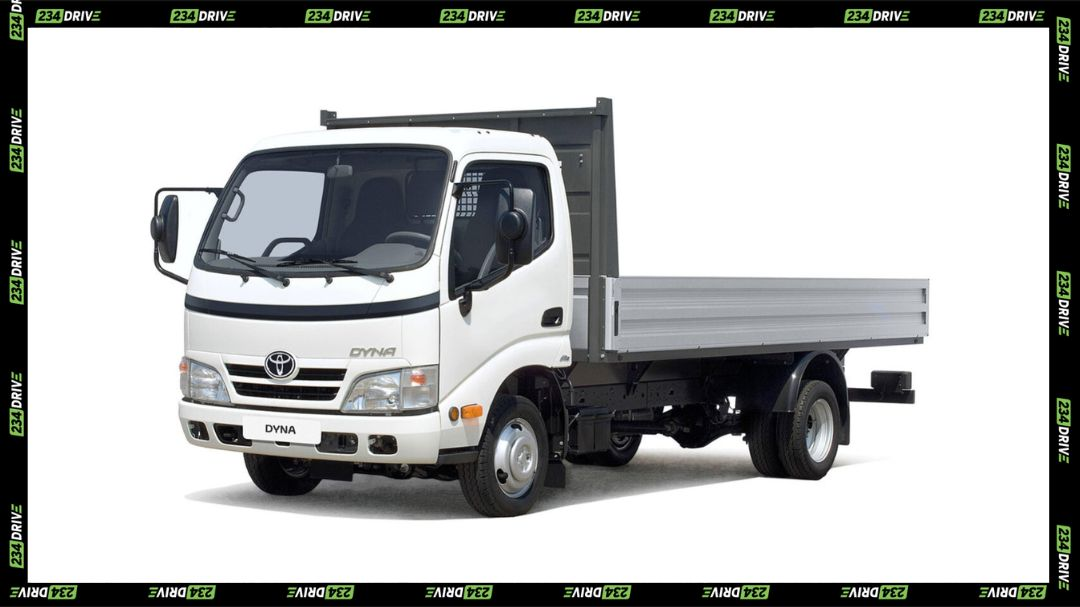
This tier consists of light-to-medium commercial trucks, represented heavily in the Nigerian market by the Toyota Dyna, Mitsubishi Canter and light Chinese tipper trucks (such as SinoTruk or Fotonne variants).
- Ideal for: Bulk transport of grains, large-volume cassava root haulage, wholesale fertilizer distribution and co-operative pooling.
- Pros: Exceptionally low cost-per-tonne when fully loaded, massive volumetric capacity and heavy-duty steel frame strength.
- Cons: Demands substantial capital, requires relatively maintained primary roads to operate efficiently and is highly susceptible to getting stuck in deep mud due to its high gross weight.
Capacity, Costs, and Pricing (Mid-2026 Nigeria Market)
The retail price of vehicles in Nigeria fluctuates based on foreign exchange volatility, clearing duties at ports and the physical condition of the unit. When purchasing, operators must prioritise duty-paid foreign-used (Tokunbo) units with clear maintenance histories to prevent sudden roadside failures.
Micro and Mini-Trucks (e.g., Daihatsu Hijet, Suzuki Carry)
- Nominal Payload: 350 kg to 700 kg (though operators frequently overload them up to 1 tonne).
- Tokunbo (Used) Price Range: ₦2.5M to ₦5.5M (Older, high-mileage models can sometimes be found from ₦850k to ₦2.5M).
- Brand-New Price Range: ₦8M to ₦13M (Near-new or clean registered imports range from ₦5M to ₦8M).
Medium Pickups (e.g., Toyota Hilux, Ford Ranger, Isuzu D-Max)
- Nominal Payload: 1.0 tonne to 1.5 tonnes.
- Tokunbo (Used) Price Range: ₦15M to ₦55M (Clean 2015 to 2020 models range from ₦20M to ₦55M). Operators frequently browse used Hilux options on online classified sites to gauge the local market.
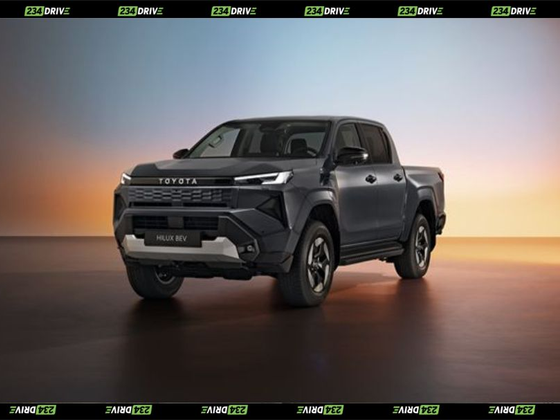
- Brand-New Price Range: ₦110M to ₦145M+ depending on the engine trim and custom beds, where the new Hilux pricing is heavily influenced by the latest duty-paid imports.
Light Commercial Trucks (e.g., Toyota Dyna, Mitsubishi Canter)
- Nominal Payload: 3.0 tonnes to 7.0 tonnes.
- Tokunbo (Used) Price Range: ₦8M to ₦25M (Older model 150 series are available from ₦7M to ₦12M).
- Brand-New Price Range: ₦45M to ₦85M+.
The Engineering of Durability on Nigerian Roads
The unpaved roads connecting Nigeria’s farming communities are characterised by deep potholes, waterlogged ruts, heavy corrugation and mud. Navigating these paths requires specific mechanical features.
Ground Clearance
An agricultural transit vehicle operating rurally needs a minimum ground clearance of at least 220 mm to clear deep ruts and rocks.
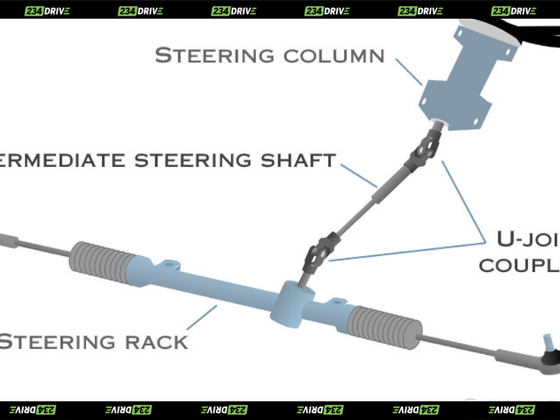
Mini-trucks like the Daihatsu Hijet struggle on these routes because their low clearance and small wheels put their undercarriages in constant contact with the ground. This risks immediate oil pan punctures and steering linkage damage.
Conversely, pickup trucks like the Toyota Hilux and Isuzu D-Max easily meet this requirement, protecting critical mechanical components from impact.
Suspension Architecture
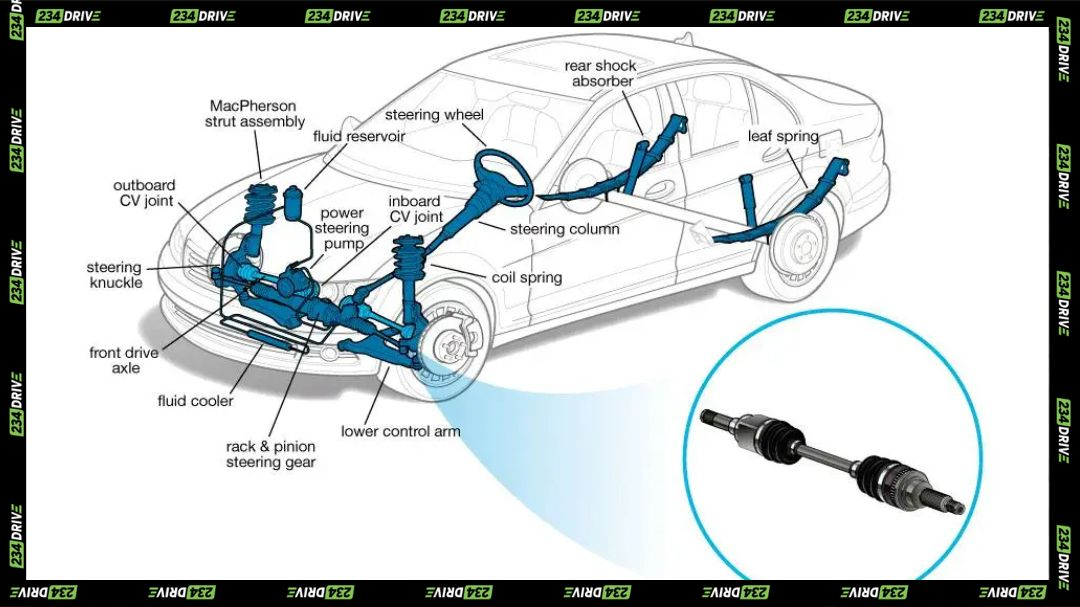
For heavy agricultural payloads, leaf-spring suspension is vastly superior to coil-spring setups. Leaf springs distribute weight across the chassis more evenly and are designed to absorb heavy vertical impacts.
The Toyota Hilux features a rear leaf-spring system optimised for heavy hauling on rough terrain.
While the Ford Ranger is often praised for its car-like comfort and smooth ride, its highly tuned coil suspension is more delicate. When subjected to chronic overloading and constant vibrations on rural unpaved roads, the Ranger’s suspension bushings and control arms fail more quickly, resulting in frequent and expensive repairs.
Fuel Efficiency and Post-Subsidy Economics
With the complete removal of fuel subsidies, operating economics have shifted dramatically. Fuel now accounts for over 60% of the daily running costs for agricultural logistics in Nigeria.
Diesel engines are highly preferred for medium and large-scale agricultural transport. Diesel fuel has a higher energy density than petrol, and diesel engines produce high low-end torque. This torque is crucial for pulling heavy loads out of mud and climbing steep, unpaved inclines.
To compare operating costs, consider a typical 400 km journey from a farm gate to an urban retail market. The formula for fuel consumption is simple: divide the total distance of the trip by the vehicle’s average fuel economy.
Toyota Hilux (Diesel, 2.8L Engine)
Under a full load on mixed roads, it averages roughly 10 km per litre.
- Fuel Needed: 400 km divided by 10 km per litre = 40 litres.
- Cost: At a diesel price of ₦1,100 per litre, the trip costs ₦44,000 in fuel. Evaluating used Toyota Hilux prices shows that diesel variants command a strong premium due to this fuel economy advantage.
Niche Petrol Pickups
Under a similar agricultural load, a petrol engine must run at higher RPMs to match the torque requirement, reducing efficiency to about 6 km per litre.
- Fuel Needed: 400 km divided by 6 km per litre = 66.7 litres.
- Cost: At a petrol price of ₦950 per litre, the trip costs ₦63,365 in fuel.
This difference shows that petrol engines can quickly erase any initial savings from their cheaper purchase price when used for regular, heavy transport.
Spare Parts and the Rural Repair Ecosystem
When a vehicle suffers a mechanical breakdown in a remote farming community, access to parts and local expertise determines how quickly you can get back on the road.
Toyota (Hilux)
- Spare Parts Availability: Ubiquitous; high availability of generic and Tokunbo options.
- Local Mechanic Familiarity: Excellent; virtually every roadside mechanic can fix it.
Ford (Ranger)
- Spare Parts Availability: Scarce; requires urban sourcing from Lagos or Abuja.
- Local Mechanic Familiarity: Poor; complex electronics scare away local village mechanics.
Mini-Trucks (Hijet / Carry)
- Spare Parts Availability: Moderate; cheap but variable quality components.
- Local Mechanic Familiarity: Fair; simple engines but parts quality is highly inconsistent.
A broken-down Ford Ranger in a remote village can stall operations for days because local mechanics are often intimidated by its complex electronics. Furthermore, simple replacement parts must often be sourced from major markets like Ladipo in Lagos, resulting in expensive downtime.
Conversely, the mechanical design of the Toyota Hilux is highly familiar to roadside mechanics across the country. If a ball joint, tie rod or radiator fails, there is a very high probability that a roadside shop within a 10 km radius will have the part in stock. This widespread support minimizes downtime, keeping perishable produce moving.
Resale Value: The Liquid Asset
In Nigeria’s volatile economic climate, a vehicle is also a financial asset. Toyota vehicles, particularly the Hilux, retain their value exceptionally well due to high demand from corporate fleets, security agencies, construction firms and agricultural operators.
A clean Tokunbo Toyota Hilux purchased for ₦30,000,000 can easily be sold for ₦18,000,000 to ₦20,000,000 after five years of service, representing a value retention rate of approximately 60% to 66%. A glance at the verified resale market confirms how consistently these vehicles retain their valuation even after heavy rural use.
On the other hand, non-Toyota brands depreciate much faster. A competitor pickup bought for the same initial price might only fetch ₦9,000,000 after five years of hard use on rural roads. This makes the Hilux a highly liquid security blanket for small businesses needing to recover capital quickly during tough times.
Total Cost of Ownership (TCO) Comparison Over 5 Years
To evaluate these vehicles accurately, we must look beyond the initial purchase price. This comparison analyses the projected five-year TCO for a used 2018 Toyota Hilux, a used 2018 Daihatsu Hijet and a used 2015 Toyota Dyna, assuming an annual travel distance of 20,000 km in agricultural service.
Toyota Dyna 100. Source: Toyota
Scenario A: Toyota Hilux (Tokunbo, Diesel, 4×4)
- Initial Purchase Price: ₦30,000,000
- 5-Year Fuel Costs: Over five years (100,000 km total), at an average of 10 km per litre, the vehicle consumes 10,000 litres of diesel. At an average diesel cost of ₦1,100 per litre, the fuel cost is ₦11,000,000.
- Maintenance & Suspension Repairs: ₦4,500,000 (tyres, bushings, leaf springs and routine servicing).
- Registration & Licensing: ₦1,000,000.
- Estimated Resale Value (Year 5): ₦18,000,000 (This is recovered money).
- Net 5-Year TCO: ₦18,500,000 (Calculated as the purchase price plus fuel, maintenance and registration, minus the recovered resale value).
Scenario B: Daihatsu Hijet (Tokunbo, Petrol)
- Initial Purchase Price: ₦4,500,000
- 5-Year Fuel Costs: Over 100,000 km, at an average of 12 km per litre under heavy load, the vehicle consumes 8,333 litres of petrol. At an average petrol cost of ₦950 per litre, the fuel cost is ₦7,916,667.
- Maintenance & Suspension Repairs: ₦3,000,000 (higher wear due to constant overloading on unpaved roads).
- Registration & Licensing: ₦600,000.
- Estimated Resale Value (Year 5): ₦1,500,000 (Recovered money).
- Net 5-Year TCO: ₦14,516,667 (Calculated as purchase price plus fuel, maintenance and registration, minus the recovered resale value).
Scenario C: Toyota Dyna (Tokunbo, Diesel, 3-tonne payload)
- Initial Purchase Price: ₦15,000,000
- 5-Year Fuel Costs: Over 100,000 km, at an average of 7 km per litre under load, the vehicle consumes 14,286 litres of diesel. At an average diesel cost of ₦1,100 per litre, the fuel cost is ₦15,714,286.
- Maintenance & Heavy Component Wear: ₦6,000,000 (clutches, heavy-duty tyres, axles).
- Registration & Commercial Licensing: ₦1,500,000.
- Estimated Resale Value (Year 5): ₦8,000,000 (Recovered money).
- Net 5-Year TCO: ₦20,214,286 (Calculated as purchase price plus fuel, maintenance and registration, minus the recovered resale value).
TCO Analysis
While the mini-truck’s net ownership cost is roughly half that of the Hilux, its payload capacity is limited to 700 kg under the best conditions, compared to the Hilux’s 1,500 kg carrying capacity.
To move the same volume of goods, the Hijet must make twice as many trips, doubling driver hours, travel time and exposure to hazards like illegal road levies or highway security risks.
The Toyota Dyna is the most expensive option over five years, but its larger capacity (3,000 kg) allows it to move twice as much cargo as the Hilux in a single trip, making it highly cost-competitive on a cost-per-tonne-kilometre basis.
Final Recommendations for Agribusinesses
1. If your acquisition capital is under ₦10,000,000
Do not buy a heavily damaged, cheap pickup truck. Instead, opt for a clean Tokunbo Suzuki Carry or Daihatsu Hijet. Keep your distribution routes local and avoid overloading the suspension past 600 kg. Use the savings to build your operating capital until your distribution volume justifies upgrading to a larger vehicle.
2. If your acquisition capital is between ₦20,000,000 and ₦60,000,000
A foreign-used Toyota Hilux (2.5L or 2.8L diesel engine with 4×4 capability) is the best investment. It offers the optimal balance of off-road capability, parts availability, rural reliability and long-term asset security. Avoid petrol models unless your operations are limited to urban peripheral roads with easy fuel access.
3. If you are moving high-volume bulk commodities
If you are regularly transporting heavy, stable cargo like tubers, grains or bags of cocoa over long distances, look for a used Toyota Dyna. While it requires better primary road networks, its high cargo capacity dramatically lowers your cost-per-tonne, helping you scale your distribution business faster.