
The Nigerian automotive market is undergoing its most significant structural shift in decades. Rising fuel costs have transformed the economics of vehicle ownership, making traditional internal combustion engines increasingly expensive to run. Chinese manufacturer BYD (Build Your Dreams) has entered this landscape, offering a highly competitive alternative. Through its official distributor, Loxea—a subsidiary of the CFAO Mobility Group—alongside active independent import channels, the brand is establishing a strong presence on local roads.
Buying BYD electric cars in Nigeria represents a practical hedging strategy against fuel volatility. This direct review evaluates the top BYD models available locally as of 2026, comparing their specifications, real-world utility, local pricing and infrastructure requirements.
1. BYD Atto 3 (Electric Compact SUV)
The Atto 3 is the standard-bearer for BYD’s pure electric passenger fleet in Nigeria, utilising a dedicated 60.5 kWh Blade Battery paired with a front-wheel-drive motor. This configuration generates a respectable 150 kW of power—which is equivalent to 201 horsepower—alongside 310 N·m of torque. Under optimal driving conditions, this crossover accelerates from standstill to 100 km/h in 7.3 seconds and offers a certified WLTP range of up to 420 km. This translates to an incredibly efficient transport option that can comfortably handle a full working week of typical commuting from the Lagos mainland to major business districts on the island without requiring a single top-up.
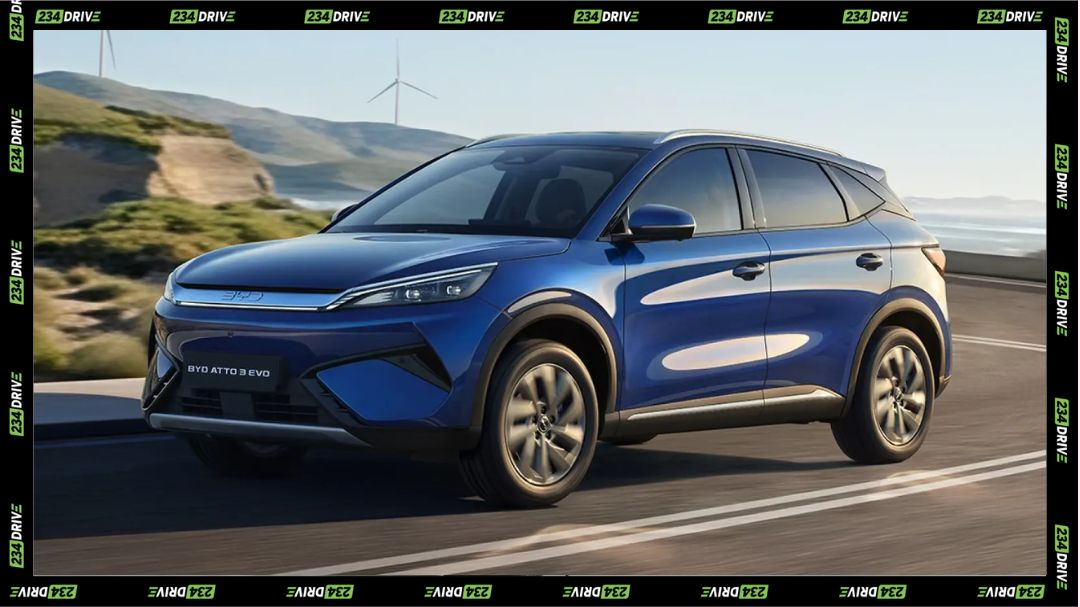
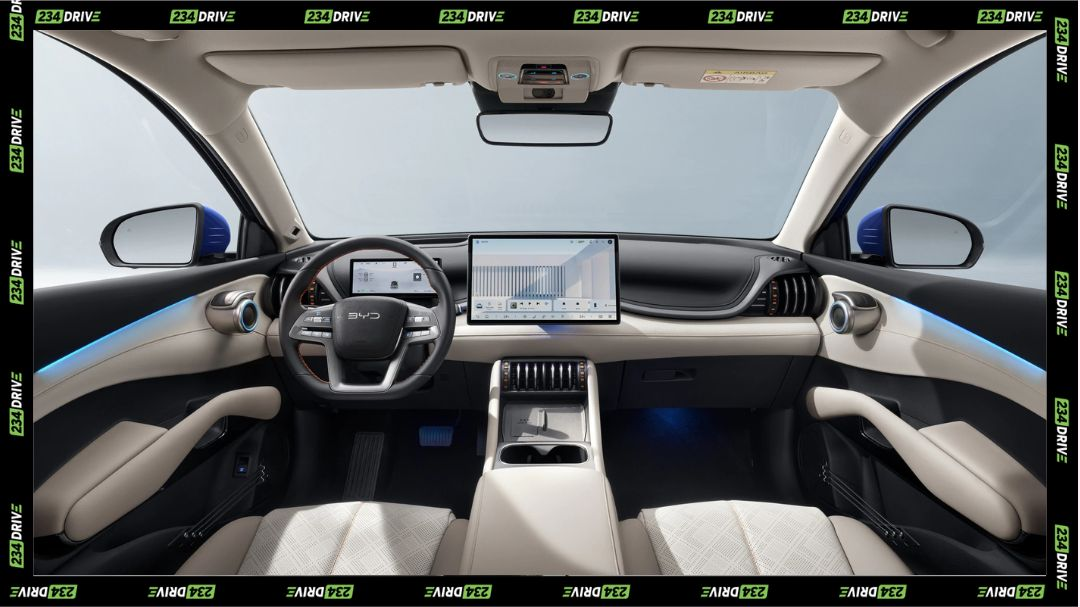
For Nigerian drivers accustomed to seasonal floods and sudden road irregularities, the crossover features a generous unladen ground clearance of 175 mm, allowing it to navigate deep potholes and standard road humps with ease. Inside the cabin, the styling is highly distinctive and functional, incorporating a unique rotating 12.8-inch touchscreen interface and a flat rear floor that maximises passenger legroom. Loxea distributes the brand-new Atto 3 officially with a comprehensive warranty for a price range between ₦36,000,000 and ₦50,000,000, while direct foreign-used imports from China can be sourced through independent dealers for roughly ₦28,000,000 to ₦35,000,000.
2. BYD Dolphin (Electric Compact Hatchback)
The Dolphin serves as the entry-level option in the local pure-electric ecosystem, designed for city-dwelling commuters who prioritise daily efficiency over vehicle size. Under the hood, a smaller 44.9 kWh Blade Battery delivers a certified WLTP range of up to 340 km, powered by a front-wheel-drive electric motor that outputs 70 kW of power and 180 N·m of torque. The hatchback supports 60 kW DC fast-charging speeds, which can replenish the battery pack from 30% to 80% capacity in approximately thirty minutes, providing minimal charging downtime for busy professionals.
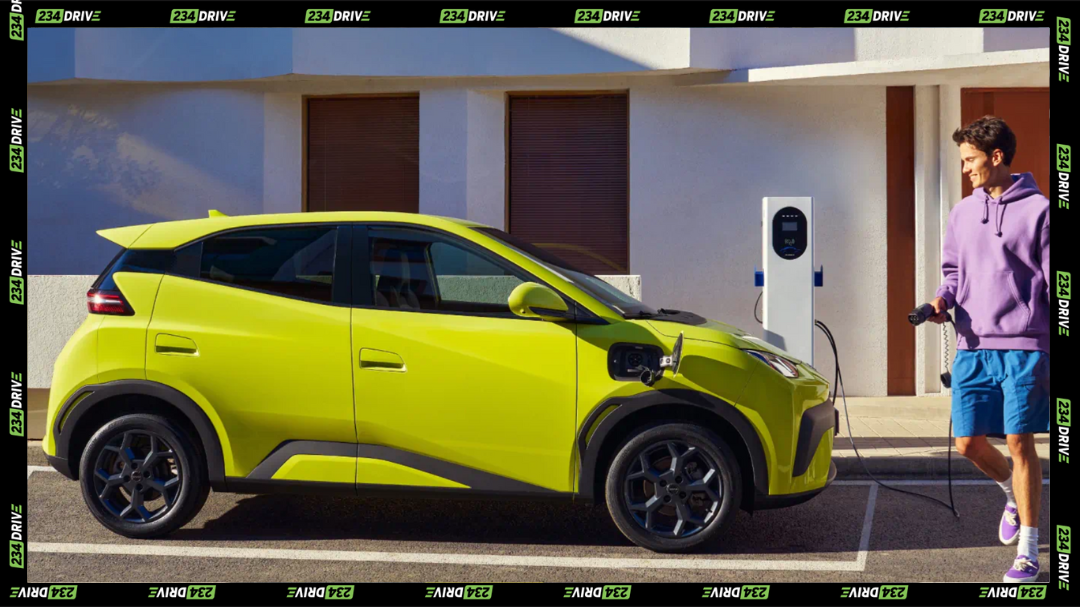
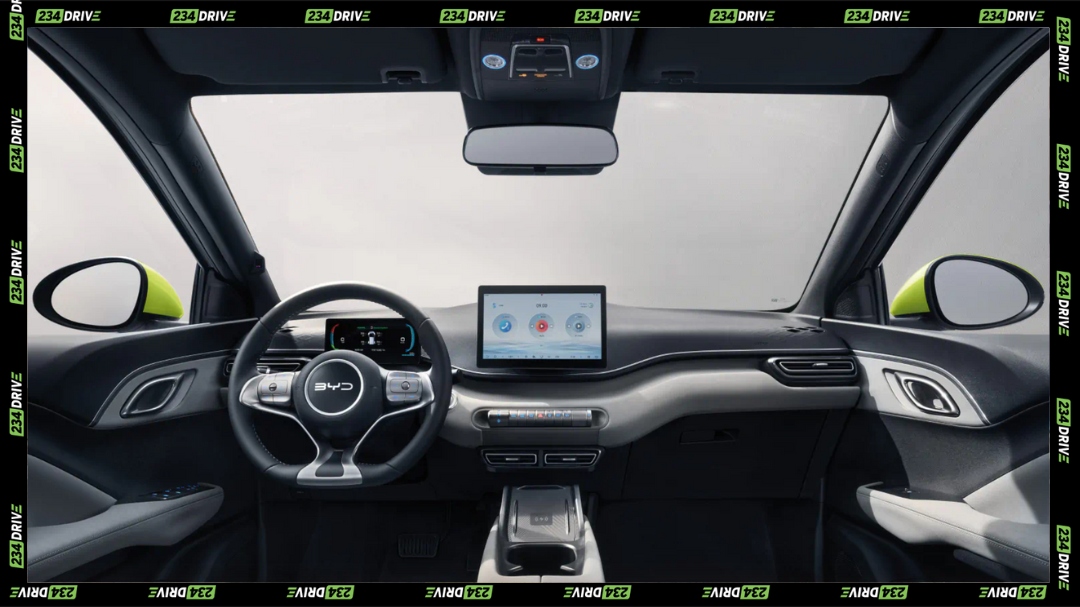
At 4.1 metres in length, the vehicle is exceptionally easy to park and manoeuvre through tight spaces in commercial districts like Wuse Market in Abuja or Broad Street in Lagos. Despite its compact exterior, the flat passenger floor creates a surprisingly spacious cabin that comfortably accommodates four adults. Drivers must remain cautious around deeper potholes due to the lower ride height compared to the Atto 3, but the model remains an excellent option for daily office runs. According to local BYD price reviews, official retail models from Loxea are priced between ₦26,000,000 and ₦32,000,000, while direct Chinese imports and listings on local platforms range from ₦20,000,000 to ₦25,000,000.
3. BYD Song Plus DM-i (Plug-in Hybrid SUV)
The Song Plus DM-i is the ultimate hybrid alternative for buyers who want the financial benefits of electric mobility without the anxiety of a limited charging grid. The vehicle features a unique Dual Mode intelligent system that pairs a highly efficient 1.5-litre petrol engine with an electric motor and an 18.3 kWh battery pack. This system delivers an impressive electric-only range of up to 110 km on a single charge—ideal for local city running—before seamlessly switching to a combined hybrid mode that provides a massive total range of over 1,000 km.
Because the petrol engine primarily operates as an onboard generator to charge the battery while the electric motor drives the wheels, the vehicle maintains an incredible fuel economy of roughly 4.5 litres per 100 km. As detailed on the official BYD Nigeria portal, the vehicle features a unique Dual Mode intelligent system that pairs a highly efficient 1.5-litre petrol engine with an electric motor and an 18.3 kWh battery pack. This model offers an upscale, premium cabin equipped with a 15.6-inch rotating interface, with brand-new prices through official channels ranging between ₦58,000,000 and ₦75,000,000, and imported foreign-used models selling from ₦28,000,000 to ₦45,000,000.
4. BYD Seagull (Mini Electric Hatchback)
The Seagull is a highly utilitarian mini hatchback that strips away premium cabin luxury to focus entirely on delivering the cheapest possible urban transport. It is equipped with a choice of a 30.08 kWh or a 38.88 kWh Blade Battery pack, supplying a front-wheel-drive motor that outputs 55 kW of power and 135 N·m of torque. This powertrain delivers a theoretical CLTC-rated range of 305 km to 405 km, which translates to a highly reliable 250 km to 320 km of real-world driving range on a full charge.
Because electric motors do not consume energy when stationary, the Seagull is remarkably efficient in dense metropolitan gridlock, making it highly attractive to younger professionals and local ride-hailing fleets. Its compact dimensions allow drivers to slice through heavy traffic with minimal effort, although its low ground clearance requires careful driving over poorly paved lanes. Direct brand-new imports of this compact model typically retail between ₦25,000,000 and ₦32,000,000, while early foreign-used models are listed on local platforms from ₦18,000,000 to ₦23,000,000.
5. BYD Sealion 06 DM-i / Tang L (Premium SUVs)
At the top of the brand’s premium tier, models like the Sealion 06 DM-i crossover and the larger seven-seat Tang L SUV represent the pinnacle of Chinese luxury and engineering. These models are equipped with high-capacity hybrid drivetrains and pure electric platforms that produce up to 496 combined horsepower, delivering exceptional performance alongside advanced active air-suspension systems. Pure electric variations offer a certified range of up to 670 km, while the hybrid trims push total driving distances beyond 1,100 km, easily accommodating any long-distance corporate travel.
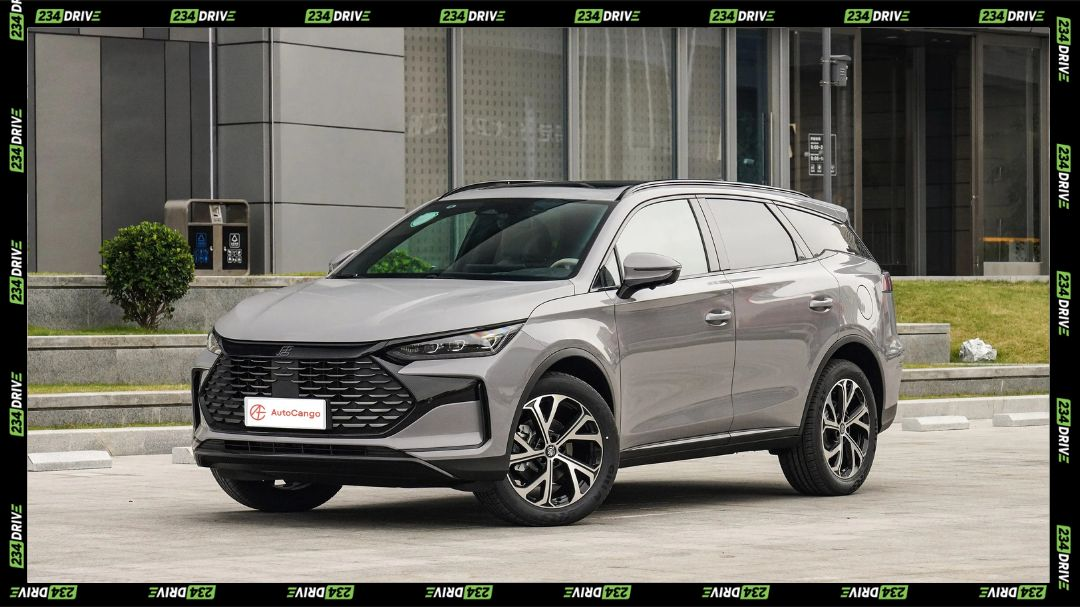
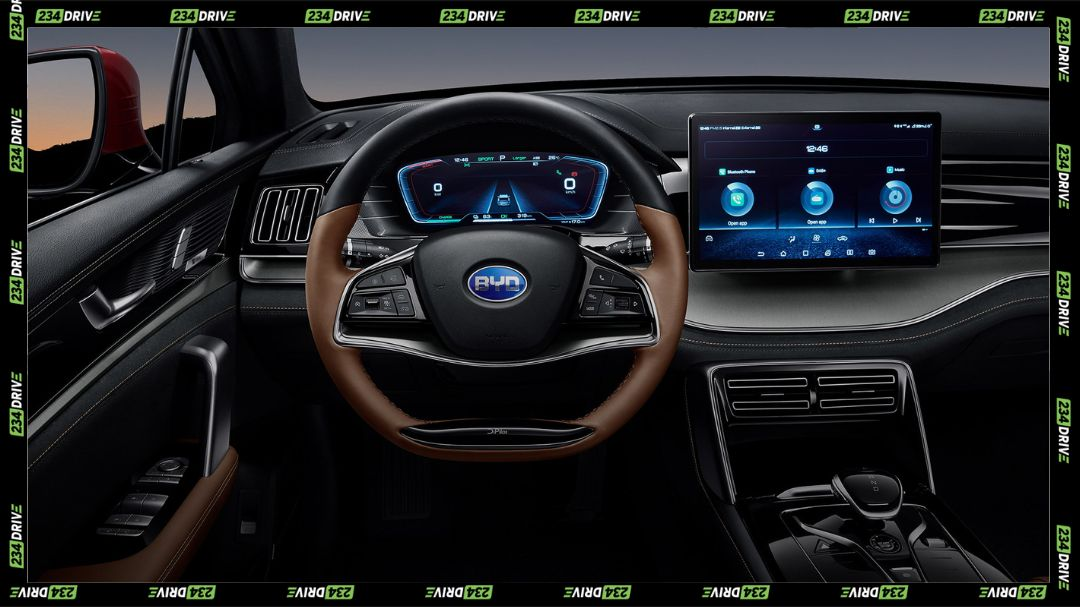
These premium vehicles are bought primarily by high-earning individuals, corporations and governmental fleets that require advanced driver assistance systems to mitigate chaotic highway patterns. In addition to high-end executive leather seating, these vehicles carry massive battery reserves that double as domestic power storage systems, using the vehicle-to-load feature to supply backup electricity to heavy household appliances during grid outages. These premium executive models occupy the highest price bracket in Nigeria, with brand-new retail prices starting from ₦76,000,000 and reaching up to ₦98,000,000.
Core Technical & Economic Realities in Nigeria
Understanding the technical and logistical pillars of ownership is crucial before making a purchasing decision.
The Blade Battery Safety Standard
Our local climate presents severe environmental challenges, including ambient temperatures that regularly exceed 38°C and poorly maintained roads that can result in underbody damage. Standard electric vehicle batteries carry a risk of thermal runaway when damaged or overheated.
BYD addresses this risk with its proprietary Blade Battery. The lithium iron phosphate (LFP) chemistry does not release oxygen when punctured, preventing combustion. During global standard testing, engineers ran a steel nail directly through the battery pack without producing fire or smoke—the battery’s surface temperature stayed between 30°C and 60°C. For a driver navigating a flooded highway in Lekki or enduring midday heat in Abuja, this structural integrity provides essential peace of mind.
Charging and the Power Grid
A common concern is our unreliable public power grid. However, EV ownership in Nigeria does not rely on public charging stations. Instead, it mirrors how local households manage domestic power:
- Home Solar and Generators: Most early adopters integrate vehicle charging into their existing home power systems. A standard 7 kW home wallbox charger will replenish an Atto 3 battery overnight in about eight hours.
- The Economics of Home Charging: On residential prepaid electricity tariffs, a full 60.5 kWh charge costs roughly ₦13,000. This is significantly cheaper than filling a standard petrol tank, which currently costs between ₦60,000 and ₦95,000.
- Vehicle-to-Load (V2L) Power Backup: BYD vehicles can export electricity. In the event of a grid collapse, a special adapter allows the car to supply up to 3.3 kW of electricity to run refrigerators, fans, lighting systems and water pumps.
Import Logistics, Tariffs and Standards
If you decide to import a BYD directly from China rather than purchasing through Loxea, you must understand the logistical and customs procedures:
- Shipping: Shipping via Roll-on/Roll-off (RO-RO) or container from Shenzhen to Tin Can Island or Apapa ports in Lagos takes between 28 and 35 days.
- Compliance: Importers must secure a Product Certificate (PC) and a Standards Organisation of Nigeria Product Conformity Assessment Program (SONCAP) certificate before shipping. Clearing customs without this documentation will result in severe penalties.
- Duties: While the government supports the transition to green energy, duties are not yet completely zero-rated. Individual imports are generally assessed with a 10% to 20% import duty plus VAT.
- After-Sales Support: Purchasing through Loxea secures a six-year or 150,000 km warranty. Loxea operates dedicated diagnostic centres with trained technicians at their official BYD partner dealerships in Victoria Island, Wuse and Trans-Amadi, which protects owners from the lack of experienced local mechanics.
Direct Comparison Matrix
| Model | Type | Real-World Range | Estimated Price (New) | Best Suited For |
| BYD Seagull | Mini Hatchback | ~250 km | ₦25M – ₦32M | City commuting, budget buyers, fleet operations |
| BYD Dolphin | Compact Hatchback | ~340 km | ₦26M – ₦32M | Daily urban office runs, congested traffic zones |
| BYD Atto 3 | Compact SUV | ~420 km | ₦36M – ₦50M | Family use, mixed urban roads, personal owners |
| BYD Song Plus DM-i | Plug-in Hybrid SUV | 1,000+ km (combined) | ₦58M – ₦75M | Long-distance driving, buyers without home solar |
| BYD Tang L / Sealion 06 | Premium SUV | ~670 km (EV) / 1,100 km (hybrid) | ₦76M – ₦98M | Executive fleets, premium buyers, maximum range |
The Verdict
The expansion of BYD electric cars in Nigeria represents a practical evolutionary step for local motoring. It is no longer an experimental luxury.
If your daily routine involves long-distance interstate travel through areas with no power grid, you should choose a hybrid like the Song Plus DM-i. It provides the low running costs of an electric car in the city, but keeps the security of a petrol engine when travelling across the country.
However, for drivers who have home solar, off-grid backup systems, or dedicated workplace charging, pure electric models like the Atto 3 or Dolphin offer immediate relief from fuel prices. They represent a highly durable, safe and economically sensible investment for the future of Nigerian motoring.