
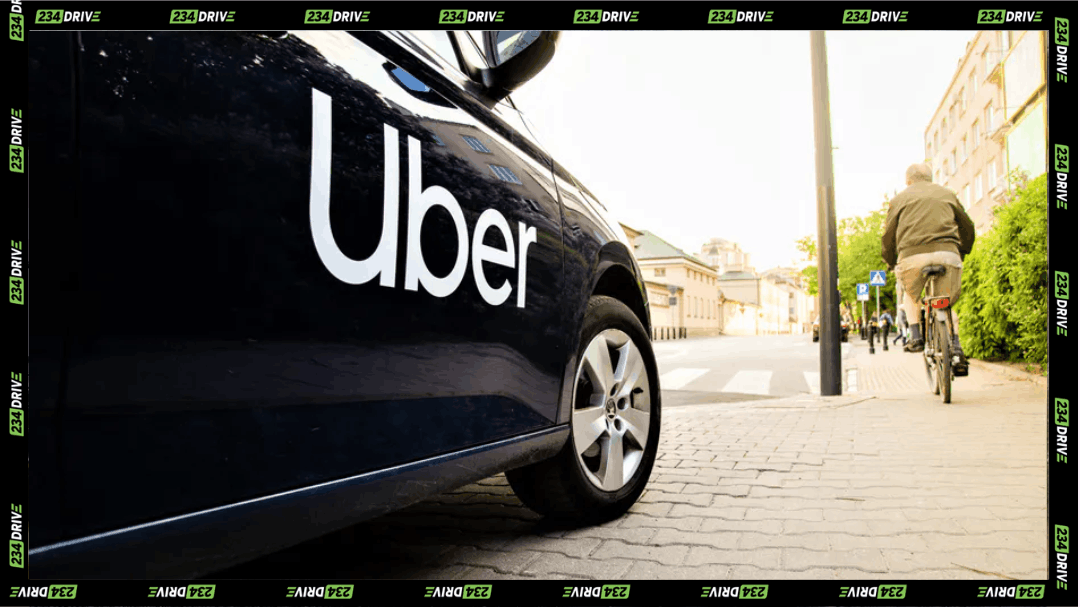
Uber is changing the way riders book everyday trips in South Africa. From 1 September 2026, UberX will no longer be available, ending a run of more than a decade as one of the platform’s most familiar ride options.
Uber entered South Africa in 2013, and UberX quickly became its standard choice for everyday trips. Johannesburg riders were first notified about the change in May before Uber later confirmed that the retirement would apply nationwide.
In its place, riders will choose between UberGo for cheaper trips, Uber Comfort for newer cars and more space, Uber Black for premium rides and Uber Reserve for advance bookings. UberX operators can remain on the platform if their vehicles qualify for any of these categories.
What Exactly Is UberX?
For most riders, UberX is the regular Uber experience familiar across markets like Nigeria and other African countries. It offers a standard private car without the lower fares of UberGo or the newer vehicles, extra space and premium feel of Comfort and Black.
Behind the wheel, UberX has also served as the middle ground. Drivers could qualify with cars that met Uber’s standard requirements without needing the higher specifications demanded by premium categories.
That balance started shifting as UberGo became more popular. Lower fares pulled more everyday riders towards UberGo, while Comfort and Black catered to passengers willing to spend more.
Caught between both ends, UberX began to lose its clear purpose.
According to Uber, the overlap became difficult to justify. Many of the same vehicles were appearing across Go, UberX and Comfort, making the differences less obvious for riders and giving operators with higher-spec cars less reason to stay in the middle category.
Usage patterns appear to support that argument. Uber says most of its e-hailing drivers now complete the majority of their trips through UberGo, showing how the cheaper option has increasingly taken over UberX’s everyday role.
Taken at face value, retiring UberX looks like a simple attempt to clean up the platform and give each ride category a clearer place.
The Bigger Question Behind UberX’s Exit
If UberX had simply outlived its usefulness, the timing would matter less. But its retirement comes as South Africa’s e-hailing market faces mounting pressure over fares, commissions and what drivers actually take home after fuel and other running costs.
Automobile Association CEO Bobby Ramagwede has also described e-hailing as a tight-margin business facing intense competition, though Bolt disputed suggestions that it was financially struggling.
This does not prove Uber is removing UberX because it is unprofitable, and the company has made no such connection publicly. Still, those tighter economics make the timing worth examining.
Without UberX, the choices become more distinct. Price-conscious riders move towards UberGo, while Comfort and Black serve those willing to spend more. That supports Uber’s simplification argument, but it may also create a cleaner distinction between lower-cost, high-volume trips and higher-value rides.
Drivers may feel the trade-off more directly. The National E-Hailers Federation of South Africa told Eyewitness News that some members had bought or rented cars specifically for UberX and may struggle to qualify elsewhere.
Dropping to UberGo would mean cheaper fares, while moving up to Comfort may require a newer or higher-spec vehicle. The federation estimates that more than 60% of its members could face difficulty making that switch.
Other recent moves point in the same direction. Uber suspended Uber Moto in South Africa in August to review the service after its pilot, while its 2025 exit from Côte d’Ivoire ended operations in a country that had become harder to sustain.
The decisions are different, but the pattern is similar: Uber appears willing to pause or remove services, reassess its place and redirect resources towards areas it sees as a better fit.
Uber Still Has Billions Committed to the South African Market
Whatever Uber is changing on the app, it is still putting serious money behind its South African business.
In March 2026, the company committed R5 billion over three years, covering electric vehicle expansion, charging infrastructure, hardware for Uber Eats merchants and new earning opportunities, including further expansion into township economies. Uber acknowledged that the figure combines fresh investment with spending that was already planned.
At the very least, that level of spending does not point to an immediate retreat from South Africa.
South Africa also gives Uber plenty of reason to stay invested. The country remains Africa’s largest vehicle producer, with major manufacturers including Toyota, Ford, Volkswagen, BMW and Mercedes-Benz operating local plants. Its automotive industry exported a record 414,268 vehicles in 2025, despite U.S. tariff pressure, and accounts for more than a fifth of the country’s manufacturing output.
Competition around those roads is changing too. Chinese manufacturers are steadily working their way deeper into South Africa: their share of the passenger-car industry rose from 11.2% in 2024 to 16.8% in 2025, as brands including Chery, BYD and GWM expanded their presence with aggressively priced vehicles. That matters for a company trying to make cheaper electric ride-hailing work at scale.
There is an even bigger change sitting further down the road. Uber CEO Dara Khosrowshahi has already spoken about a future where autonomous vehicles could eventually handle much more of Uber’s ride volume. But that is a longer-term global strategy and there is no evidence connecting that autonomous push to the retirement of UberX in South Africa.
For now, UberX’s retirement looks more like a reshuffling of the business than a retreat from South Africa. With billions still committed and the country’s mobility landscape changing around it, the bigger question is what Uber chooses to build next — in South Africa and across the rest of Africa.