

A wave of phishing text messages impersonating the Federal Road Safety Corps (FRSC) is currently hitting Nigerian phones, and it is pulling serious money out of motorists who thought they were clearing a routine traffic fine. Victims are crying out on social media after discovering that clicking a simple link drained their bank accounts in minutes.
The Outcry on Social Media
The panic started spreading after several prominent figures and everyday drivers took to X and Instagram to share their experiences. Nollywood actress Eva Ibiam posted a warning to her followers after losing almost ₦400,000 to one of these links. She explained that because road safety officers had recently pulled her over and photographed her plate, receiving a text about a traffic violation felt completely believable.
Comedian MC Monica also took to social media to share bank screenshots after falling for the same trick. He wrote in his post: ‘Omoh, which kind Wahala be this way I enter so? @frscnigeria how did my data get to this people please? Like this I don lose all my money.’
He explained that he paid what looked like a small ₦5,000 fine on the site, only to discover nearly ₦2 million wiped from his account shortly after.
Another driver on X shared how he narrowly avoided the trap by paying attention to the checkout page: ‘This was when it struck me. I have paid a fine before and I had three options for payment. This fake link only had one card payment option.’
How the Scam Actually Works
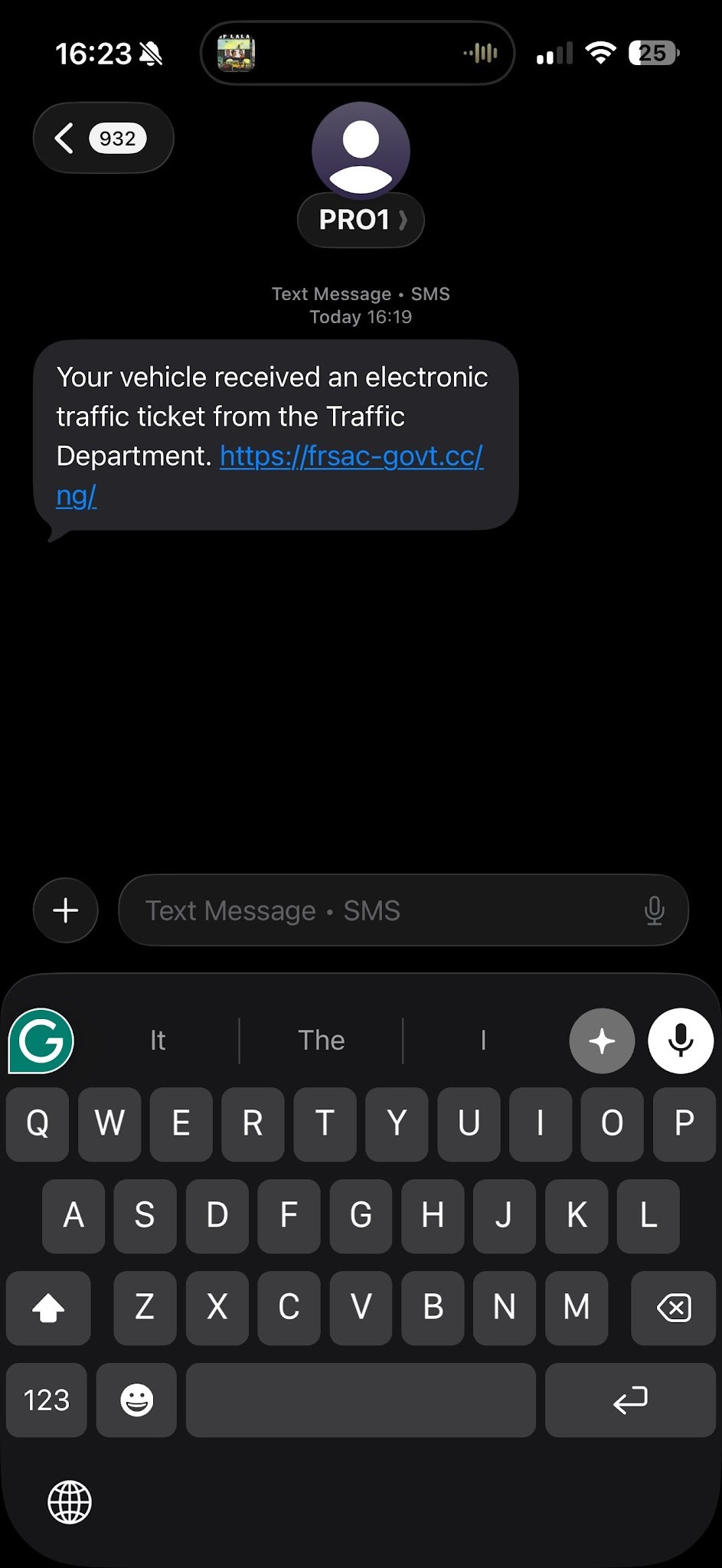
The SMS usually looks like this: ‘FRSC: You have a new road traffic offence record that requires handling.’ Attached to the text is a web link. When you click it, you land on a page that looks identical to the official FRSC website, complete with government logos, agency colours, and a search box asking for your vehicle plate number.
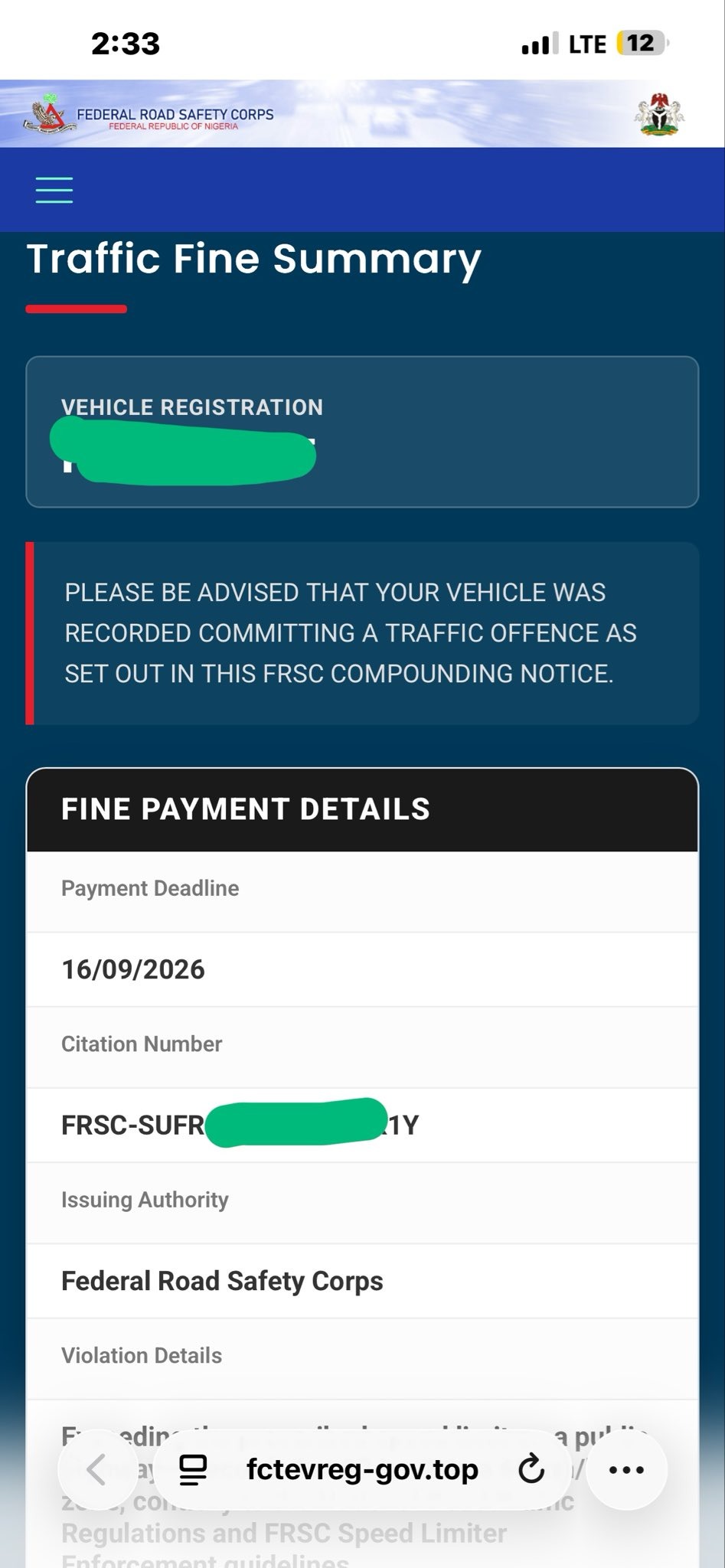
The entire platform is rigged from the start. Independent tests by the Foundation for Investigative Journalism (FIJ) showed that typing in completely made-up plate numbers, ones that do not even match standard Nigerian plate formats, still pulled up an alleged traffic offence and a fine every single time.
To get you to act without thinking, the fake portal relies on urgency and fake discounts. It often claims that your fine is ₦10,000, but offers to slash it to ₦5,000 if you settle it immediately. Once you enter your card details on the fake site, the scammers harvest your card information in real time. They immediately use your card on an international payment gateway. When your bank sends a genuine One-Time Password to your phone to confirm the transaction, the fake site prompts you to enter that code under the guise of finishing your fine payment.
The moment you type in the code, the scammers complete a massive withdrawal before you even realise what happened. The same pattern has been reported where this exact OTP-interception method shows up across scams impersonating other government agencies too, including the Nigeria Customs Service and FIRS, suggesting the same fraud playbook is simply being recycled with a different official logo each time.
Spotting Fake Links and Payment Pages
While some fake messages look sloppy, others are very convincing. Security analysts have flagged several fake domains, including frscgov.top, frsc-gov.sbs, and frsc.gov.eu.cc.ng, all built to copy the official FRSC layout. One of these fraudulent links was registered just hours before thousands of motorists began receiving the text message.
Spotting the difference comes down to looking closely at the web address. The real FRSC website is strictly frsc.gov.ng. Genuine government portals in Nigeria always end in .gov.ng, the same domain structure behind FRSC’s own contactless biometric driver’s licence rollout and other official digital services. If you see .top, .sbs, .cc, or any other extension, close the tab immediately.
Furthermore, genuine FRSC traffic fines are not paid through pop-up card fields on random websites. An officer must issue you a physical Notice of Offence Sheet on the road first, and payments are processed through Remita or completed directly at bank branches and official command centers. Real payment platforms will never ask for your card PIN.
This isn’t the first time fraudsters have impersonated a road transport agency to prey on Nigerian drivers either. Last year, the Abuja DRTS had to warn the public about impostors posing as its officials to sell counterfeit number plates, exploiting the same trust drivers place in anyone claiming to speak for a licensing authority.
What the FRSC Is Saying
The FRSC has issued an official alert disowning these scam messages and specifically blacklisting the domain frscgov.top/ng. Corps Marshal Shehu Mohammed has urged all Nigerian drivers to remember three simple actions whenever they get an unexpected text message: Stop, Verify, and Report.
The agency advises motorists never to click links inside unsolicited text messages and never to enter card numbers, bank PINs, or driver’s licence details on unverified pages. If you suspect you might actually have an outstanding traffic fine, open your browser yourself, type in frsc.gov.ng directly, or call the official FRSC toll-free line at 122.
This scam works because it targets a common fear that threatens you with a minor traffic ticket that most drivers half-expect to deal with eventually. That sense of familiarity is what convinces people to drop their guard. The next time a text claims your car has been flagged for a violation, close the message immediately and verify it through official channels before typing a single digit of your card details.