
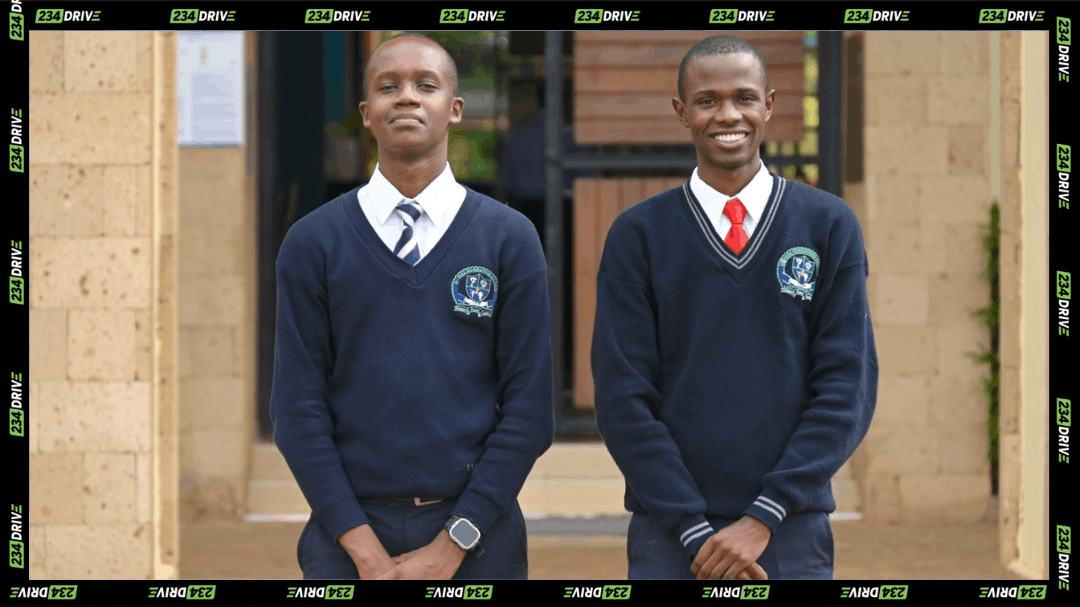
Two Kenyan teenagers have developed a low-cost vehicle filter that could help reduce the pollution produced by mini-buses known as matatus and other public transport vehicles.
Fredrick Njoroge Kariuki and Miron Onsarigo created HewaSafi after seeing how vehicle fumes affected people in their communities. Kariuki’s interest also came from personal experience after doctors linked his recurring bronchitis and breathing problems to polluted air. Their project has now earned international recognition and funding for further development.
HewaSafi Cuts Particulate Emissions by More Than 93%
HewaSafi, which means ‘clean air’ in Swahili, fits onto a vehicle’s exhaust pipe and captures harmful particles before they enter the air.
The 17-year-olds built the filter with locally available and recycled materials, including corn cobs, coconut shells, steel mesh, copper, algae and reused battery components. The combination helps trap particulate matter (PM) while reducing some gaseous emissions.
During pilot testing on five matatus operating along Nairobi’s Thika Road corridor, the device reduced PM2.5 emissions by 93.3%. It also cut carbon monoxide by 42% and absorbed about 21.4% of the carbon dioxide produced. Sensors recorded readings every six hours as the vehicles moved through normal traffic.
The students estimate that each unit costs about $126 to manufacture, compared with roughly $390 for similar conventional filters. The lower price could make the device more practical for matatu and boda boda operators working with limited budgets.
The project responds to a major public health concern in Nairobi, where a 2024 study found particulate pollution levels were 3.7 times higher than World Health Organization guidelines. Estimates also link air pollution to between 400 and 1,400 premature deaths in the city each year.
HewaSafi won the 2026 Earth Prize for Africa, giving Kariuki and Onsarigo $12,500 to improve the design, expand production and adapt it for wider use across Kenya’s public transport system.