

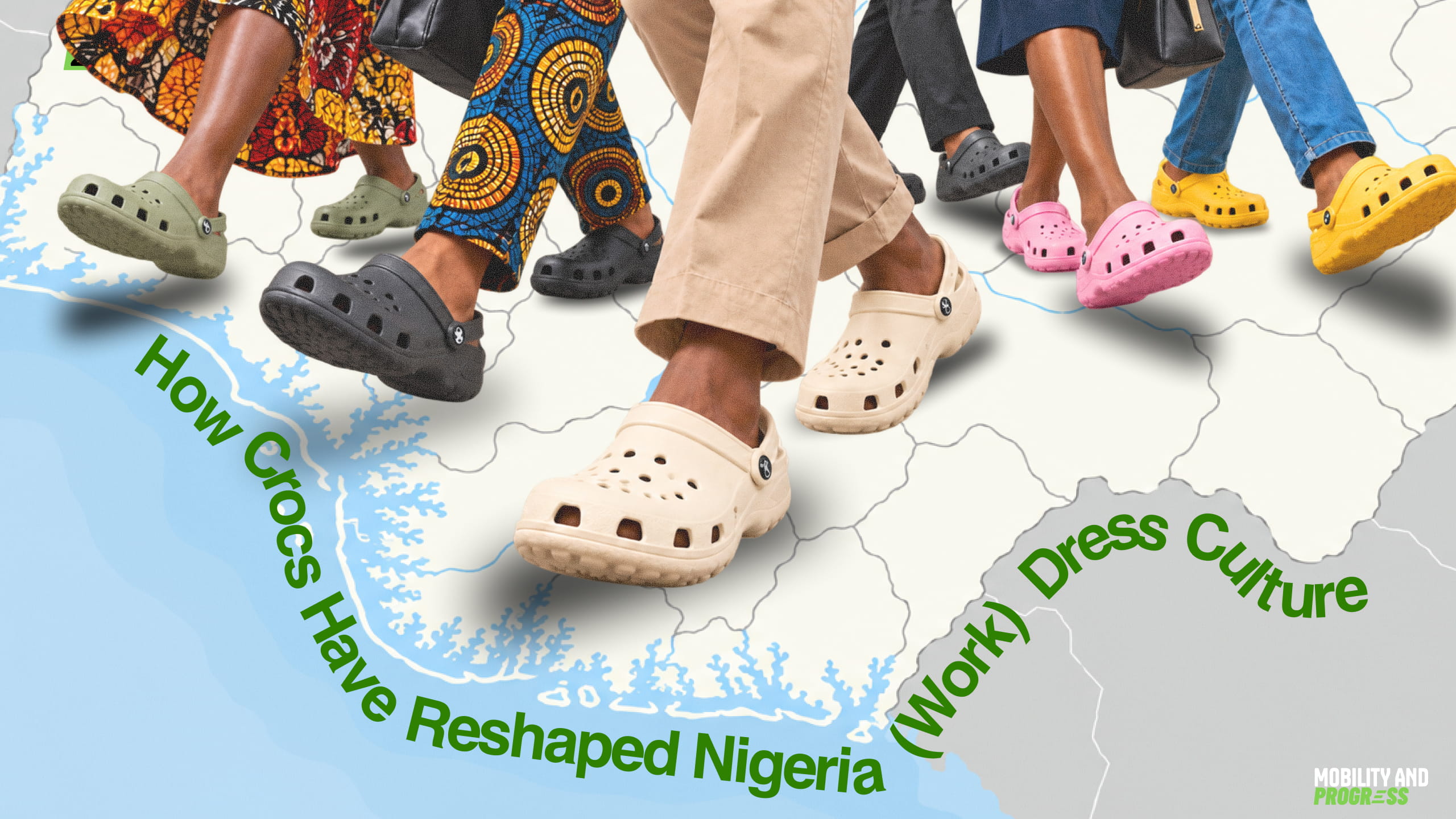
As a kid growing up in Abuja in the 2000s, I remember owning a pair of Crocs, along with many of my friends. Then somewhere along the line, they faded into oblivion. However, by 2022, when I returned to Nigeria from my studies abroad, I was surprised to find that Crocs had not just made a comeback but also taken over youth fashion in Nigeria. Every young adult I knew, or saw on my screen, had a pair or two—or five. I didn’t buy into the trend at first, as I still mentally filed them under ‘children’s footwear’, until a friend bought me a pair of Crocs and I yielded. Relishing its comfort, practicality and cuteness, I found myself struggling to wear anything else when I wasn’t headed to work.
Nigerian Gen Z-ers weren’t the only ones who had caught the Crocs bug. A 2022 article by American site Pion noted that Crocs had gone beyond being the go-to footwear for children, nurses and gardeners, to being streetwear for celebrities and everyday people. Some of that shift came from the pandemic, when comfort briefly outranked everything else in people’s wardrobes. Some of it came from pop sensations like Post Malone and Bad Bunny lending the shoe their cool by association. And a good chunk of it came from ‘Jibbitz’, the little charms you clip into the holes, which let you make a mass-produced shoe feel truly yours. Gen Z-ers, it turns out, love that kind of thing; a Marketing Dive survey found 75% of them are more likely to buy something they can customise.
In Nigeria, the trend arrived with the same colours and jibbitz, but also with a thriving market for knockoffs. The originals, made from Crocs’ proprietary Croslite™ material, a plastic polymer known as polyethylene vinyl acetate (PEVA), sell for ₦50,000 to ₦90,000 through verified retailers like Crux, a steep ask when minimum wage stands at ₦70,000. Meanwhile, the fakes go for as little as ₦6,000 on Jumia, cheaper still from the market. And they look convincing enough at a glance, though they don’t hold up the same way underfoot.
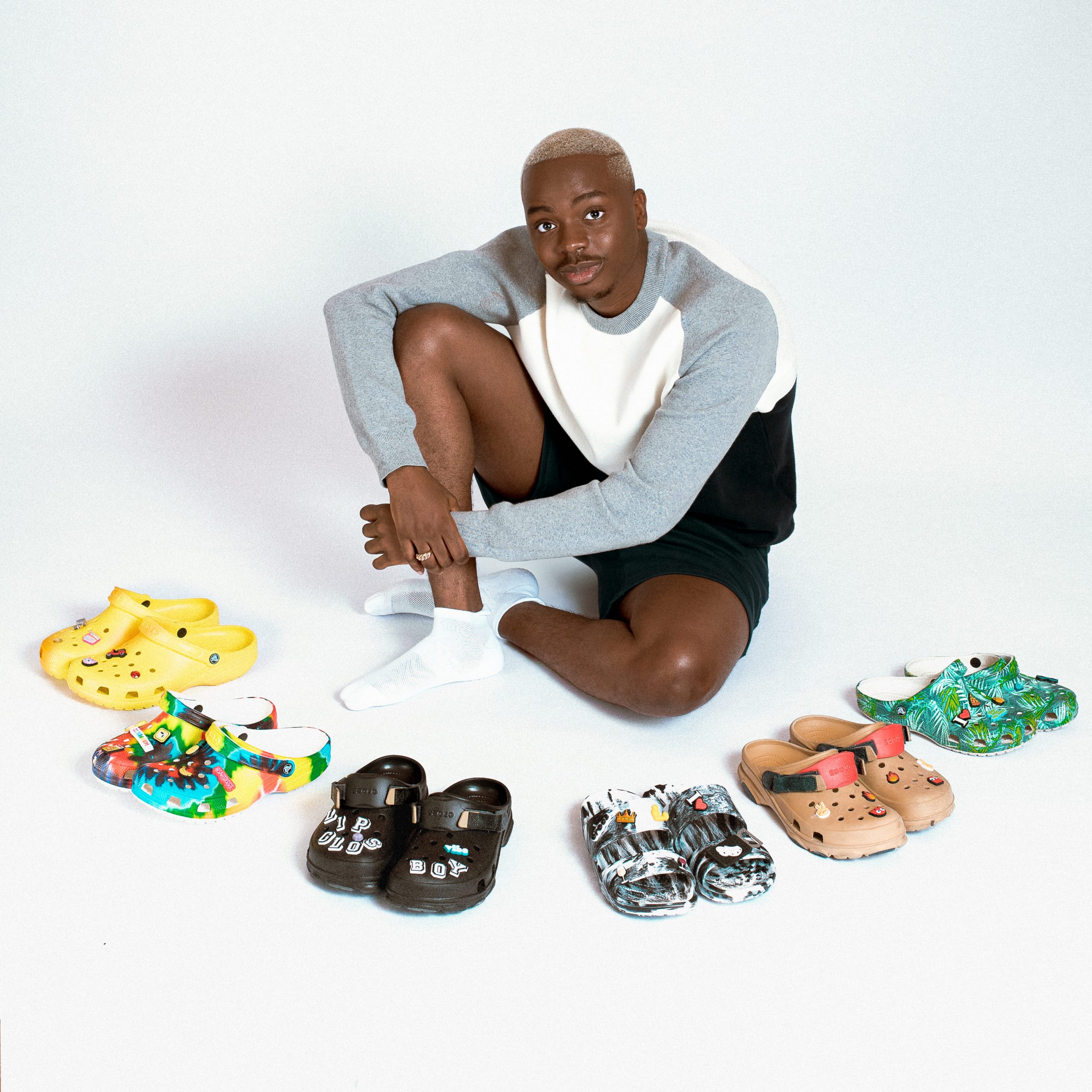
Nigeria even got its own Crocs ambassador in Enioluwa, a Gen Z influencer, in May 2022. But the brand’s marketing presence here seems to have quietly faded since; its Nigerian Instagram page no longer exists, and its Facebook page hasn’t posted since December 2023. Globally, Crocs isn’t going anywhere. The shoe came to life in 2002 as something meant for wet, outdoorsy use, and now sells in over 85 countries, moving 129 million pairs in 2025 alone, according to its 2025 Comfort Report.
The Real Reason Crocs Took Over: Nigerian Roads
None of that fully explains why Crocs became such a fixture in Nigerian working life specifically, though, and the honest answer has less to do with fashion than with the country’s roads.
Most commuters walk to a bus stop, board something communal (a bus, a keke, a shared taxi), then walk again on the other end, often on unpaved or half-paved ground. Add the rainy season, when parts of Lagos flood badly enough that vehicles get stranded on major roads, and you start to see why a shoe that can seemingly swim and is cheap to clean became more of a survival tool than a fashion statement. You can wade through a flooded junction in Crocs and simply rinse them off at the other end, but you wouldn’t dare try that with leather.
To be clear, this trend has pervaded Nigeria, not just Lagos. The country’s rainy season and patchy road infrastructure aren’t unique to any one city, and Crocs have found the same footing in Abuja, Port Harcourt, Ibadan and everywhere else people have to trek (not just ‘walk’) before they get to sit down.
Hospitals were early adopters for related reasons. Christiana, a 28-year-old medical doctor, wore Crocs almost every day during her housemanship, the one-year internship every Nigerian medical graduate completes before full practice. The habit starts earlier than that, in medical school, the first time you’re sent to observe a surgery or clerk a patient on the ward. There’s a pair kept specifically for the operating theatre, washed and treated for that environment, separate from the ones worn for everyday rounds. ‘The whole idea of Crocs is for it to cover your foot, especially in the theatre,’ she explained. Scalpels get dropped. Blood spills happen. A closed shoe with ventilation holes turns out to be exactly the right shape for a job that demands both protection and breathability, and the ability to rinse the whole thing under a shower afterwards matters more than most non-medical people would appreciate.
But Not Every Office Has Gotten the Memo
Outside hospitals, Nigerian attitudes to Crocs at work vary across industries, with some demanding a lot more formality than the footwear can offer and others aligning with it almost perfectly. Banking sits at the formal end. Folashade, a 28-year-old banker at an international bank in Lagos, described a dress code that’s loosened over the past year, sneakers permitted, ties no longer compulsory, native wear allowed on weekdays, without ever extending that leniency to Crocs. ‘We do not wear Crocs at my organisation,’ she said plainly. Law firms tend to be even less forgiving; formal footwear remains close to non-negotiable in most Nigerian legal practices, Crocs or otherwise.
Marketing agencies, fintechs and a lot of startups sit at the other end entirely. Several posts and reviews of Nigerian workplace culture note that while a strict banking boardroom still isn’t the place for Crocs, they’ve become close to standard in tech offices, agencies and casual-Friday settings, where the emphasis has shifted from formal dressing to just looking put together. For an industry built around speed, screens and informal client relationships rather than boardroom optics, a shoe you can wear from the bus stop to your desk without changing makes practical sense.
Even within banking, the loosening hasn’t been linear. Folashade’s bank allowed sneakers at the start of the year, then narrowed the acceptable colours down to a handful. It allowed native wear on weekdays, then specified exactly what that had to look like, full senator for men, an Ankara blazer only for women, then narrowed even that down to a single day a week. Crocs never made it onto any version of the list, not because the bank got stricter about everything, but because some concessions were always going to have a lower ceiling than others.
So, Where Does That Leave Crocs?
The overall picture is a country slowly renegotiating what professionalism has to look like, industry by industry, with the terrain and the weather doing a lot of the arguing that fashion trends usually get credit for. Crocs earned their place in Nigerian working life the way most practical things do here: not because they were stylish first, but because they solved a problem everyone was quietly dealing with. And yeah, it doesn’t hurt that they are stylish too.