
When the European Union voted to impose definitive tariffs of up to 45 per cent on Chinese-made electric vehicles, the headlines focused almost exclusively on Brussels, Beijing and Washington. Western analysts framed the move as a necessary shield to protect traditional European carmakers from subsidised foreign competition. But inside the logistics hubs of Guangzhou and across the auto retail corridors of Lagos, Nairobi and Johannesburg, the strategic calculus looks entirely different.
As European ports tighten regulatory screws and North America enforces steep import barriers, Chinese electric vehicle manufacturers are not slowing down production. Instead, they are rerouting their massive supply lines toward developing regions. Africa, long treated as a dumping ground for ageing European internal combustion engines, is suddenly emerging as the primary battleground for China’s global automotive expansion.
This collision between EU trade protectionism and Chinese industrial output is triggering a seismic shift across the African continent. For local buyers, fleet operators and urban transport unions, it marks the beginning of an aggressive transition to electric mobility. But for domestic economies struggling with weak power grids, volatile currencies and fragmented assembly policies, it presents a complex industrial dilemma.
The European Tariff Wall and the Diversion to Africa
To understand the volume of Chinese electric vehicles moving into African markets, one must look at the structural bottleneck in Europe. Chinese auto conglomerates like BYD, Geely, and Chery invested heavily in domestic battery supply chains, achieving manufacturing efficiencies that allow them to produce electric sedans and compact SUVs at costs European brands cannot match.
When European regulators placed high tariffs on these imports, the immediate corporate priority in Shenzhen and Wuhu became market redirection. Emerging economies with low trade barriers, growing urban populations and high fuel costs became prime targets. Africa, where imported used petrol and diesel cars historically accounted for over 80 per cent of vehicle registrations, suddenly represents a vast, underserved frontier.
Chinese manufacturers are not merely shipping consumer sedans. They are targeting the real backbone of African transit: commercial fleets, micro-mobility and public transportation networks. Electric two-wheelers and three-wheelers are flooding East Africa, while electric mass-transit buses and commercial delivery vans are securing government contracts and private fleet orders in West and Southern Africa. By offering complete vehicles at price points competitive with traditional used petrol cars, Chinese brands are bypassing the traditional luxury market and embedding themselves directly into daily commercial operations.
The Death of the Traditional European Used Car Pipeline
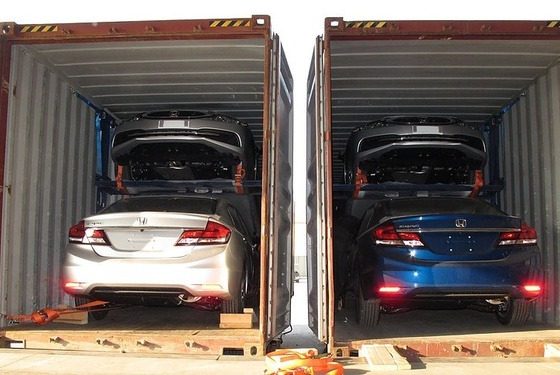
For decades, the African automotive sector operated on a predictable, cyclical trade route. European motorists purchased new petrol and diesel vehicles, drove them for a decade and exported them through ports like Rotterdam and Hamburg to West and Central Africa. Cities like Lagos, Cotonou and Douala relied heavily on these ‘Euro-spec’ used vehicles to keep their transport networks running.
New European Union environmental mandates and stricter domestic emission standards are steadily choking this pipeline. As Western European nations accelerate internal deadlines to phase out internal combustion engines, the production of traditional petrol models is shrinking. Furthermore, new EU regulations governing the end-of-life handling of vehicles and waste exports are making it increasingly difficult and expensive to ship older, high-emission diesel cars out of Europe.
This regulatory pinch is creating a sharp inventory deficit across African car lots. The supply of clean, affordable used European cars is drying up and the ones that do reach African shores carry inflated price tags driven by shipping logistics and currency devaluations. Chinese EV exporters are stepping directly into this void, offering brand-new, zero-emission vehicles with digital infotainment suites and factory warranties for the same price as a ten-year-old European import.
Local Assembly, Infrastructure Realities and Economic Friction
While the influx of affordable Chinese electric vehicles offers an immediate alternative to expensive petrol imports, it exposes severe infrastructure vulnerabilities across the continent.
In markets like South Africa, Nigeria and Kenya, national power grids struggle with generation capacity and consistent distribution. Charging an electric fleet in a city experiencing routine load-shedding or blackouts requires heavy private investment in off-grid solar infrastructure. While commercial fleet operators are increasingly building captive solar charging hubs to bypass national grids, individual retail buyers face significant charging anxiety outside major metropolitan centres.
There is also the question of industrial policy and local manufacturing. African governments have spent the last decade trying to build domestic automotive assembly industries through protective tariffs and local content mandates. The sudden arrival of fully assembled, low-cost Chinese EVs threatens to undermine these nascent assembly plants, which were originally built to configure traditional internal combustion engines.
To navigate these local content rules, forward-thinking Chinese brands are moving beyond pure vehicle exportation. They are beginning to partner with regional assembly hubs, setting up semi-knocked-down (SKD) assembly lines in countries like Kenya, Rwanda and Egypt. By assembling electric buses and commercial vans locally, these companies satisfy government industrial requirements, lower import duties and shield themselves from local currency risks.
A New Automotive Order on the Continent
The convergence of European trade protectionism and Chinese industrial scale has permanently altered the trajectory of mobility in Africa. The long-standing reliance on Western European used cars is reaching its natural conclusion, replaced by a rapid, Chinese-led electrification drive tailored to commercial utility and cost efficiency.
Africa is no longer merely a passive recipient of the developed world’s automotive leftovers. It has become a crucial proving ground where low-cost electric mobility must prove its durability against tough road conditions, fragile power networks and volatile economic climates. The brands that master this environment will not only control the African automotive market for the next generation—they will define the blueprint for mobility across the entire developing world.