
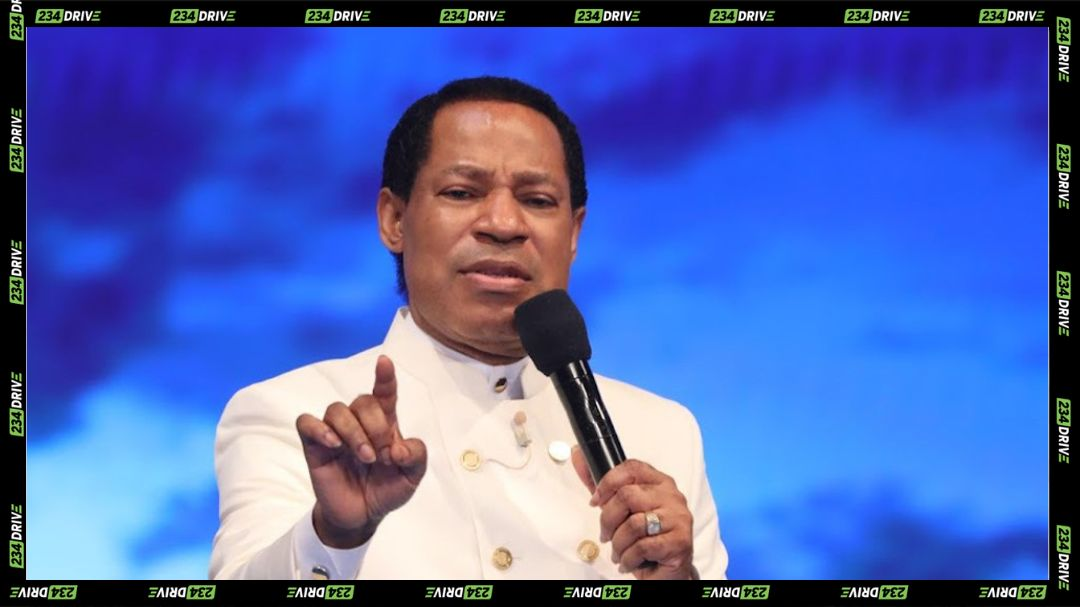
Mid-August 2026. The stage at The New Economy Unveiling (NEU26) did not look like a traditional church altar. Instead, it resembled a high-stakes Silicon Valley product presentation. Pastor Chris Oyakhilome, the founder and president of Christ Embassy, paced the floor, but he was not parsing scripture. He was walking an exclusive, invitation-only audience through the sleek, aerodynamic curves of a red performance sports car. This was the debut of the Tsion brand, and within hours, viral video footage circulated across Nigerian social media, moving rapidly from Instagram feeds to mainstream news platforms.
It is one thing for a megachurch to launch a university, a broadcasting network, or a digital bank. It is entirely another to step into heavy hardware production by entering the auto industry. The unveiling of Christ Embassy electric cars is more than a viral internet moment. It represents a radical shift in how African faith-based institutions engage with the mobility economy, moving away from simple fleet purchasing to indigenous production ambitions. But scaling an electric vehicle brand in Nigeria’s complex infrastructural landscape requires more than gleaming prototypes. It demands supply chain mastery, billions in capital and a grid integration strategy that faith alone cannot build.
The Tsion Lineup: A Multi-Segment Strategy
What exactly was on display? The lineup presented at NEU26 was expansive, signaling a bold ambition to cover multiple vehicle segments simultaneously. Oyakhilome did not unveil a single concept car; he introduced an entire proposed fleet. While he conceded that certain elements, particularly the steering wheel designs on specific models, were still undergoing refinement, the physical prototypes presented a clear vision of the brand’s intended market reach.
Tsion Passion
The Tsion Passion positions itself at the center of the modern utility market. Presented as an electric SUV, it features a minimalist dashboard and a sleek exterior designed to rival established mid-market competitors. In the global EV race, the mid-size SUV has become the most contested and lucrative segment. By leading with passion, the Tsion brand is signalling an intent to capture urban professionals and family demographics who desire elevated ride heights and spacious interiors, assuming the eventual retail price aligns with market realities.
Tsion Falcon
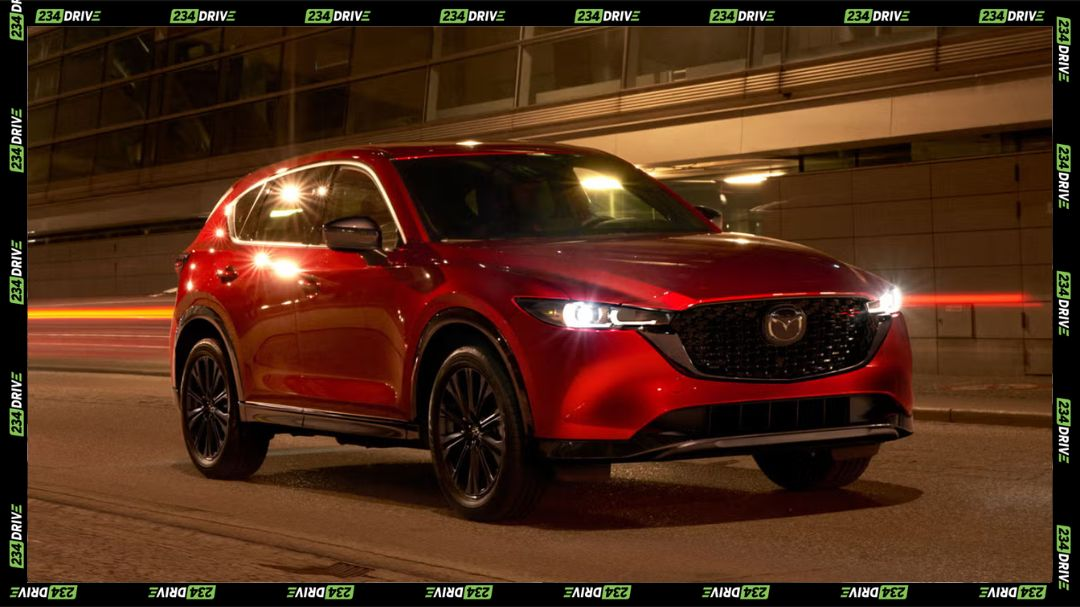
For the performance market, Oyakhilome introduced the Tsion Falcon. Also referred to as the Falcon Series, this red, track-oriented sports car dominated the visual space of the presentation. Sports EVs serve a specific function for emerging automakers: they act as halo vehicles. They demonstrate engineering prowess, speed capability and aerodynamic design, drawing attention to the brand even if the bulk of future sales will rely on more practical models like the Passion.
Vision Series
The presentation also included the Vision Series, specifically teasing a Vision Coupé. While fewer details were shared about this specific model, the inclusion of a coupé suggests a strategy aiming at the executive luxury segment. Coupés traditionally appeal to a demographic prioritising styling and personal driving experience over passenger utility, adding a layer of European-style grand touring ambition to the Tsion portfolio.
OG Series
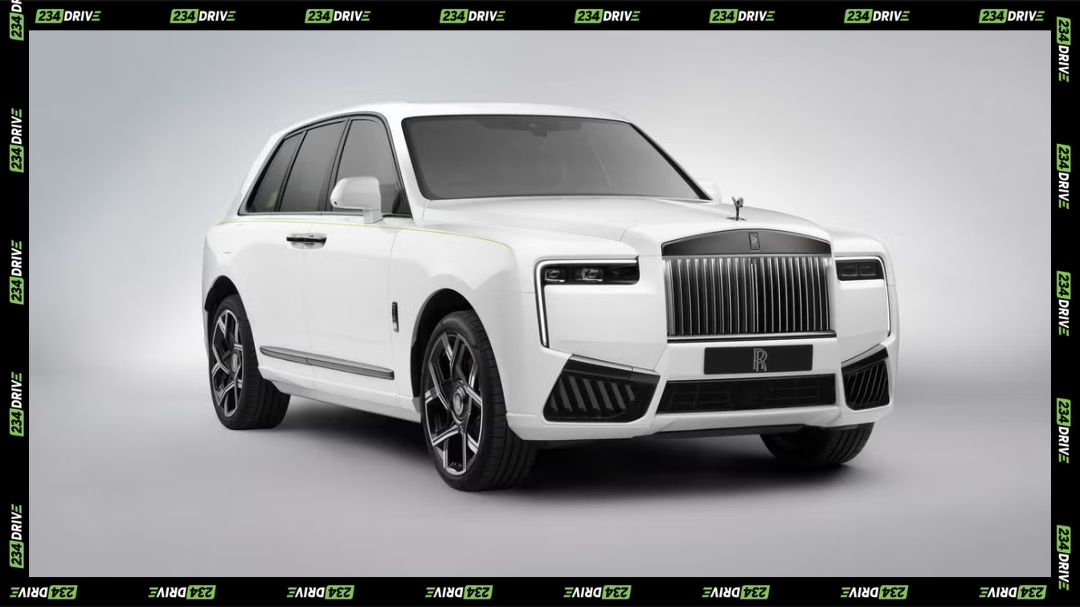
Perhaps the most discussed vehicle segment was the OG Series, a lineup of imposing luxury SUVs. When explaining the nomenclature, Oyakhilome noted that the ‘OG’ simply stands for ‘Of God’. This direct integration of faith-based branding into luxury automotive naming conventions is unprecedented. The OG Series appears aimed directly at high-net-worth individuals, church executives and global partners who currently navigate Lagos or Abuja in imported Lexus LX or Mercedes G-Class vehicles.
Bridging the Manufacturing Gap
These vehicles exist physically as impressive visual prototypes, but for a mobility publication, the exterior styling is only the beginning of the story. To understand the true weight of this launch, we must separate automotive assembly from deep manufacturing. Designing a beautiful chassis and outfitting an interior can be executed locally with skilled engineers and custom bodywork. However, the core architecture of an electric vehicle relies on a heavily consolidated global supply chain.
At present, there are no public technical specifications for the Tsion brand. We do not know the battery capacity, the estimated driving range or the charging architecture. More importantly for the African mobility context, we do not know how these vehicles manage thermal regulation in tropical climates. An EV battery operating in Lagos traffic requires robust cooling systems to prevent severe degradation, a hurdle that even seasoned global manufacturers have had to re-engineer specifically for the continent. Until these specifications are published and homologation standards are met, the cars remain conceptual marvels rather than market-ready mobility solutions.
During the presentation, Oyakhilome publicly named prominent tech figures, thanking Elon Musk and Jeff Bezos. He praised Musk for his ‘personal attention’ and noted Bezos was ‘very helpful’ when the ministry got started ‘on the Wall Street thing’. While these namedrops fuelled intense online speculation, there is no verified public record of Tesla, Amazon or either billionaire taking a direct technical stake in Tsion cars. In 2024, Musk was named a top technology partner for Rhapsody of Realities, the ministry’s globally distributed devotional, highlighting existing tech-infrastructure ties for gospel reach. The recent comments appear linked to the broader technological ecosystem Christ Embassy is building, rather than a secret automotive manufacturing pact.
Policy Realities and Nigeria’s EV Ambitions
If Tsion cars are to transition from prototypes to commercially viable vehicles, they must navigate Nigeria’s evolving mobility policy. The National Automotive Industry Development Plan (NAIDP) 2023–2033 sets an ambitious target for a 30% local production share for electric vehicles in Nigeria and a 40% local content integration. The federal government has actively moved to zero-rate VAT on EVs and reduce import tariffs on semi-knocked-down kits to encourage domestic assembly and reduce the country’s crushing reliance on imported refined fuel.
Yet, this policy exists in a reality distinct from the daily commute of everyday Nigerians. The infrastructure deficit remains the primary bottleneck for EV adoption in the country. A luxury electric SUV is a brilliant piece of engineering, but it is entirely reliant on a charging network that does not yet exist at scale. Nigeria’s existing auto plants often operate far below capacity. Historic attempts at local manufacturing have struggled against inconsistent government policies, porous borders bringing in cheaper used vehicles and a lack of local component ecosystems.
The macroeconomic reality of 2026 is defined by the absence of fuel subsidies, which has decimated the operating margins of commercial transport operators. While EVs present a long-term solution to this crisis, high-end luxury models do not solve the immediate mass transit issue. For Tsion to succeed commercially, it cannot just sell cars. It will have to participate in building the energy infrastructure that powers them, or risk manufacturing vehicles that can only be driven within heavily controlled, privately powered environments like church estates or affluent neighbourhoods. We have yet to see if the Tsion strategy includes a wider rollout of charging stations or battery-swapping infrastructure.
Megachurches in the Mobility Economy
To view the Tsion brand purely as an automotive startup is to miss the wider context of the organisation behind it. Christ Embassy, formally known as LoveWorld Inc., is a sprawling global enterprise. Founded in 1987, it has grown into a highly disciplined institution with a long, proven history of economic diversification. The ministry operates satellite television networks like LoveWorld SAT, social media platforms like KingsChat and significant fintech interests. Through corporate arms, the ministry holds a reported 9% stake in Parallex Bank, which evolved from a microfinance institution into a fully licenced, digital-first commercial bank.
The New Economy Unveiling was not solely about cars. The Tsion vehicles were presented alongside Tsion Ark, a digital finance and trading ecosystem, VIVID AI platforms and Interlink, a proposed alternative internet infrastructure. This is a cohesive strategy of technological sovereignty. Oyakhilome is building parallel economic structures, framed to his audience as ‘the supply system and administration of Christ’. By venturing into automobile manufacturing, the ministry is remaining remarkably consistent with its pattern of institutional expansion into productive enterprises.
The public reaction to the unveiling reflects the complexity of this ambition. Supportive voices frame the electric vehicle initiative as a masterstroke of indigenous innovation and job creation. Pastor Bolaji Idowu of Harvesters International Christian Centre publicly praised the move, noting, ‘My mind has been stretched. This is what it means to be the salt of the earth and the light of the world’. For many, it is a powerful counter-narrative to the long-standing critique that Nigerian megachurches only invest in massive auditoriums rather than productive industries that employ people.
However, the scepticism is equally loud and deserves analytical attention. Critics question the funding models, asking if tithes and offerings are appropriate capital for high-risk industrial ventures. There are valid legal and regulatory questions regarding the status of incorporated trustees stepping into commercial manufacturing. Furthermore, the branding itself sparks fierce debate about the commercialisation of faith in a country where economic pressures are acute. The gap between unveiling a prototype and achieving industrial scale is vast, and online banter quickly pointed out that ordinary members might end up funding a project they can never afford to drive.
The Road to November and Beyond
Pastor Chris Oyakhilome has promised that fuller details, perhaps including the elusive technical specifications, production capacities and the commercial roadmap, will be revealed in November 2026. Until then, the true nature of the Tsion brand remains suspended between an audacious vision and a challenging industrial reality.
Building a car is phenomenally difficult. Building an electric car in Nigeria is an exercise in defying infrastructural gravity. But 234Drive knows better than to dismiss an institution with the capital, the captive global audience and the sheer organisational discipline of LoveWorld. Whether the Tsion Passion eventually navigates the congested traffic of Eko Bridge alongside a danfo or remains a high-tech novelty for church elites, it has already achieved one undeniable thing. It has permanently changed the conversation about what an African religious institution can build.