
Watch the evening traffic crawl along the Third Mainland Bridge or glide down Abuja’s Airport Road and you will notice a visual shift in the automotive hierarchy. Tucked between the predictable sea of Toyota Prados, Honda CR-Vs and the occasional Mercedes-Benz GLE sits the striking silhouette of a Mazda CX-90. With its deep reflective paintwork, elongated bonnet and quiet confidence, it looks every inch a premium vehicle. It prompts a question that has divided automotive forums and showroom floors alike: is Mazda a luxury brand?
The short answer is no. Mazda is not a traditional luxury brand.
However, the reality of modern mobility is far more nuanced than a simple yes or no. By examining official positioning, industry pricing, historical attempts at exclusivity and actual engineering data, a clearer picture emerges. Mazda has deliberately engineered a ‘premium mainstream’ identity. It offers the sensory experience and driving dynamics of a luxury vehicle without the exorbitant badge tax that defines traditional luxury ownership in Africa and globally.
Here is the data-backed reality of where Mazda actually sits in the global mobility ecosystem.
The Strategy Behind the Badge
Anyone who remembers the early 2000s remembers the ‘Zoom-Zoom’ era. Back then, Mazda built cars that were thrilling to drive but often compromised on interior refinement and cabin noise. The modern iteration of the company has completely abandoned that strategy. To understand Mazda today, you must first look at what the company says about itself.
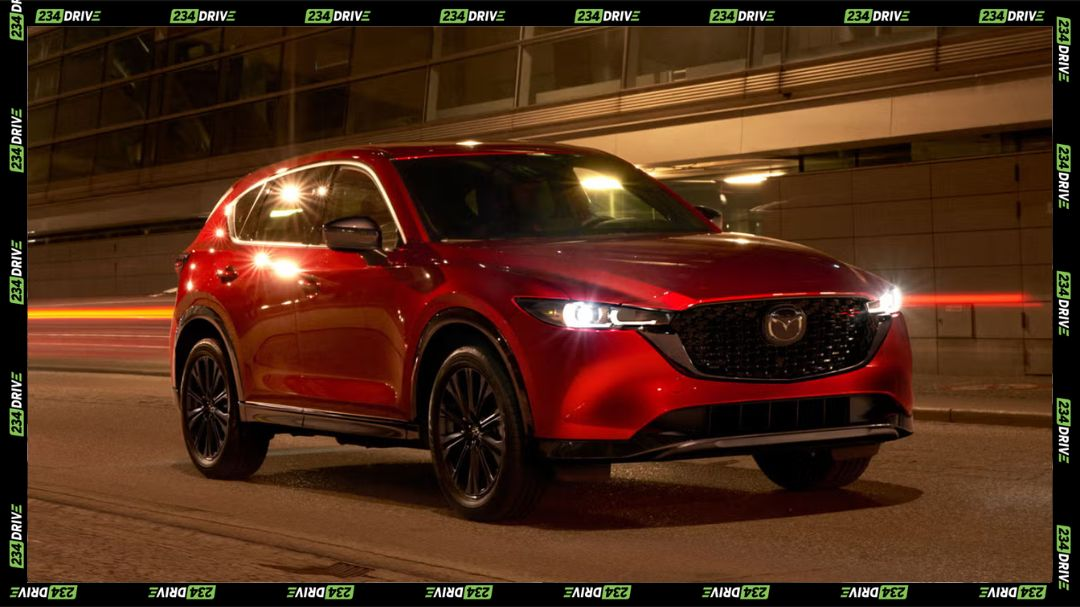
The Japanese automaker explicitly avoids labelling itself a luxury marque. Instead, its messaging centres on purpose and experience. The company’s 2030 Vision focuses on being a ‘car-loving company that creates moving experiences’, anchored by core philosophies like Jinba Ittai (the unity of horse and rider) and Kodo design.
Executives have publicly described their strategy as becoming a credible alternative to traditional mainstream premium brands. They are specifically targeting buyers who are fatigued by the aggressive pricing and subscription-model micro-transactions of German vehicles. One critical study from recent market surveys validated this approach. It found that 93% of respondents preferred getting ‘more of what matters’—better design, technology and safety—over paying a premium strictly for a status brand.
Modern buyers increasingly define premium by the tangible experience rather than the badge on the steering wheel. Mazda has capitalised on this shift. It markets its higher trims with upscale language while carefully avoiding the pure luxury classification that would put it in direct, unsustainable competition with Lexus or BMW.
The Ghost of Amati
Mazda’s current strategy is actually born from a historical lesson in overreach. In 1991, flush with cash during Japan’s economic boom, Mazda announced the creation of a dedicated luxury division called Amati. Named after a famous Italian family of violin makers, Amati was designed to be Mazda’s answer to Lexus, Acura and Infiniti.
Internally dubbed ‘Project Pegasus’, the plan was ambitious. It included separate luxury dealerships and a flagship sedan powered by a massive V12 engine designed to rival the BMW 7 Series and Mercedes-Benz S-Class. But when Japan’s asset bubble burst in 1992, the financial pressure became insurmountable. The Amati project was cancelled before a single production vehicle was ever sold.
Rather than abandoning its premium ambitions, Mazda absorbed the lessons of Amati. It realised that creating an entirely new luxury ecosystem was a monumental financial risk. Instead, it chose to elevate its core brand, pouring its luxury-tier engineering and design budgets directly into the everyday cars it was already building.
The Economics of Premium Mainstream
Industry classification and pricing data firmly anchor Mazda in the mainstream category, albeit at the very top of it. Analysts from Kelley Blue Book to JD Power treat Mazda as a competitor to Toyota, Honda and Hyundai rather than Audi or Volvo.
The numbers tell the story. In mid-2026, the average transaction price for a new vehicle in the US market hovered around $49,500. Mazda’s average transaction price sat comfortably at roughly $37,500. For context, true luxury brands command significantly more. Lexus averages $63,000 while BMW and Mercedes-Benz transact at upwards of $73,000.
Even when examining specific models, the pricing strategy is clear. A 2026 Mazda3 starts at around $25,885, making it highly accessible. However, its top-tier Turbo Premium Plus trim reaches roughly $38,175, placing it squarely in entry-level luxury territory. The luxury flagship SUV—the three-row CX-90—tells a similar story. The base model starts near $40,000 but a fully loaded Turbo S Premium Plus can push towards $60,000. While this sounds expensive, it aggressively undercuts comparable luxury SUVs like the Audi Q7 or BMW X5 by $20,000 to $30,000.
Redefining What Premium Means
Before deciding where Mazda fits, we must examine how the definition of a luxury vehicle has evolved. Twenty years ago, luxury was strictly defined by engine displacement, leather quality and a hood ornament. Today, the lines are blurred. Mainstream brands like Hyundai and Kia now offer heated steering wheels and panoramic sunroofs—features once exclusive to the Mercedes-Benz S-Class.
Because feature lists are no longer the ultimate differentiator, true luxury brands have leaned into exclusivity, aggressive performance divisions and bespoke dealership experiences. You are paying for the ecosystem as much as the vehicle. Mazda does not offer this ecosystem. You will likely buy your Mazda CX-90 from the same dealership floor where someone is financing an entry-level hatchback. There are no champagne lounges in the waiting room.
However, what Mazda offers is ‘near-luxury’. It provides the tactile and dynamic benefits of a high-end vehicle without the associated social baggage or exorbitant running costs. For a growing demographic of educated professionals across African cities, this understated excellence is precisely the point. They want the acoustic glass and the refined engine but they do not want the intense scrutiny that comes with driving a Range Rover into a government secretariat or a local market.
Engineering the Experience
If the pricing is mainstream, why does the experience feel so upscale? The answer lies in where Mazda chooses to spend its money.
The brand has invested heavily in the tangible touchpoints of driving. The Kodo design language produces elegant, motion-oriented styling that ages exceptionally well. Step inside a high-trim Mazda and you are met with materials rarely seen in its price bracket. You will find real wood trim, Nappa leather, acoustic glass for a quiet cabin and premium audio systems. Even the tactile feedback of the switchgear is engineered to mimic high-end vehicles. In an era where mainstream brands are forcing drivers to use massive, distracting touchscreens for basic functions, Mazda has retained physical buttons and a rotary dial controller—a deliberate, human-centric design choice that mirrors the ergonomics of premium European systems.
More importantly, Mazda has committed to engineering architectures usually reserved for pure luxury cars. The introduction of longitudinal inline-6 engines and rear-biased all-wheel-drive platforms on models like the CX-70 and CX-90 is a direct challenge to European engineering ethos. These platforms provide responsive, balanced handling that front-wheel-drive competitors simply cannot match.
The Verdict on African Roads
Sales context matters. With global sales hovering around 410,000 to 424,000 units annually in recent years, Mazda is a relatively small volume player. It does not dominate the mass market like Toyota, nor does it command the ultra-high profit margins of Mercedes-Benz.
Instead, it occupies a highly strategic, intelligent middle ground. This positioning creates a unique value proposition for the African buyer. In the secondary Tokunbo market, a lightly used Mazda CX-5 offers superior cabin quietness and advanced safety features for millions of Naira less than a heavily used, stripped-down Mercedes-Benz GLC.
Furthermore, reliability remains a core strength. Mazda consistently scores well in vehicle dependability studies. It offers lower long-term ownership and maintenance costs than traditional luxury brands—a crucial factor for fleet owners and everyday drivers navigating the harsh realities of African road infrastructure. When a suspension component breaks in a pothole on the Apapa-Oshodi Expressway, replacing a Mazda control arm is significantly less ruinous than sourcing one for a German luxury SUV.
Mazda is not a luxury brand because traditional luxury requires more than just good leather and a smooth ride. True luxury demands exclusivity, dedicated high-end dealership networks, exhaustive bespoke options and a heavy premium paid simply for the prestige of the badge.
But for the urban professional in Lagos, the expatriate in Nairobi or the discerning driver anywhere on the continent, Mazda has mastered the art of punching above its weight. It delivers a premium, engaging and sophisticated mobility experience without the crippling purchase price or maintenance anxiety of a luxury vehicle. It is the smart alternative for those who care more about how a car feels on the road than what the badge signals to the neighbour.