
Watch any luxury SUV navigate the challenging roads of Lagos or cruise through the clean avenues of Abuja, and the three letters on its tailgate immediately convey authority. Yet, ask the average driver or observer what those letters actually signify, and you will hear a range of creative guesses. Understanding the exact meaning of ‘GLE’ in Mercedes Benz is not just a lesson in automotive trivia—it is a masterclass in how modern German engineering and systematic branding collide.
Yet, if you ask the average motorist or bystander what those letters actually signify, the response is usually a collection of creative guesses and marketing folklore. Many assume it is an acronym born in a focus group, whilst others spin elaborate theories about luxury tiers and performance packages. In reality, deciphering the badge is not a lesson in corporate trivia—it is a clinical masterclass in how systematic German nomenclature and product hierarchy collide.
Deciphering the Letters: G, L and E
The letters on the tailgate of a Mercedes-Benz SUV are not a random combination chosen by a marketing agency. In 2015, the Stuttgart-based automaker introduced a restructured nomenclature system designed to bring order to its rapidly expanding portfolio. For a comprehensive look at decoding model names, we must break down the badge into its three distinct linguistic and structural components.
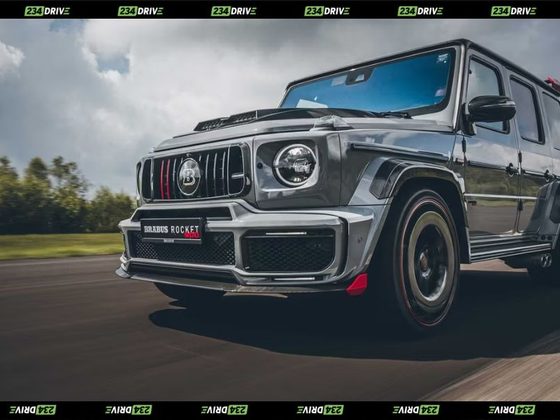
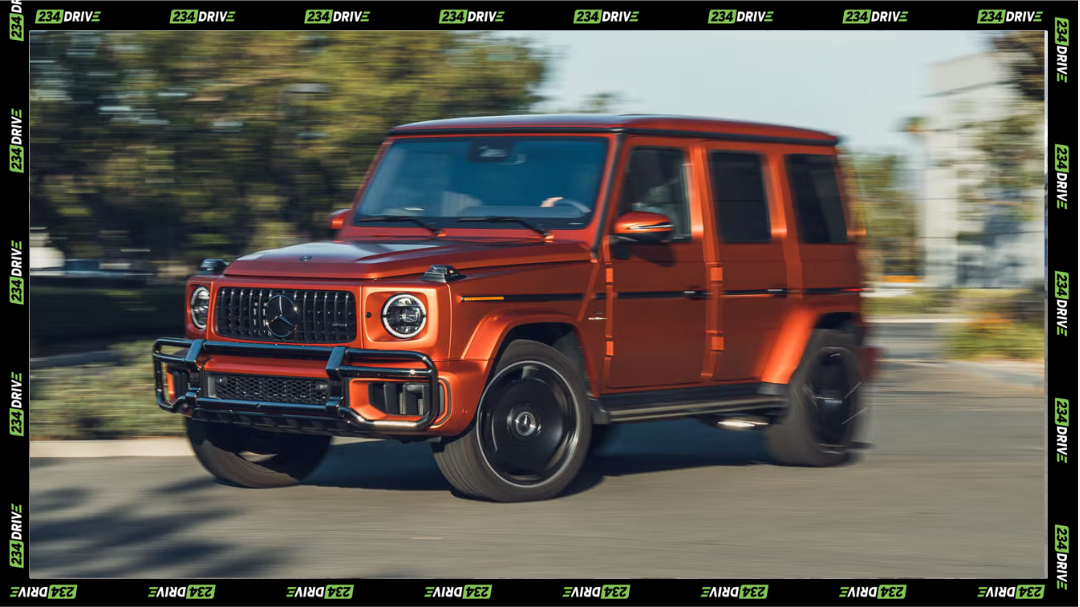
The first letter, ‘G’, represents Geländewagen—the German word for an off-road or terrain vehicle. This serves as a direct mechanical homage to the legendary G-Class, the rugged, boxy military-grade flagship that has defined the brand’s off-road capabilities since 1979. By beginning every SUV name with ‘G’, German engineers signal that the vehicle carries the structural DNA of its utilitarian ancestor, even if its primary daily routine consists of smooth highway commutes and school runs.
The second letter, ‘L’, functions purely as a linkage letter. It has no independent translation or acronym definition. Instead, it serves a phonetic and structural purpose, connecting the off-road prefix with the class-defining letter. This linkage standardises the naming scheme across the entire utility lineup, allowing for smooth pronunciation and a clean visual presentation on the vehicle body.
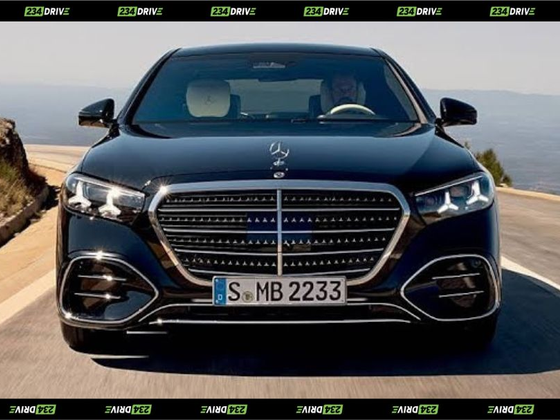
The final letter, ‘E’, establishes the vehicle’s exact market segment and luxury tier by linking it directly to the E-Class sedan. In the German brand’s hierarchy, the E-Class represents the executive mid-size sweet spot—large enough for supreme cabin comfort, yet agile enough for daily urban use. Therefore, the GLE badge literally translates to an E-Class engineered for tough terrain. For a complete understanding of how this fits into overall SUV name meanings, the class formula holds firm.
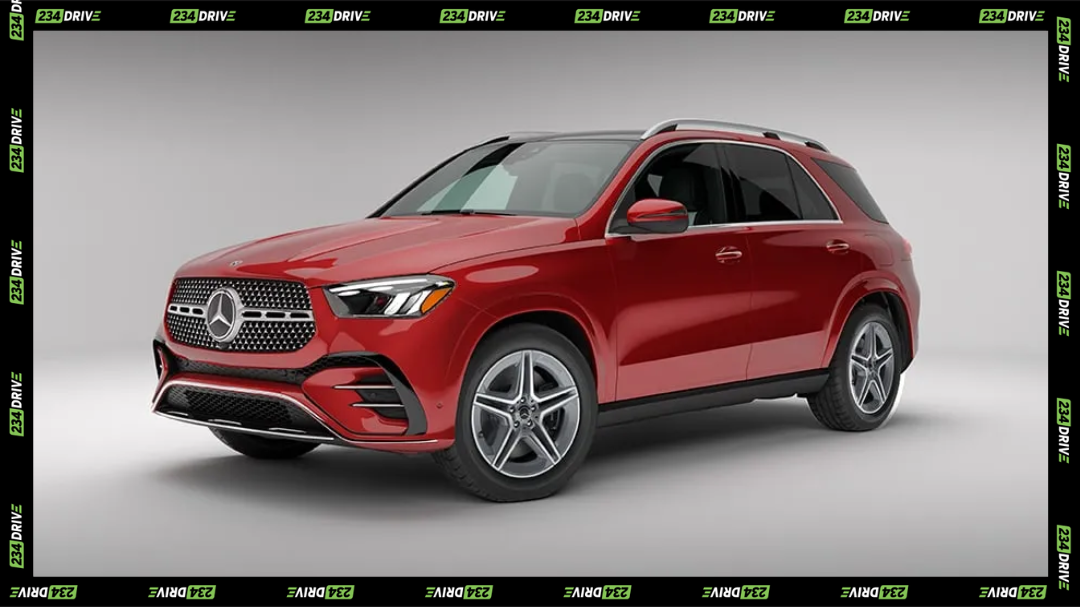
While several online forums and independent dealership websites popularise alternative theories—such as ‘Geländewagen Luxus E-Klasse’ or ‘Geländewagen Einführung’—the official engineering reality is far more clinical. The badge represents a logical mathematical formula where GL (SUV prefix) + L (Linkage) + E (Class equivalent) equals the mid-size luxury executive SUV.
The 2015 Nomenclature Revolution
To appreciate why the meaning of GLE in Mercedes Benz matters, we must look at the corporate confusion that preceded its introduction. Prior to 2015, the luxury mid-size SUV was known globally as the M-Class, often referred to colloquially as the ML. This naming choice created a significant corporate headache for the brand.
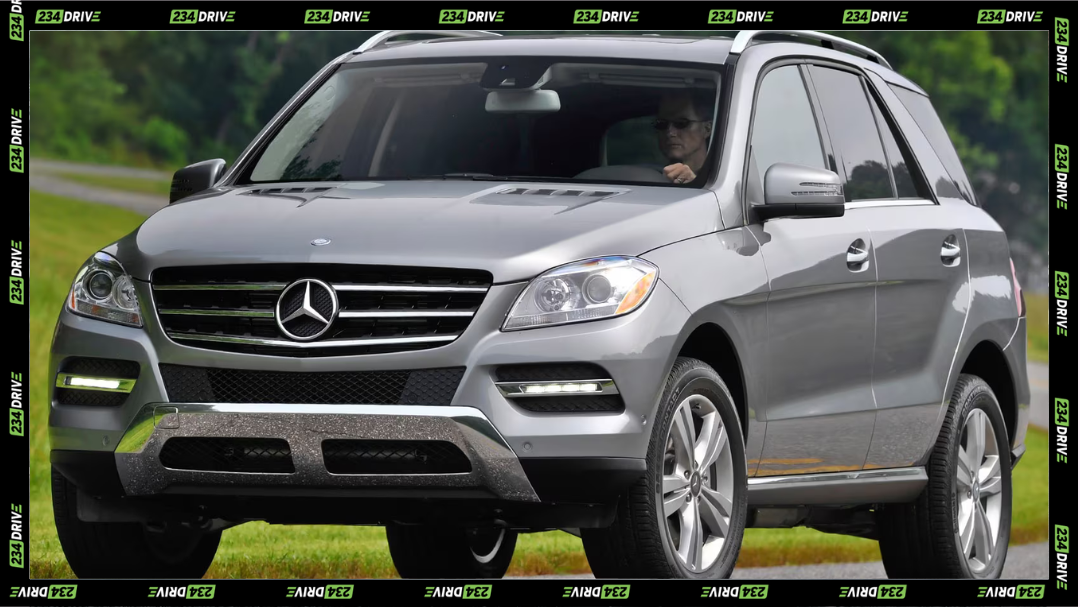
BMW had long guarded its ‘M’ trademark for its high-performance division, which created legal friction whenever Mercedes-Benz marketed its mid-size SUV in key global markets. Furthermore, as the Mercedes-Benz product line expanded to include compact crossovers and full-size haulers, the older names like GLK and ML failed to communicate a clear sizing hierarchy to prospective buyers.
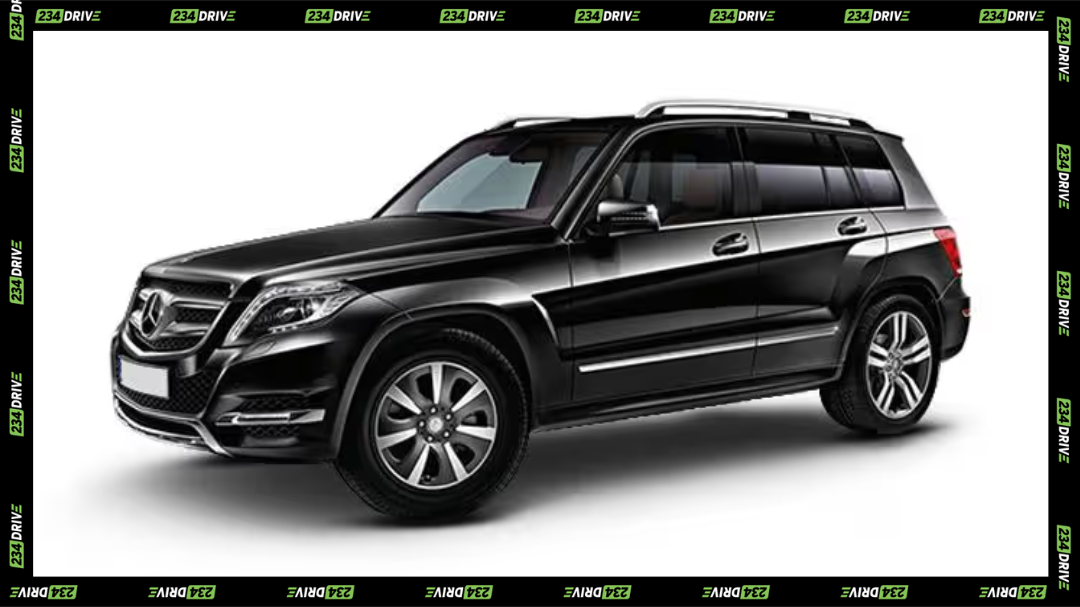
With the broader naming strategy explained across the range, the German automaker could prevent brand confusion. The 2015 W166 facelift provided the perfect opportunity to retire the M-Class designation in favour of the GLE badge. This systematic M-Class transition resolved the historic trademark tensions with Munich whilst simultaneously unifying the entire SUV family. Under this modern architecture, buyers instantly understand how the compact GLC aligns with the C-Class, the mid-size GLE aligns with the E-Class and the flagship GLS aligns with the S-Class.
A History of Adaptation: From ML to GLE
The physical vehicle carrying the GLE badge has a rich history that pioneered the premium SUV segment. For readers exploring Mercedes-Benz GLE history, the vehicle actually dates back to the late nineties. In 1997, Mercedes-Benz launched the W163 M-Class, built at the Mercedes-Benz US International (MBUSI) plant in Vance, Alabama. It was one of the earliest luxury utility vehicles to offer electronic stability control, proving that family SUVs could handle highway cruising safely.
Early models achieved global fame after appearing in the 1997 blockbuster movie The Lost World: Jurassic Park. Despite the brilliant marketing campaign, those early Alabama-built vehicles suffered from noticeable quality issues that threatened the manufacturer’s reputation for indestructible engineering. However, the development team worked tirelessly across subsequent generations to resolve these manufacturing defects, transforming the platform into a benchmark of luxury.
As the vehicle evolved through its second (W164) and third (W166) generations, it transitioned from a rugged body-on-frame truck construction to a sophisticated unibody design. This structural shift dramatically improved on-road refinement, bringing the driving dynamics closer to those of a premium passenger car. When the fourth-generation W167 launched in 2019, designers built it from the ground up to embody the unified GLE philosophy.
How the E-Class Standard Shapes the Driving Experience
Because the ‘E’ in GLE links the vehicle directly to the executive sedan class, the SUV must deliver an equivalent level of technological sophistication and interior comfort. It acts as a serene sanctuary, protecting its occupants from the harsh realities of the external environment through excellent sound insulation and advanced air suspension.
The modern platform offers an extensive range of powertrains designed to balance environmental efficiency with effortless performance. In the local market, buyers can select from turbo four-cylinder engines, smooth inline-six powerplants and high-performance twin-turbo V8s. For instance, the entry-level GLE 350 delivers approximately 255 hp, whilst the potent inline-six in the GLE 450 produces up to 375 hp, paired with a slick nine-speed automatic transmission.
Crucially, the manufacturer equips almost all models with its legendary 4MATIC all-wheel-drive system as standard. This permanent system continuously monitors grip levels, instantly directing torque to the wheels with the most traction. This capability is invaluable on African roads, where sudden downpours can transform a dry asphalt highway into a slippery hazard in minutes.
Unlike its smaller sibling—the compact, crossover-oriented GLC—the GLE provides substantial cabin space and an optional third row of seats. This versatility makes it highly popular among expanding families and corporate executives who require both utility and executive presence. For those who prefer a sportier silhouette, the manufacturer offers the GLE Coupe, featuring a swept-back roofline designed to rival the BMW X6.
Ultimately, the Mercedes Benz GLE is a class of vehicles that understand their role in the modern automotive landscape. They do not pretend to be a raw, military-grade G-Wagen, nor do they try to mimic the track-focused dynamics of low-slung sports saloons. Instead, they offer a meticulously insulated cabin that delivers executive E-Class luxury across any terrain.