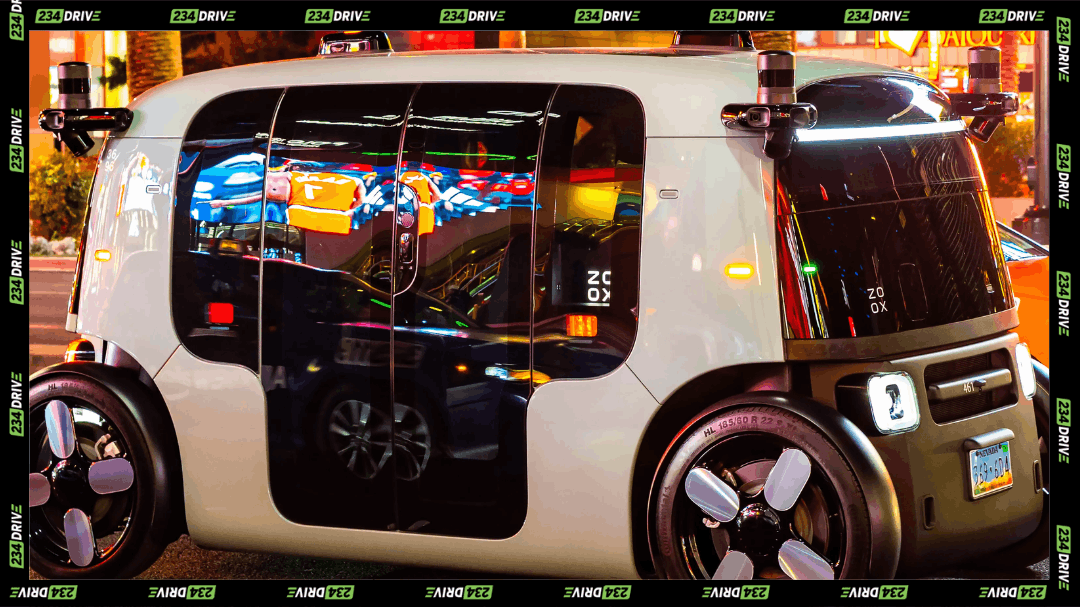

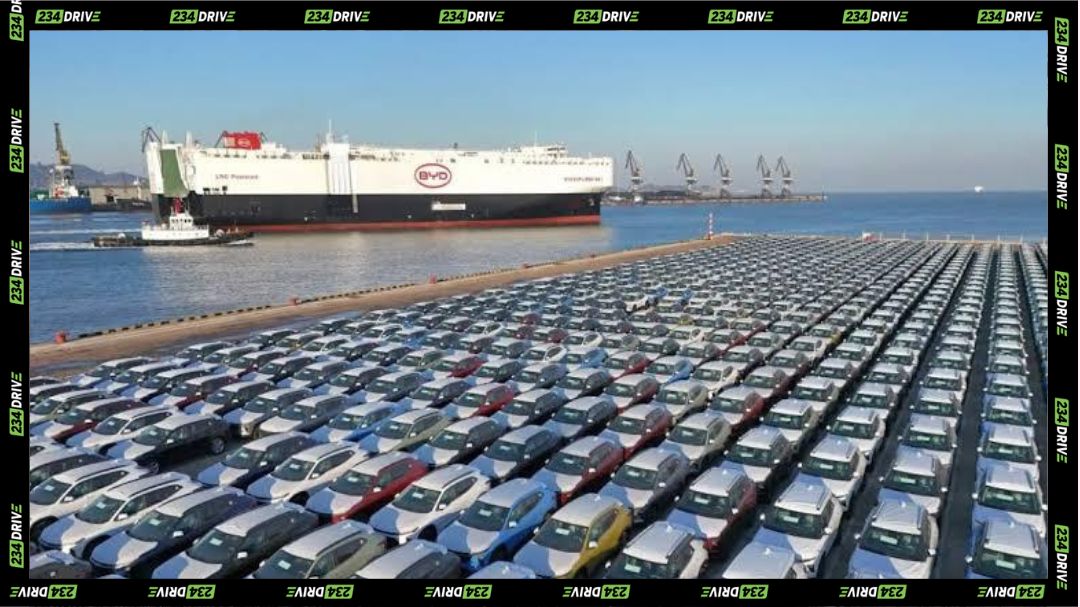
Drive through Victoria Island, Ikeja or Lekki today, and the trend is nearly impossible to miss. A sleek BYD Atto 2, Changan sedans and even the occasional Tesla now drive beside danfos and keke napeps, slowly becoming part of the everyday scene.
Online chatter has shifted since 2023, with conversations in WhatsApp groups and office car parks moving from “Will this work here?” to “Which is the best electric car to get?” Rising fuel prices and growing curiosity are pushing people from interest to action.
A recent post by 234Drive also brought to focus that many Nigerians stepping into this space don’t fully understand the trade-offs between buying locally and importing directly.
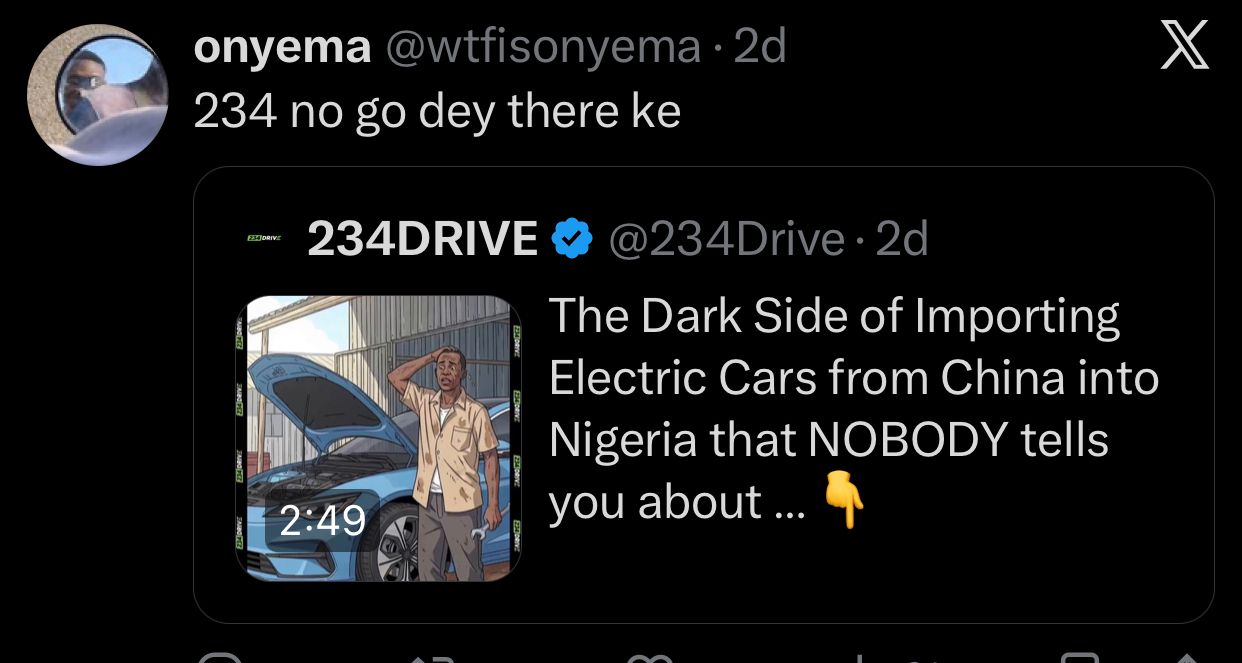
Nigeria isn’t just talking about EVs anymore—people are actively trying to buy them. But how Nigerians are shopping in this market will shape how their experience plays out.
The Surge of Chinese And Electric Vehicles
For a long time, Toyota was the safe bet. But things are changing. Since the subsidy removal and current international tension, fuel now sits around ₦1,250 per litre, making keeping a petrol car on the road harder to justify. That’s why more people are starting to look at electric cars, and the Chinese carmakers seem to have the most practical cars in the market. For some Nigerians it isn’t just joining a trend; it’s spending less on fuel and getting newer auto tech.
You’ll see it online too—TikTok conversations are picking up, with people sharing clips, reviews and first-hand experiences. Even dealers are joining in. In a mid-2025 post, Sarkinmoto highlighted how cars like the 2025 XPENG X9 are coming in at prices lower than some used Lexus RX 350 models.
Public charging is still not everywhere yet, but that hasn’t slowed things down. More buyers are leaning into home setups—charging overnight in their compounds or estates—and quietly making it work. As more people figure out these everyday routines, the idea of owning an EV is starting to feel less complicated and more possible.
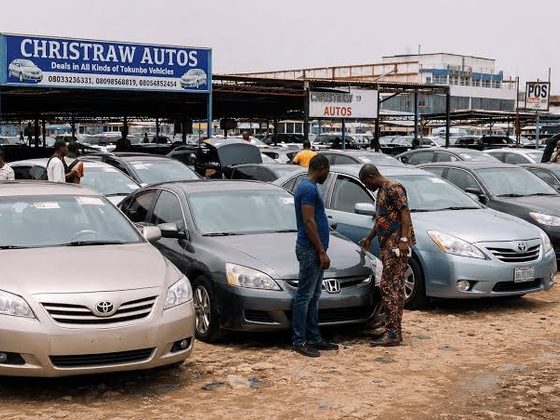
So far, there are two main ways Nigerians are going about buying these cars. Some stick with local dealers—walking into showrooms, paying a bit more, but getting some level of structure and support. Others are going the direct route—importing themselves through contacts, online platforms or shipping agents. Both paths are growing, but the second is pulling more attention.
A Shared Opinion Sparking A Bigger Conversation
When 234Drive shared the post asking people to weigh their options carefully before importing EVs from China, it sounded really straightforward—but the reactions went in very different directions.
The louder responses leaned away from the point, calling it an agenda or asking why Chinese cars were being singled out.
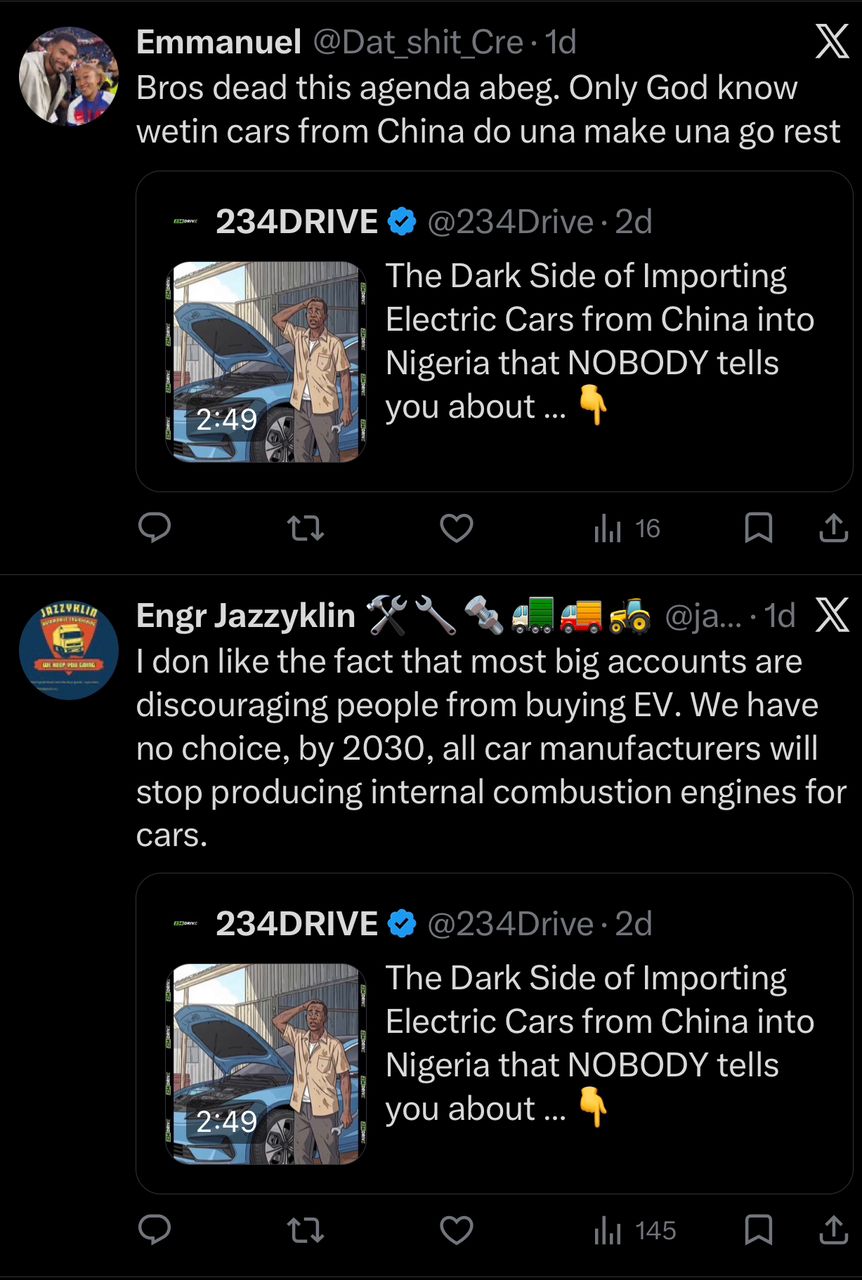
Others pushed back with confidence, saying mechanics and parts are already available if you know where to find them. The price factor came up a lot too. People pointed to the gap between dealer prices and direct imports, arguing that the real issue is how expensive local options have become.
As the conversation grew, some popular X personalities like the Aproko Doctor and Yinka Ogunnubi joined in and added their takes, which pulled even more attention to the post. .
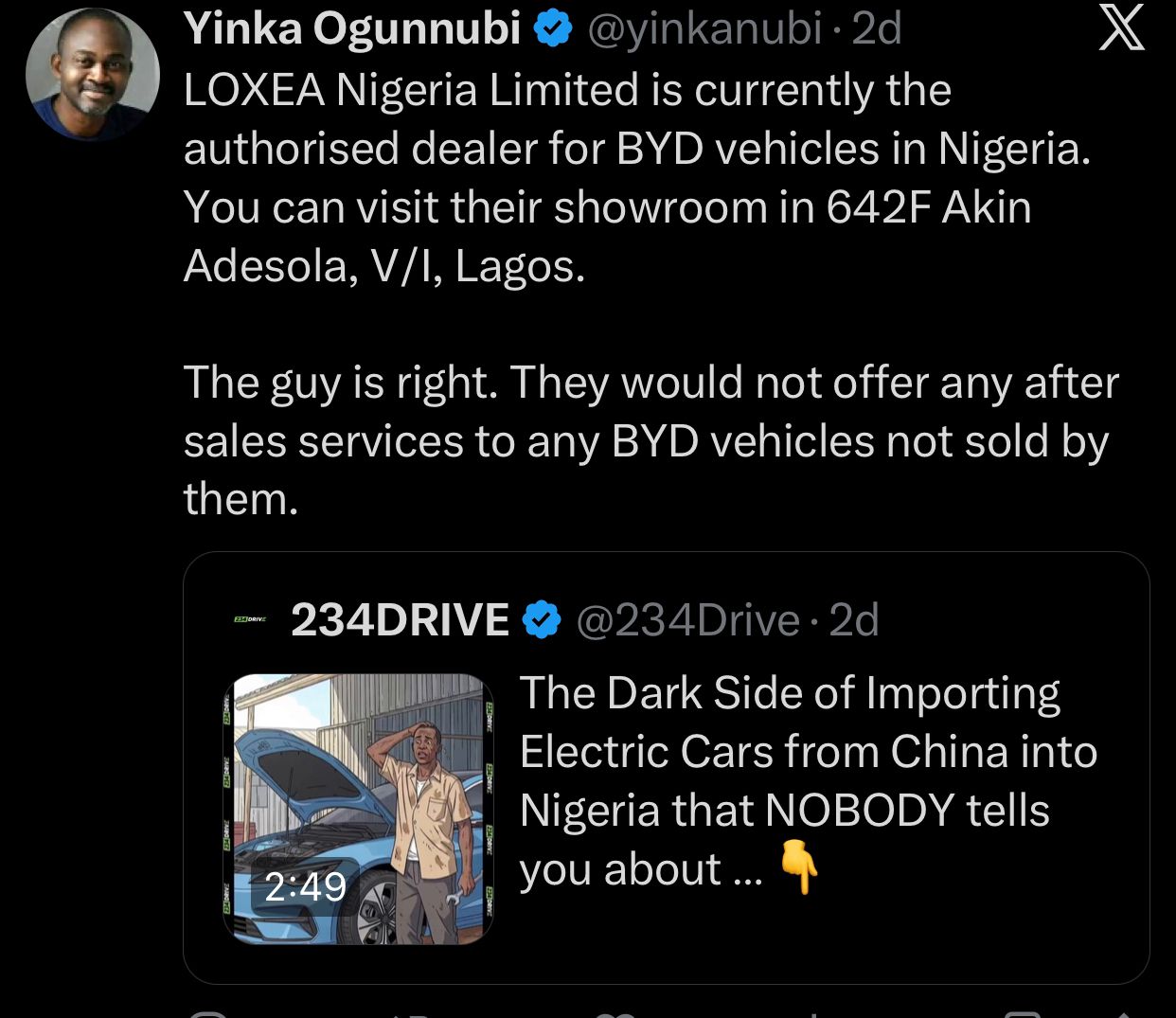
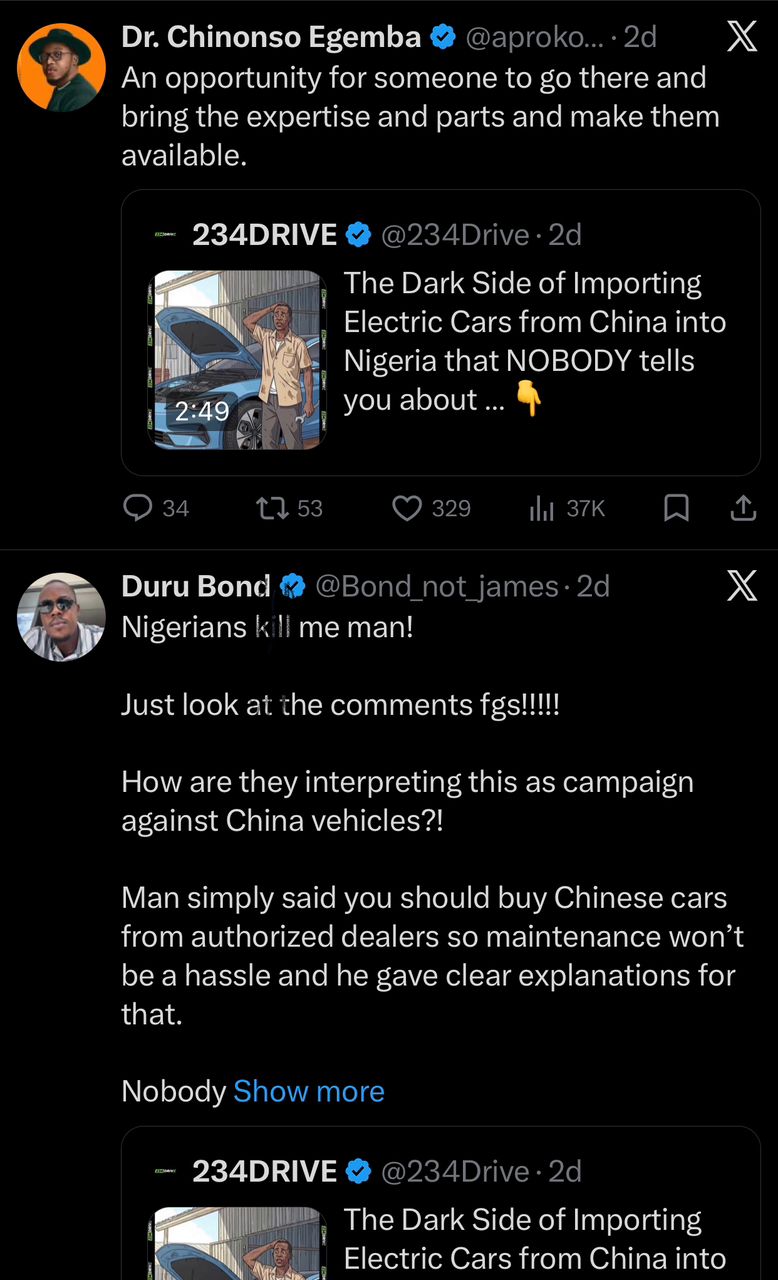
More so, the point about buying through authorised dealers for easier maintenance didn’t land the same way for everyone. Some took it as a warning against EVs altogether, and that sparked another round of reactions from people defending the shift.
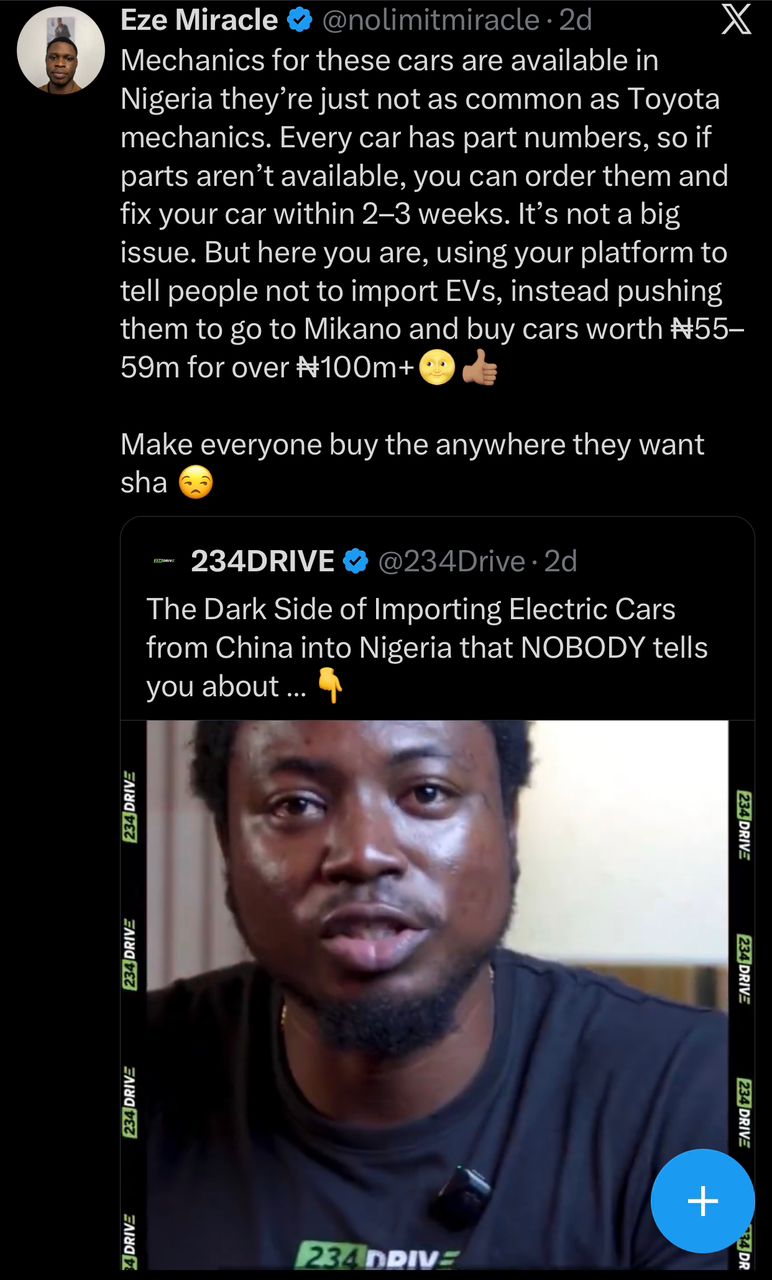
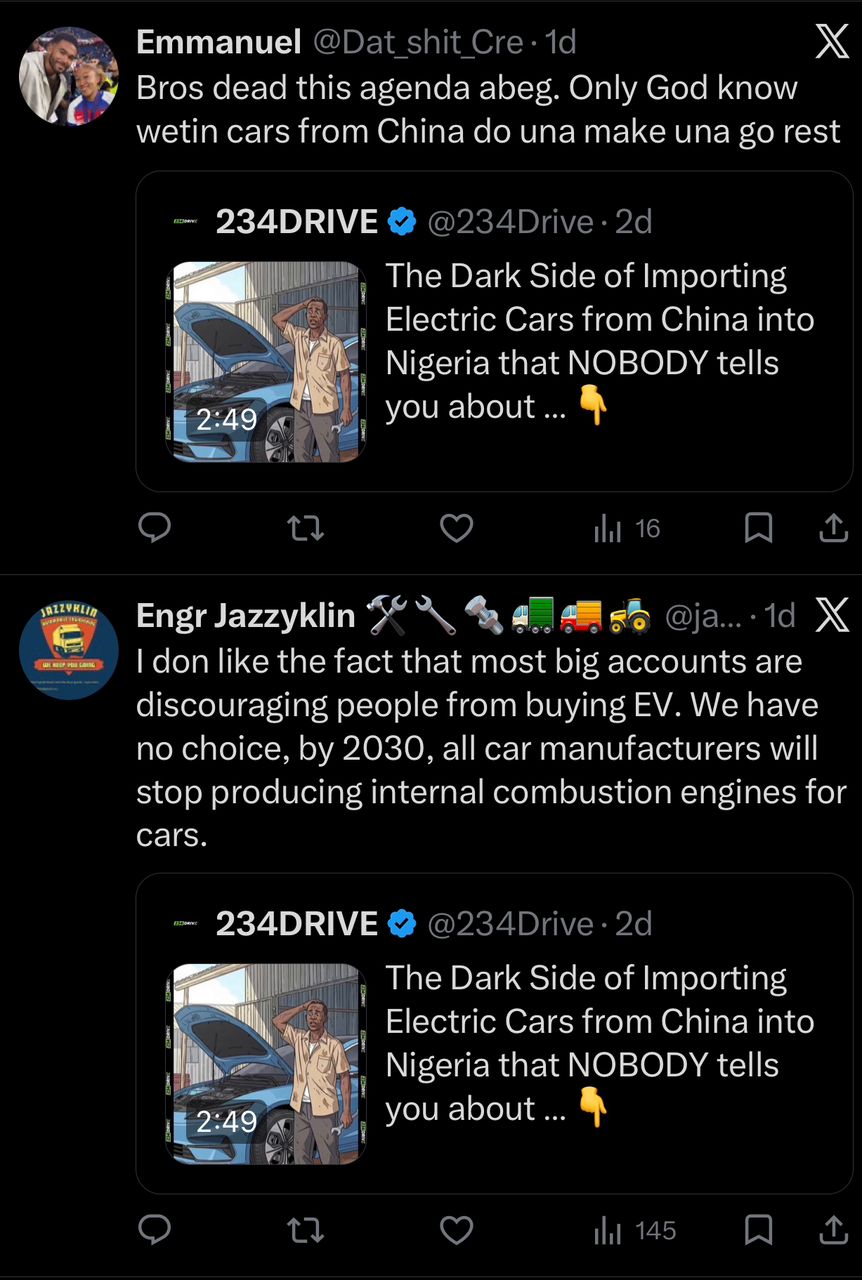
Still, some did agree with the post, highlighting that after-sales support matters and that saving money upfront can make way for a stressful situation in the long run. Then there were those who saw the gap as a chance for people to build parts supply and repair expertise locally.
Regardless of where you stood after watching the video, the truth is that there was only so much a nearly 3-minute video could get into. So let’s dive deeper here.
What You Actually Get When You Buy Through Recognised Dealers
The deal you get when buying locally often includes more than just the car itself.
For starters, there’s warranty coverage. Some dealers offer warranty for up to five years or 150,000 km, and that can include roadside support. This means if something goes wrong, there’s a clear place to turn to. More so, the cars sold by authorised dealers are primed up for the regions’ conditions, from on-the-road endurance to engine operations, which helps avoid issues early on.
You also get access to verified service networks as part of the car support. That means proper diagnostics, trained technicians and parts that are easier to find. Software updates are another piece people don’t always think about. Some brands like BYD only push updates through dealers, so staying connected matters.
Ultimately, you’re not just paying for the car—you’re paying for everything that keeps it usable. That is the major selling point even though it isn’t always obvious at the start.
What Dealers Might Not Always Spell Out
It’s not a lie that EV repair stations are gradually expanding in Nigeria. You’ll find workshops in Lagos handling diagnostics, battery checks and general servicing.
However, the presence of repair centres doesn’t necessarily mean every car brought in there can be fixed easily. Some systems require brand-specific tools or certifications. If your car falls outside that network, access can become tricky.
That means even if a workshop is available, it might not fully support your car the way you expect.
Why Some Imported EVs Don’t Always Fit — And Where The Savings Can Fade
Not all EVs are built for everywhere, and that’s where things can start to get tricky.
In some cases, cars are designed mainly for their home market. You’ve probably heard of cars made specifically for the U.S. or the Middle East. The same idea applies here. It can affect how a car handles heat, how the battery performs and how well the cooling system works in places like Lagos.
A Quick Look At Why Chinese EVs Are Cheaper
One major reason China’s EV market looks the way it does today is long-term government support. The country started pushing EV subsidies around 2010, offering cash incentives to buyers and strong backing to manufacturers. The goal was to cut pollution, reduce reliance on imported oil and build a strong local auto industry. Over time, this grew into tax breaks, cheaper production and policies that made EVs easier to own.
Other countries like the US, Germany and Norway also introduced similar support, but China moved earlier and scaled faster. While many of these countries are now pulling back on subsidies, the years of heavy investment still give Chinese EVs an edge.
That’s a big reason why an EV that looks expensive elsewhere can seem cheaper when you’re importing it directly from China—especially if it’s a clean 2024 model or one that hasn’t moved quickly in the Chinese market. In some cases, it can cost less to ship it to Nigeria than to buy a similar one through an authorised local dealer, largely because the seller’s responsibility often ends once the car gets to you.
There’s also a legal side people don’t always think about. While this kind of import isn’t usually treated as a criminal offence, it can fall into grey areas under civil or contract law, and sometimes trade regulations. It’s not something people get arrested for, but it can still carry real risks—like vehicle seizures, heavy fines or even being flagged by manufacturers.
The lower upfront price is real, but it doesn’t always hold up over time. Repairs outside official networks can turn into a costly trial and error experience. Parts might take weeks to arrive, which means vehicle downtime. Over time, those small issues can add up and resale becomes harder without proper support or service history.
Ultimately, what looks cheaper at the start can become harder to manage over time