
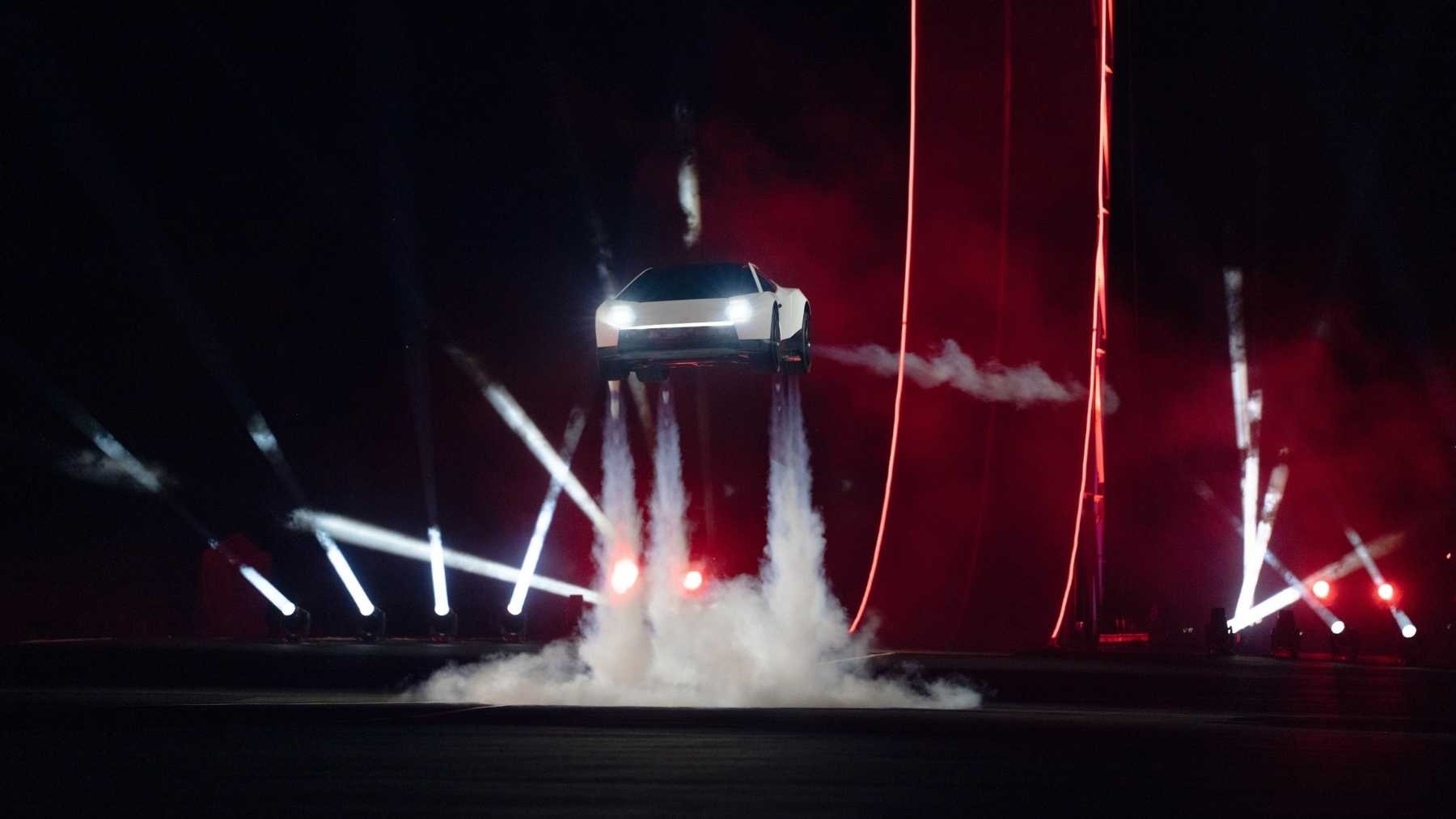
Tesla recently unveiled a high-performance prototype in Texas, a sports car capable of executing short hops and mid-air barrel rolls, and completely upended global tech circles. The vehicle features aerospace hardware that Tesla developed directly with SpaceX, pushing the boundaries of automotive engineering into the realm of science fiction. While the viral videos of compressed-air bursts look like pure tech-industry theatre, the engineering behind the prototype offers a fascinating look at how aerospace physics can intersect with car design.
Inside the Technology: Bypassing Physics With Cold-Gas Thrusters
To understand what makes this new Roadster different from any passenger vehicle ever built, you have to look at how it overcomes the limits of traditional driving. Tyre grip entirely limits normal cars. No matter how powerful an electric motor is, a vehicle can only accelerate or turn as fast as rubber can bite into the asphalt.
Tesla bypassed that physical ceiling by borrowing propulsion technology from rockets: cold-gas thrusters.
Unlike a rocket that burns liquid fuel, the system stores air under extremely high pressure in onboard tanks. Computer-controlled valves release it through directional nozzles at supersonic speed, producing thrust in accordance with Newton’s third law. Suction fans in the floor also help pin the car to the ground as it performs extreme manoeuvres on a dedicated track.
Despite the demonstration, this machine is not yet ready for purchase. Tesla has targeted production for 2028, meaning buyers face a long wait filled with the usual manufacturing delays that plague the brand.
History Repeats Itself
Borrowing aerospace technology for a passenger car is hardly new. In the 1950s and 1960s, manufacturers including Chrysler and Rover experimented with gas-turbine vehicles, hoping the smooth, compact engines might offer a credible alternative to the conventional piston engine. The prototypes were real and roadworthy, not merely styling exercises. They appeared at motor shows, gave demonstration rides, and drew crowds with their distinctive turbine whine. For a while, they made the jet-age dream of radically different cars feel close enough to touch.
But the excitement never translated into a viable mass-market car. Turbine engines consumed too much fuel, produced punishing levels of heat, responded poorly in some everyday driving conditions and required specialised maintenance. Emissions rules and high production costs added further obstacles, and the manufacturers eventually shelved the programmes.
Tesla’s thruster-equipped Roadster belongs to a long tradition of ambitious prototypes that test how far engineers can push automotive technology. A controlled demonstration cannot show how the car would perform in everyday conditions, but it can still offer useful engineering lessons and open up new possibilities for vehicle design. The spectacle will naturally attract headlines and investor attention, yet that does not diminish the achievement. For now, the Roadster serves as an experimental showcase rather than a preview of what most drivers will soon find in showrooms.
The Bank PHB Prophecy
For many Nigerians of a certain age, Silicon Valley’s experiments with compressed-air rocket cars evoke a familiar television memory. In the late 2000s, Bank PHB ran adverts imagining a future in which cars could run on water, drive themselves and make the impossible look ordinary. The playful commercials promised that technology would eventually catch up with the imagination. At the time, self-driving and alternative-fuel cars still seemed like science fiction.
Some of that imagined future has since arrived. Cars now offer significant autonomous capabilities, while electric vehicles have shown that road transport need not depend on petrol or diesel. Cars running on water remain a fantasy, but Tesla’s rocket-assisted sports car takes Bank PHB’s vision one step further.
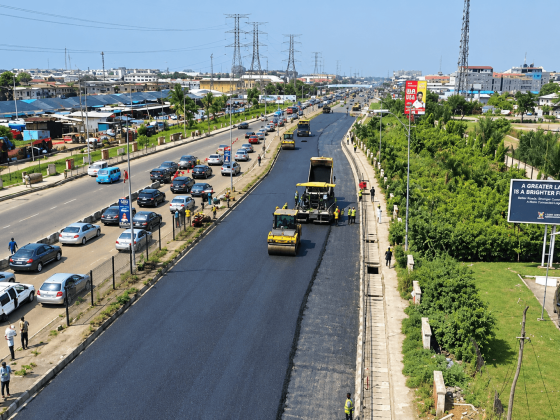
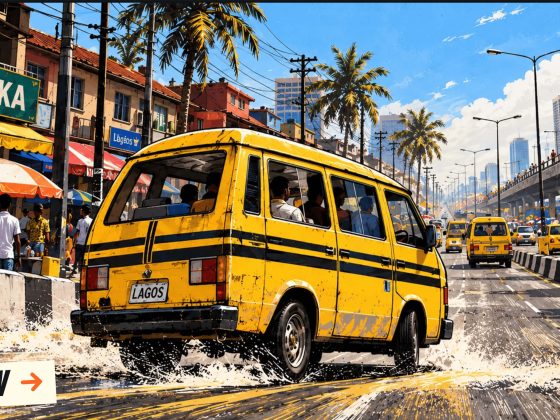
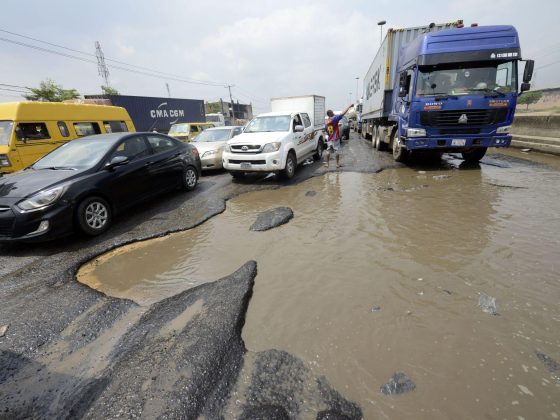
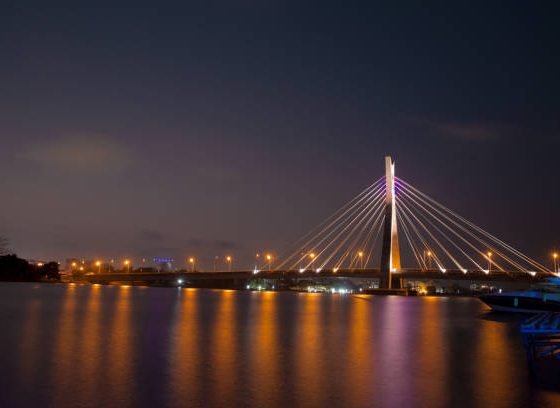
Yet the contrast remains striking. In Texas, engineers are testing a hypercar that can briefly lift itself off a spotless runway; on the Lagos mainland, drivers must still contend with potholes, floodwater, broken-down vehicles and traffic jams that can consume an entire afternoon. The future that those adverts once imagined is already here, but people still have profoundly unequal access to its benefits and the infrastructure that supports it.
What Is the Real Use Case?
Social media discussions naturally gravitate towards fantasies of flying over traffic or skipping highway gridlock. In reality, the demonstration showed a brief, controlled hop on a specialised runway rather than sustained flight. That distinction matters because true flight requires continuous lift, steering authority in the air and the ability to take off and land safely under changing conditions. By contrast, engineers can plan a short jump around a known trajectory, a level surface and a carefully prepared landing area. The Roadster may momentarily leave the ground, but its designers did not intend it to function as an aircraft or navigate freely above public roads.
Its practical use is therefore in controlled environments, where engineers can explore how cold-gas propulsion affects acceleration, braking, cornering and vehicle stability. Directional thrusters could provide brief bursts of force beyond what the tyres alone can deliver, while the resulting tests could improve control software, sensor coordination and safety systems for high-performance vehicles. However, compressed-air storage, repeated operation, system inspections and the consequences of a malfunction would all complicate everyday use. For enthusiasts, the attraction lies primarily in seeing an extreme engineering concept tested at the limits, not in gaining a practical new form of daily transport.
That distinction is central to the Nigerian context. The Roadster may influence future engineering, but it offers no practical answer to the country’s more immediate transport needs. Its value lies in what engineers may learn from it, not in any prospect of leaping over Lagos traffic.