
Before Olajuwon agrees to go anywhere in Lagos, three questions usually come first: Can he afford to hail a ride there? Can he take a bike there? And if the trip stretches late into the night, will the whole outing still make sense?
This is how he started weighing movement after moving to Lagos for work.
Olajuwon is a software engineer who studied quantity surveying at FUTA. He grew up in Ibadan and later moved to Lagos to work in tech, becoming what he jokingly calls a ‘tech bro’ after Nigeria’s economic reality pushed him to look for a better way to earn.
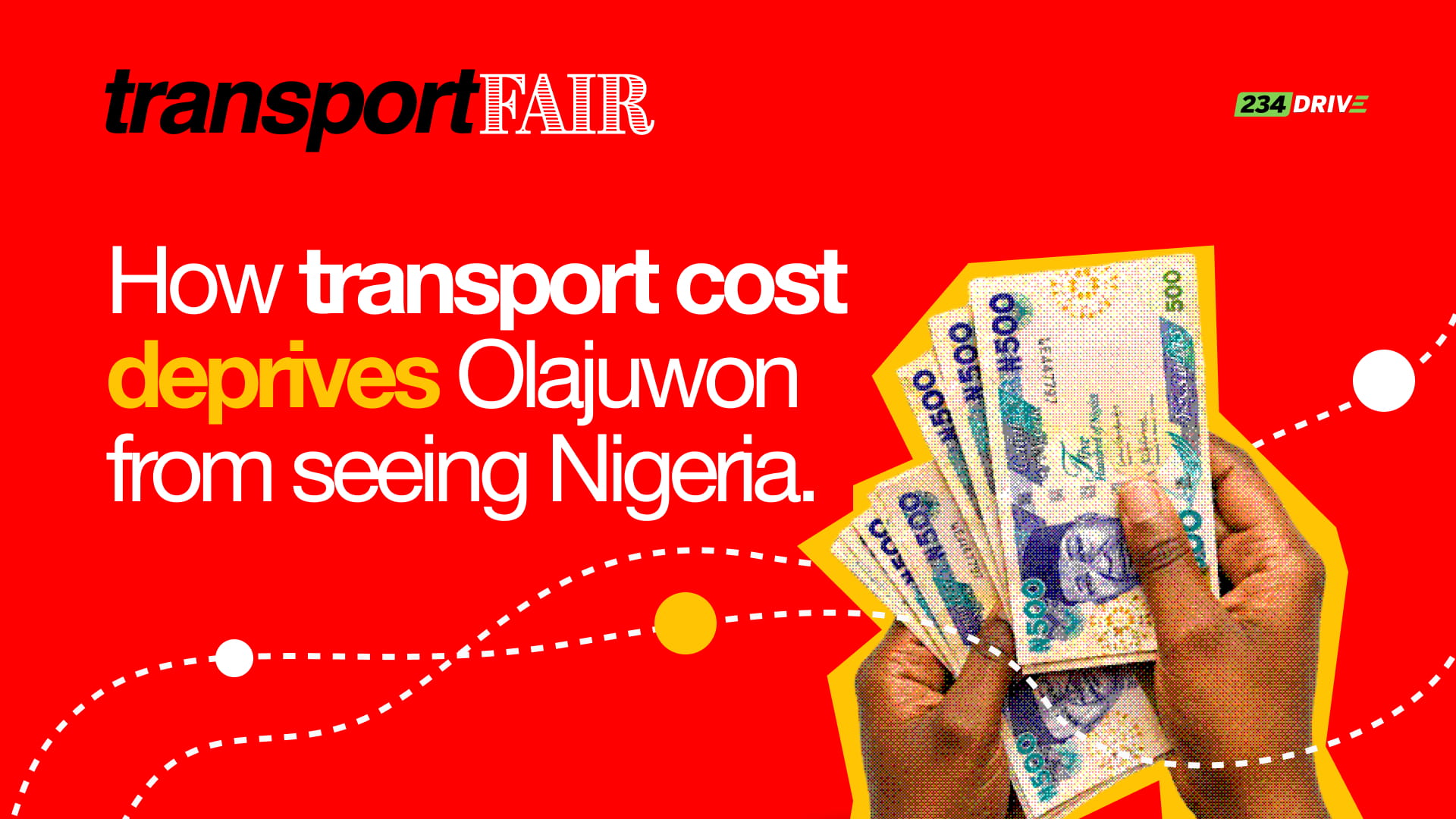
He has also sworn off the regular 9-to-5 life, but Lagos still gives him trips to think through. On average, Olajuwon says he spends about ₦30,000 to ₦40,000 monthly on transport. That takes around 20% of his monthly income, even though he only spends about two to three hours on the road in a regular week.
His Usual Route Is Surulere to Yaba, but it’s Not Straightforward
When Surulere was still his base, Olajuwon’s regular movement in Lagos was mostly from Surulere to Yaba. He made the trip about once a week, so he was not thinking like a daily commuter. He chose based on what felt easier on the few days he had to move.
Public transport was available. From his place, the trip could be broken into smaller parts: first to the Surulere-Yaba link bridge, then another bus towards Yaba. Based on earlier trips he described, that kind of movement could cost around ₦400.
But because the trip was not an everyday expense, Olajuwon often chose Uber instead. The extra cost was easier to accept when it saved him from the stress of changing buses along the way. Before the fuel situation worsened, a ride from Yaba to Surulere could cost around ₦4,000 on average.
For Olajuwon, Comfort Means a More Direct Trip
His preference for direct movement did not start in Lagos. When Olajuwon lived in Ibadan, bikes made movement feel simpler. From his house around Jericho to the Eleyele Road area, he could haggle for a direct bike when he was not going with his brother or moving by car. Sometimes, the ride cost as much as ₦2,000.
Lagos does not always give him that same option. In parts of the city, commercial motorcycle restrictions have made bikes harder to rely on, so ride-hailing often becomes the easier choice when he wants to avoid multiple stops.
In his view, opening a ride-hailing app now means preparing to spend at least ₦4,000 on many trips. Longer routes climb much higher. His most expensive trip so far was a ₦16,000 one-way ride from Surulere to Ikorodu before the fuel situation worsened. Today, he says that kind of trip would require serious thinking.
A recent invitation to an event around Magodo made that glaring. Olajuwon was interested, but the movement around it quickly became the bigger question.
Because Lagos routes are still not familiar to him, public transport did not seem like the easiest option for that kind of distance. Ordering a ride would have been easier, but he estimated that getting to the event and moving around could cost between ₦16,000 and ₦20,000. That was before adding whatever the event itself would require.
So he turned it down. For him, one event did not justify the fare, the stress or the extra planning that could come with staying out late in an unfamiliar part of Lagos.
If He Doesn’t Know the Route, the Area Starts to Seem Too Far
Transport has also changed how Olajuwon thinks about unfamiliar places. Some areas do not enter his plans easily because he does not know the routes well enough. In those moments, ride-hailing becomes one way to measure whether the trip is worth attempting.
His January house search showed him that clearly. For about two months, he was going out almost every weekend to check apartments, first around Surulere and later towards Berger. But when Mowe entered the conversation, the route felt too uncertain to chase.
Mowe seemed too obscure. Olajuwon did not know the area well, did not know what the journey would feel like in person and did not want to inspect a place that could leave him dependent on unpredictable ride-hailing costs if he eventually lived there.
Public transport did not feel like a clean alternative either. If taking a ride became too expensive, getting back to the Lagos mainland could mean dealing with multiple buses on a long route. That was enough to take Mowe out of consideration.
House hunting already came with enough cost, calls and back-and-forth. Adding a location with unclear transport options made the decision easier.
Ibadan Gave Him More Room to Move
Olajuwon’s preference for bikes did not come from nowhere. Part of it is tied to how much he dislikes buses.
One experience from his industrial training during his Bachelor’s programme still haunts him. Back then, after dressing properly and spraying some perfume, he entered a bus, only for someone carrying live fish to sit nearby. Water from the fish kept splashing around. ‘By the time I got down, the scent of my perfume had disappeared,’ he said. ‘What was fresh before was just fish now. Everything.’
When comparing his transport experiences in Ibadan and Lagos, Olajuwon thinks about the road networks, the traffic and how easy it is to move from one point to another. For the QS graduate, the major difference is directness.
In Ibadan, bikes gave him that control. A direct bike could be negotiated, with a little extra added if the normal stop was not exactly where he wanted. The trip did not have to be split into too many parts. That ease was also one of the reasons he liked staying at his uncle’s place in Ikorodu, despite the road condition in some areas.
Lagos makes Olajuwon’s bike preference harder to hold on to. Movement often feels more broken. A trip can mean one bus, then another bus, then a short bike or keke ride to finish the journey. For someone who already dislikes buses, that is the part that quickly becomes tiring.
What frustrates him is that Lagos can cost more while still feeling harder to move through. Olajuwon says a bike trip that is the equivalent of moving between Surulere and Berger could cost about ₦1,500 in Ibadan—but as much as ₦4,000 in Lagos.
Another transport incident that haunts him is the day he tried to get to Landmark Event Centre. He had already taken a ferry from Ikorodu to beat traffic, but the next leg nearly ruined the trip. A bike rider asked for ₦10,000. Olajuwon turned back.
To him, ₦10,000 for a bike ride within the same state made no sense. He even joked that he might have been the first person in his lineage to even consider that kind of fare.
The Ferry Showed Him Lagos Could Feel Closer
One transport option Olajuwon speaks about with some excitement is the ferry.
He used it from Ikorodu towards the Island and liked how quickly it removed the usual Lagos transport uncertainty. For about ₦2,000, the trip got him across much faster than he expected. Compared to sitting in traffic or paying much more for a ride, that seemed like a smart deal.
Official route information also shows why the ferry can seem like a strong option on that axis. LAGFERRY lists Ikorodu to Five Cowries/Falomo as a 50-minute trip, while Lagos Ferry Map shows some Ikorodu-to-Island routes taking around 35 to 40 minutes, depending on the stop. Olajuwon’s account suggests his own trip was faster than some listed public routes, possibly because of the operator or stop used.
‘If you have the time and the mind, especially from Ikorodu to the Island, the ferry makes sense,’ he said, referring to courage as ‘mind’. ‘It is fast, and it saves you from a lot of road stress.’
But he also thinks the system can work better. Some terminals are still far from where people live, which means riders may need a bike or another short ride before the ferry trip even starts. Routes can also be limited by time, and with only 5 state-owned terminals available, access is still not as wide as it could be.
According to Olajuwon, better access roads to terminals, more frequent movement and wider route options would make ferries easier for more people to use.
After talking about ferries, the next question was where he would go more often if transport was easier. Olajuwon did not have to think too far. His answer still pointed to the Island.
He sees places online, especially on Instagram, that he would like to try. Restaurants, lounges, beaches and hangout spots catch his attention, but many of them still feel like places he watches from the mainland.
With easier movement, the Island would feel less like somewhere he only sees on this social media—out of reach.
Olajuwon’s Biggest Transport Wish Is a Train System That Actually Connects People
If Olajuwon could change one thing about transport, he would choose a better train system.
He has used the Lagos-to-Ibadan train before and speaks positively about the comfort. He likes that it is cheaper, calmer and more structured than many road options. But his issue is access. The terminals can be far from where people actually live or where they need to go. If getting to the train station is already mentally draining, the benefit starts to reduce.
He remembers one trip from his uncle’s place in Ikorodu, when he had to decide how best to get to Ibadan.
‘I had to think about whether to take a bus to Alagomeji in Yaba or go to Ikeja to enter the train,’ he said. ‘At the end, I just decided to take an interstate bus instead.’
This is why he wants both inter-state and intra-city train systems to work better. He imagines a system where someone can move from Ikorodu to the Island, or from other major parts of Lagos to Yaba, without building the whole journey around buses, bikes, ride-hailing apps or private cars.
To him, a good train system would reduce traffic, lower transport costs and make movement feel less tiring. Olajuwon may have sworn off the regular 9-to-5 movement, but in Lagos, even the occasional trip still has to pass the transport test.