
Chinonyelum Igwe used to travel from Enugu to Kano to choose seeds for her farm. She stopped making the trip when the road no longer felt safe. Now a neighbour goes in her place, selecting what she will plant. Her case is one of many that shows how the road shapes what Nigerian women can or cannot do.
Her decision was less about travel and more about it has changed how she runs her farm. In Lagos, other women described different journeys that had become impossible to justify or complete. Their accounts show how transport barriers can quietly close off work and income before a woman ever reaches the destination.
Nigeria’s transport statistics can count fares, routes and journeys made. They say less about the opportunities abandoned along the way. To bridge this gap, I spoke with four Nigerian women in Enugu and Lagos about what changed when the journey became too costly, unreliable or unsafe.
Chinonyelum and the Road to Kano
Chinonyelum Igwe, a 53-year-old farmer and market trader in a village in Enugu State, has not been to Kano in years. For most of her working life, she regularly journeyed up to Kano to buy seed because she would not pay for seed she had not inspected. ‘Farming is my livelihood,’ she told me. ‘I need to see the seed with my own eyes, touch it and verify the quality before I hand over my money.’
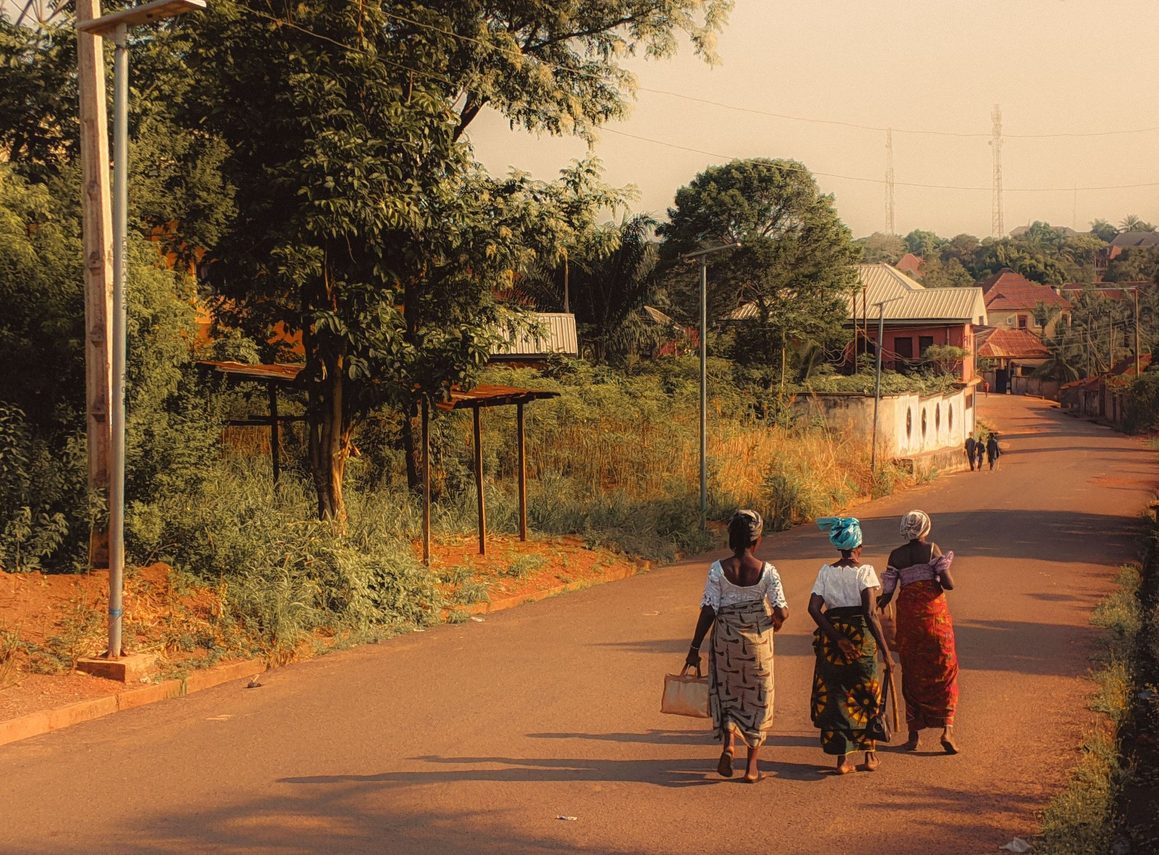
She stopped travelling north because she no longer considered the road safe. ‘Look at the insurgency happening up North! The roads are no longer safe,’ she said. ‘Coupled with that, age is no longer on my side to be entering long journeys on dangerous roads. The fear is too much.’
She still gets seed, but no longer chooses it herself. A male neighbour makes the trip and brings it back. ‘I pay him for his trouble, and he brings the seeds down for me,’ she said. She also declined an invitation to an agricultural convention in Abuja because of the journey.
For Chinonyelum, the obstacle is the road. For two other Nigerian women, it was the cost of a safer, more dependable journey.
When the Safer Option Costs Too Much
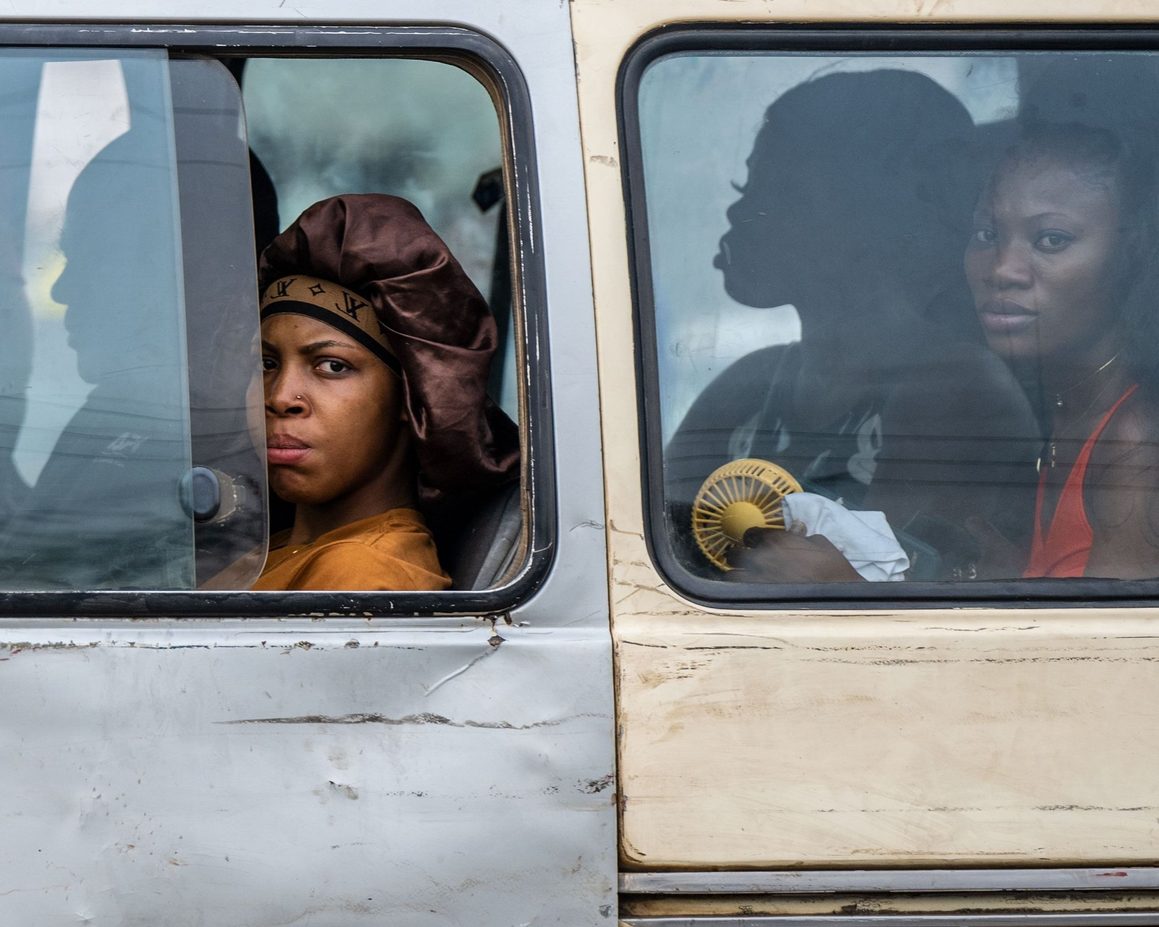
Inioluwa Babalola faced that cost while she was at university. She had secured a paid internship with one requirement: arrive at the office by 9:00 am. She planned to take an Uber, but the fare was too high. ‘On that particular morning, I initially planned to take an Uber, but the ride prices were so crazy and expensive,’ she said. She took a commercial bus instead, but it broke down, leaving her stranded.
The office made no exception. ‘They were very strict with timing, even though it was just an internship,’ she recalled. ‘They maintained their strict standards regardless, and that transit failure cost me the opportunity.’
Affiong Edet, who lives in Egbeda, Lagos, has had to weigh travel costs against opportunity at two different points in her life. After secondary school, she was admitted to the University of Calabar, but her family could not afford the fees or the journey from Lagos. ‘We couldn’t raise money for the school fees, let alone the transportation cost to travel from Lagos all the way down to Calabar,’ she said. She gave up the place.
Years later, while working as a domestic cleaner and raising three children, Affiong was invited to interview for a job in Ajah. She got the children ready at dawn, then calculated the cost of the journey from Egbeda against the salary on offer. ‘When I looked at the salary they were offering, I did the math and saw that more than half of the pay would just go into transport fare and stress,’ she said. ‘I just sat down and told myself, ‘Affiong, this trip is not worth it.’ So I stayed back home and missed the interview.’
Neither Affiong nor Inioluwa said the route itself was unsafe. Their accounts show a different barrier: the dependable option was beyond their means. That matters in a transport system where Nigerian women may pay more to avoid harassment or assault. An Ipsos study commissioned by Bolt and conducted in November 2025 across Lagos, Abuja, Port Harcourt and Ibadan found that women aged 25 to 34 made up 70% of ride-hailing users.
Conversely, women accounted for 4% of ride-hailing drivers in Nigeria, according to a separate Bolt and Ipsos report on gig work. That reporting ties the first number partly to safety: women already use ride-hailing as protection from the risks they face in public transport. It also cites a 2018 International Finance Corporation study of six countries, none of them Nigeria, in which 64% of women drivers surveyed said security concerns are a reason more women do not sign up to drive.
The safety concerns are also reflected in survey data. Passenger surveys in Lagos for the EMPOWER research project found that 45% of female passengers had experienced sexual harassment on public transport, and 70% had witnessed it. In 2022, Oluwabamise Ayanwole was murdered on a BRT bus in Lagos. Those figures describe women who got on the bus, and they say nothing about the ones who looked at the options and stayed home. The women in them could at least choose between the bus and the car. Hauwa Ibrahim’s work leaves her no such choice.
When the Trip is Part of the Job
Hauwa Ibrahim is a film producer and entrepreneur in Lagos who also runs a farm in Adamawa State. For film projects, she can scout locations in advance to reduce risks to her crew. Managing the farm requires travel she cannot avoid. ‘I live here in Lagos, and I am also a farmer with my farm located all the way in Adamawa State,’ she told me. ‘When you have to travel out to source things or oversee operations, it gets tricky. You spend a lot of money on long-distance travel, and sometimes you don’t even get the contract or produce you went for.’
She continues to make the journey. ‘Because of bad roads and security risks, whenever you step out to get to a distant location like Adamawa, you already know you are putting your life in danger,’ she said. ‘So you just hand everything over to God.’
Chinonyelum can pay a neighbour to travel in her place. Hauwa still has to reach her farm herself. Their circumstances differ, but both show how travel risks can reshape work. The scale of that effect is difficult to measure because the journeys that never happen are absent from transport data.
What the Numbers Leave Out
Across the four accounts, the consequences include an internship lost, a university place abandoned, a job interview missed, seed-buying trips handed to someone else and an agricultural convention declined. These accounts show what happened to these women, but they cannot establish how common such losses are. The available figures do not fill that gap.

National transport figures count journeys that take place. They do not record a trip abandoned because the fare is unaffordable, a route feels unsafe or a bus cannot be relied on. Ride-hailing use and harassment surveys capture important parts of Nigerian women’s travel, but neither tells us how many opportunities were lost before a journey began.
The journeys in these accounts are not confined to Lagos. Chinonyelum’s seed-buying route runs from Enugu State to Kano, and Hauwa travels from Lagos to her farm in Adamawa. Their experiences raise a further question: what transport options are available to Nigerian women making these trips, and who can afford them?
What Exists For Nigerian Women, and Who it Reaches
Some services have tried to address Nigerian women’s safety, mainly in cities. HerRyde, described as Nigeria’s first women-only ride-hailing app, launched in Abuja in August 2022 with vetted women drivers, real-time tracking and an SOS button. Its former CEO, Monsurah Oluwafuyi, said it completed more than 2,000 rides for over 500 passengers and registered 200 women drivers. After a year, the service paused operations to restructure and seek funding. Oluwafuyi stepped down as CEO in March 2024.
Other major ride-hailing platforms have built safety into the product. Uber’s Women Preferences feature, which began in Saudi Arabia in 2019, lets women drivers receive requests from women riders. 234Drive’s report on the ride-hailing gender gap argues that women drivers in Nigeria need similar optional trip preferences, along with faster emergency response and better rider verification. Closer to home, Damilola Olokesusi built Shuttlers, a shared-bus operator that tracks trips live and runs in Lagos, Abuja and Port Harcourt.
For Inioluwa and Affiong, ride-hailing was available in Lagos, but its cost remained a barrier. Chinonyelum’s and Hauwa’s journeys are longer, running across state lines and along roads these urban services do not cover. The gap is not simply a lack of women-focused options: existing services may be unaffordable, while the routes beyond the cities remain outside their reach. That limitation brings the investigation back to what would have changed each woman’s decision.
What Would Have Had to Be True
For each of the four Nigerian women, a different change might have made the journey possible. Chinonyelum needed a road to Kano she could travel without fearing for her safety. A women-only ride-hailing app could not make that highway safe. Inioluwa needed an Uber fare she could afford on the morning of her internship. Affiong needed money to travel to Calabar after her admission, and later a salary that made the job interview worthwhile after transport costs.
The options that exist do not reach every journey. In Lagos, ride-hailing was available to Inioluwa and Affiong, but its cost remained a barrier. Chinonyelum’s and Hauwa’s journeys run across state lines, beyond the routes covered by the urban services described here. For Chinonyelum, the consequences reach beyond the trip itself. She still gets seed for her farm, but she has lost the chance to choose it herself, and must pay a neighbour to make the journey in her place.