Esther knows the difference a few minutes can make on a Lagos morning.
A brand design lead for a fintech company, her regular work trip is from Onike in Yaba to Ikoyi through the Third Mainland Bridge. On a clear day, the journey can take about 20 to 25 minutes. On a Monday morning, with traffic already building, it can stretch to about 45 minutes or more.
Esther Leaves Yaba Early Because Lagos Fares Can Change Before 7am
She sets her alarm for 5am and keeps to it. By 6am, Esther is rounding up her preparations and ready to move in minutes. If someone she knows is driving that morning, she joins them. If not, she starts looking for an Uber before 6:20am because waiting too long can make the fare rise quickly.
Leaving early helps her manage the cost. Once it gets past 6:30am, more people are already on the road and the fare can begin to rise. So while she is trying to get to work on time, she is also checking the price, watching the driver’s movement and hoping the trip does not get cancelled.
Esther goes to the office four times a week, and the morning trip carries most of the pressure. A colleague usually drops her in front of her house after work, so getting home is easier. But in the morning, one delay can affect when she arrives and how much she pays.
‘If I go before 6:30, I spend around ₦6,000 or ₦7,000,’ Esther says. ‘But if I go after 6:30, I spend like ₦7,000, ₦8,000, sometimes ₦9,000.’
Rainy weather makes the same trip cost even more, so Esther tries to move early enough to keep both time and fare under as much control as possible.
Rain Turns the Fare Into a Bigger Problem
Rainy mornings make Esther’s commute harder to budget for. During the rainy season, the same route can rise to ₦11,000 or ₦12,000.
When the fare gets that high, she waits. Sometimes, she informs the office that she is running late and gives the app time to drop to a price she can manage. The highest she remembers paying to get to work is about ₦9,800 through inDrive. ₦12,000 is where she draws the line.
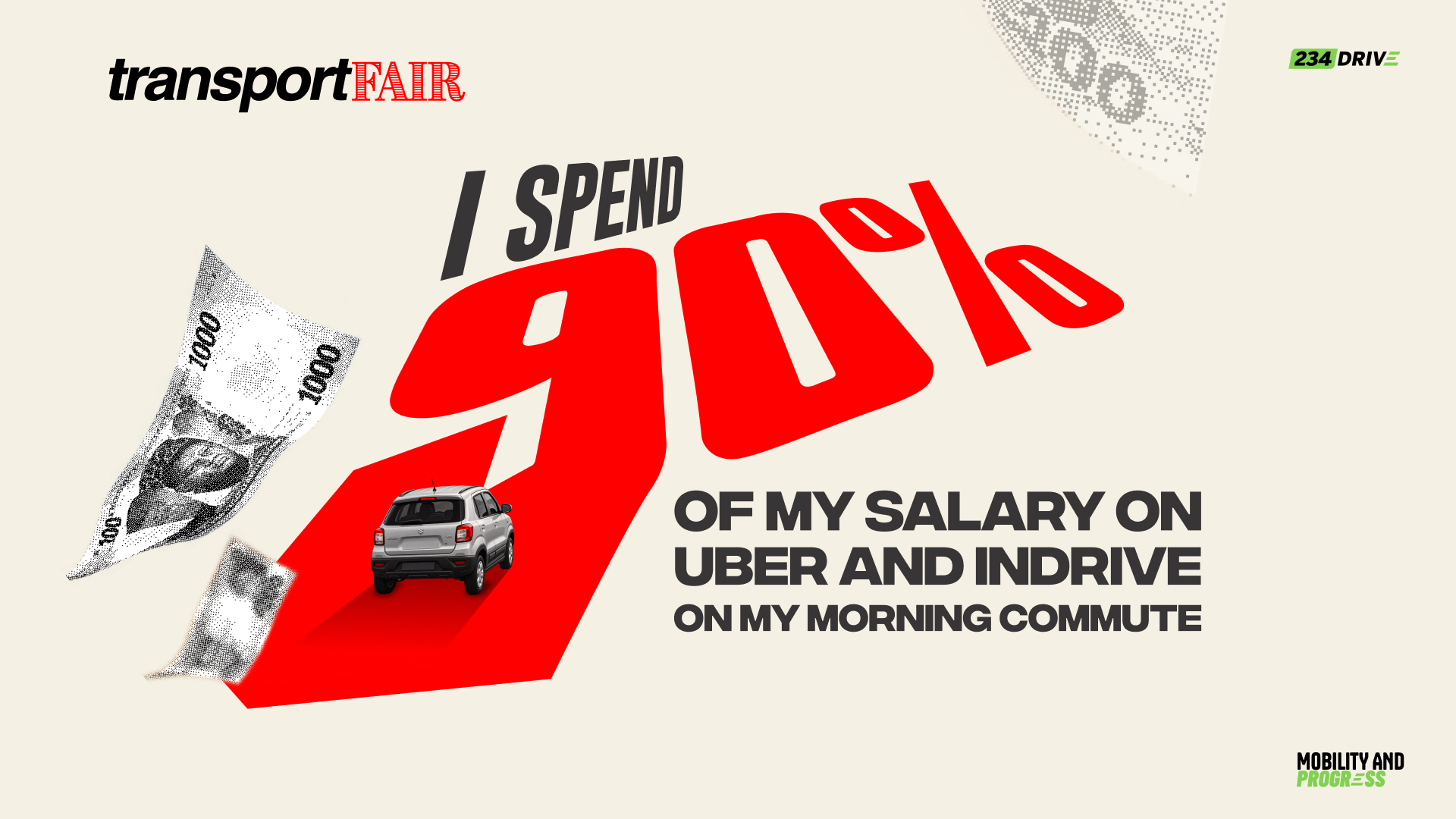
Even at her lower morning rate of ₦6,000 to ₦9,000, the numbers still stack up to close to six figures in a month. Four office days a week puts her monthly morning commute at about ₦96,000 to ₦144,000, using a four-week month. That is already about 137% to 206% of Nigeria’s ₦70,000 national minimum wage before any other movement enters the month.
Last year, Uber sent her a spending breakdown. She cannot remember the exact amount, but she remembers how it made her feel. The figure was high enough to make buying a car look like something worth considering.
She Keeps ₦100,000 Aside for Movement
Esther has not calculated the exact share of her salary that goes into transport, but she plans around it every month. Once she gets paid, she sets aside about ₦100,000 for logistics, enough to cover work trips and other movements that may come up.
That cost is one reason car ownership has crossed her mind. But even saving ₦100,000 to ₦200,000 monthly would not make a decent ₦5 million tokunbo car easy to reach. The money would have to sit untouched for months, and that is before other daily expenses enter the picture.
For many Nigerians, the gap is wider. Nigeria’s official minimum wage is ₦70,000, while Intelpoint’s income snapshot shows that only 2.4% of Nigerians earn above ₦200,000 monthly and only 10% earn above ₦100,000.
Esther also does not see car ownership as a simple decision. She stressed that she does not know much about cars in general.
‘I don’t really know anything about cars,’ she says. ‘If a time comes and I really need to get a car, I’ll meet somebody that knows a lot about cars.’
For now, she works with what she has. Ride-hailing handles most morning trips, while a colleague’s evening lift helps reduce what she would have spent getting home.
The Ride Can Be Stressful Before It Starts
The most stressful part of Esther’s commute is often finding a driver who will actually come.
A driver may accept the trip, delay it, cancel it, or, on what Esther calls ‘really special occasions,’ refuse to come to her exact location. Once a driver shared that he was on his way, he then later discovered he had arrived at another location with the same street name. When Esther asked him if he could navigate back to Onike, he refused. After she cancelled the ride, he called back repeatedly to insult her.
Another trip became tense on the Third Mainland Bridge. The inDrive driver suddenly asked for more money because he said he had not expected traffic. Esther felt he should have rejected the fare before accepting the trip, not after they were already on the road.
She ignored the argument until they got to her office. Then she called security, paid and stepped away.
Experiences like that make ride-hailing feel less straightforward, but Esther still prefers it to public transport for her work commute.
‘It’s too stressful,’ she says. Asked if she would try public transport again for work, her answer is a clear no.
Transport Decides What She Can Say Yes To
Outside work, the calculation continues for Esther. Once, Uncover, a skincare brand, invited her to a Galentine’s event in Lekki, which she wanted to attend, but the cost of moving from Yaba to Lekki made the final call. Going alone meant paying the full trip both ways, with no familiar person to split the burden or make the journey easier.
The estimate came to about ₦15,000 to ₦20,000. At the time, spending that much on movement did not make sense, so the plan ended there.
‘I really wanted to go,’ Esther says. ‘But it was not something I could afford to do at the time.’
Work still carries more weight because it has to be done. But meetups, events and casual plans are easier to drop when the fare alone starts to feel like too much.
Asked where she would go more often if transport costs were not an issue, the brand designer revealed she doesn’t have a specific place in mind, but only the freedom to move without considering the cost of every trip first.
The same thinking follows her work decisions. A new job would have to make sense after transport is added to the salary. If the role required relocation to another state, the cost of moving would also enter the conversation.
Bad Roads Keep Raising the Cost of Movement
When asked what she would fix about Lagos transport, Esther mentions the roads.
She believes bad roads feed into traffic because drivers slow down to protect their cars. When vehicles approach potholes or rough patches, everyone begins to move carefully. That slowdown gathers more cars behind them, and the road starts to choke.
She sees this often around her route.
The problem is not only the traffic itself. It is what creates the traffic and keeps it returning. Bad road sections, narrow points and damaged surfaces can turn a short delay into a longer one.
Recently, flooding has added another hurdle to her commute. Esther says the area around her office is prone to it, and just recently, the front of the office was flooded. The company allows room for people to work from home when movement becomes difficult, but it is not always a given.
‘There’s always the opportunity to work from home,’ Esther says. ‘If your area is flooded and you can’t leave, then it’s left for you and your manager to decide.’
There is a standing transport allowance at work, but she does not expect a special allowance each time rain or flooding makes movement harder.
Esther already spends enough on movement to think about owning a car, but not enough to make ownership easy. That is the gap many Nigerians sit in. Ride-hailing solves the immediate trip, while car ownership remains just out of reach.
Fair financing would not fix Lagos traffic or bad roads, but it could make the jump from daily fares to vehicle ownership more realistic. For commuters like Esther, that could make monthly transport spending feel less like money disappearing and more like money building toward something.