
Ofure Idah, the founder of an online car accessory store called ‘Moto Mi’, has been drawn to machines for as long as she can remember. Generators, televisions, anything with moving parts and a function she could try to understand. This curiosity followed her through school and into adulthood, a constant thread running beneath everything else.
When she got to university, the natural expectation from her family was that she would study engineering. But she studied Philosophy instead, and when she graduated in 2018, she didn’t use the degree at all. A year later, almost fresh out of school with no clear direction, she was scrolling through social media when a picture of a car stopped her. She still can’t remember exactly which one or what about it stuck so hard, but it planted a question: what if she could work with cars somehow?
She thought about car sales first. Then reality set in: the capital required was too much and she didn’t have that kind of money. So she pivoted to car accessories. This line of business offered a smaller entry point and was much less capital intensive. This was her way in.
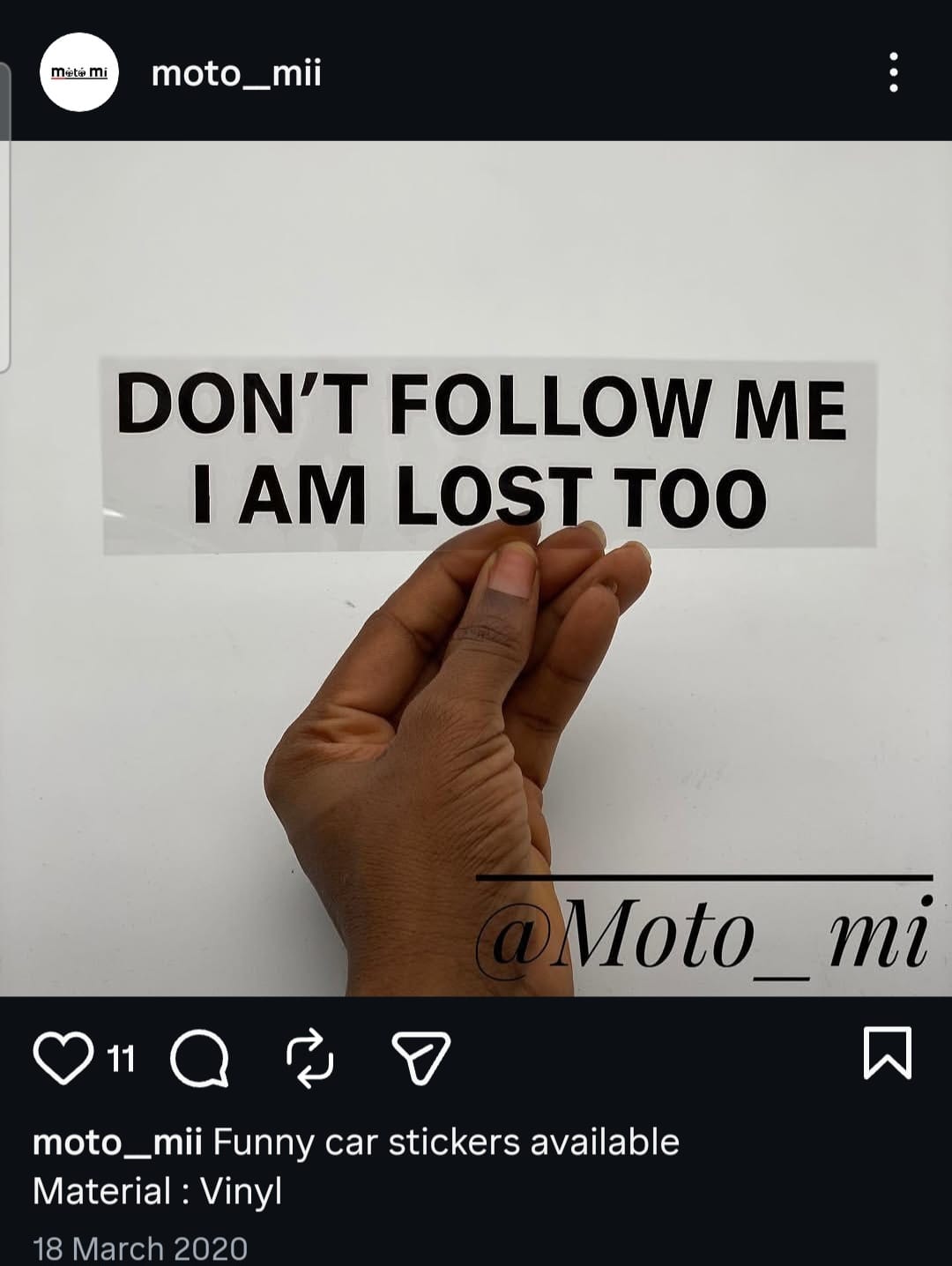
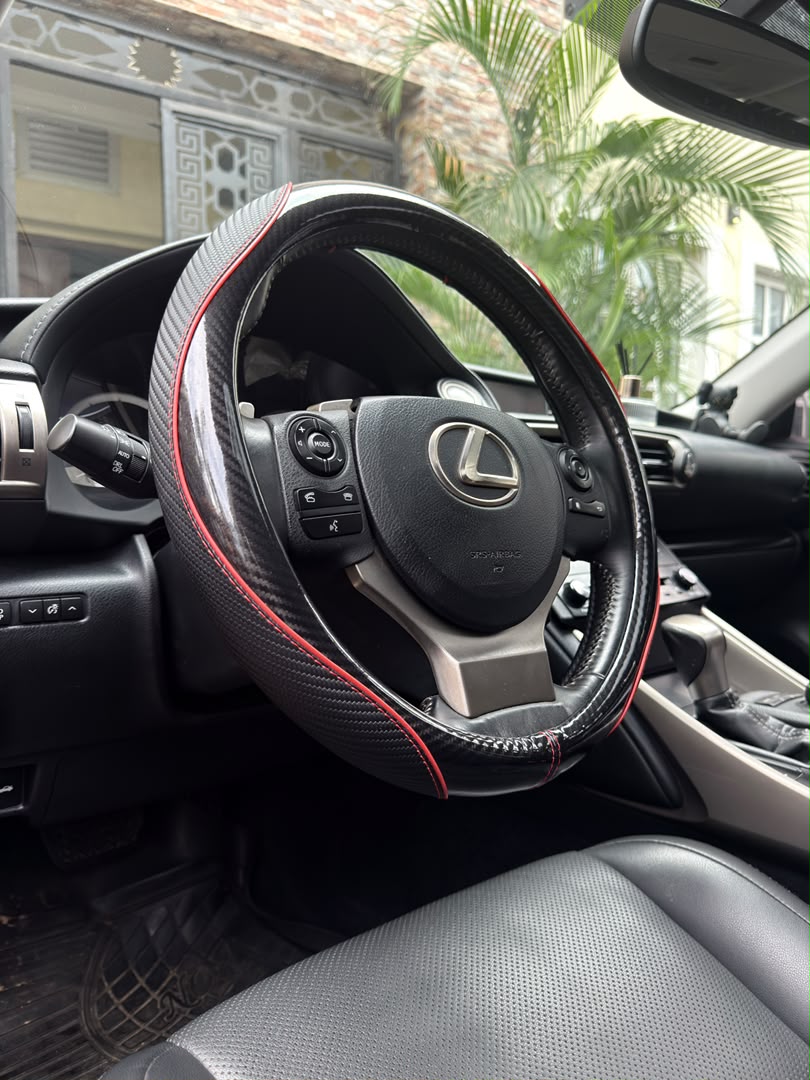
Ofure started Moto Mi in 2020 with 30,000 naira—less than $70 at the time—stocking up inventory from China. Moto Mi’s first few Instagram posts showcased funny car stickers, before their portfolio gradually expanded to include more functional car accessories like multipurpose holders and steering wheel covers.
Today, Moto Mi’s catalogue spans a comprehensive mix of humorous, functional and aesthetic car accessories—with the kind of eye for detail that usually comes from a woman holding the reins. With 7,000 followers and counting on their Instagram page alone, Moto Mi has established itself as a household car accessory business in Nigeria.
Building Moto Mi in a Shifting Economy
The early obstacles Ofure had imagined dissolved once she actually started trying. She had worried that customers would not take her seriously if she did not have a physical store. She had also worried about importing from suppliers in countries she had never visited. There was the issue of figuring out how to exchange her naira to the sale currency, but her bigger concern was not knowing if what arrived would match what she had ordered—the classic ‘What I ordered vs what I got’ debacle. Her anxieties were real and reasonable, but they also turned out to be irrelevant.
The advent of social media meant she could easily set up shop online, without incurring the overhead costs of renting a space, and her customers were content with the online-only presence. ‘No one cared about a store, as far as they got their products,’ she stated.
She was also able to navigate forex and find trustworthy suppliers from China and the US. ‘I’ve never been to China or the US, but I’ve still been able to build good relationships with suppliers from there,’ she revealed. ‘It was very easy for me to hack it.’
What she did not anticipate, though, were the problems that would arrive later, the ones that were beyond her power. When she started in 2020, delivery within Lagos cost a maximum of 1,500 naira. By 2026, she said delivery fees could cost as high as 6,000 naira, a quadruple fold increase. Outside Lagos, to nearby cities like Ibadan and Abeokuta, it can cost up to 10,000 naira. In practice, this means that a customer buying a 7,000 naira item now faces delivery costs that nearly match the product itself, discouraging some prospective buyers from making purchases altogether.
‘Those are big challenges that we face. The fuel price, import duties, they really put a big strain on businesses like ours,’ she said ruefully. ‘But I guess it is what it is.’
Women in a Male-Dominated Space
For the most part, her experience as a woman running the business has been hitch-free. With occasional viral reels through which Ofure interacts with her audience cum customer base, she is quite a visible part of her brand— though some believe she is the social media handler rather than the owner of the business. Still, her being a woman has not brought any negative attention online. In person, however, it’s a bit different.
‘The most derogatory reaction that I’ve gotten is from people that I speak to one on one. When they ask what I do and I say I sell car accessories, they’ll sometimes ask, ‘Why are you doing that kind of man business?’
The comments don’t faze her, though. Instead, Ofure encourages more women to own their love for cars and all things mobility. She’s building an Instagram community called LadyLane for ‘women who love cars, drives, and cute dates’. And beyond what she considers the ‘pretty side’ of mobility, she also wants more women to get into the less glamorous parts.
‘I want to see more women mechanics, more women drifters,’ she expressed. ‘If I could change one thing, it would be that women should just put themselves out there more. I know that the world sometimes might not be very fair to women, but you need to take your space by force. Go out, do, take your place in the world. Because the world is not going to give you a place on a platter.’
She’s learning to drift herself. If she wants to see more women in spaces traditionally dominated by men, she figures she should lead. This mindset also informed her decision to feature on an episode of ‘Owner’s Corner’, 234Drive’s interview series exploring the lived realities of car ownership in Nigeria. With over 12,000 views and counting, her episode, detailing her love for her Lexus IS250, is one of the most viewed in the series.
‘I had so many positive responses to that interview. A lot of people asked me to do more car-related stuff and I definitely will,’ she proudly shared with us.
When women ask her how to start a similar business, she tells them the same thing every time: go for it.
‘You don’t need a lot of money. You don’t need anything fancy. Just start with your passion and whatever capital you have. I know that sounds very cliche, but it’s just what it is. Start from where you are and then you build over the years’, she advised.