Most of Ephizy’s Lagos movement feels triangular, even if the map technically has four familiar points.
Yaba is the launch point. Oyingbo is for foodstuffs, Ikeja is for work and Ikorodu is home, where he goes to visit family when that trip enters the plan.
For Ephizy, Yaba is not a random starting point. He studied biology education at the University of Lagos, so the environment is one he knows well. These days, he works as a supply chain manager at an FMCG company, so his Lagos transit is split between work, errands and family visits.
From Yaba, most journeys begin with a short walk before he reaches the first bus stop. It is a routine he hardly thinks about anymore.
As Ephizy jokingly puts it, as a struggling young Nigerian, his legs do the most.
From Yaba to His World
Starting from Yaba is not always as direct as it sounds.
To get to Oyingbo, there was a time when he could get a bus closer to his exit point. The Tejuosho bridge has changed that for him, a change he does not like ‘at all’.
The Tejuosho bridge and the wider transport setup around Yaba are meant to organise movement in a busy part of the Mainland. But for Ephizy, that order also added a small walk to a trip that once felt more direct.
Now, before joining a bus to Oyingbo, Ephizy has to walk for at least five minutes first. It is not a dramatic complaint. It is just one of those changes that feels small on paper but becomes noticeable when the route is part of your regular life.
The fare to Oyingbo is now around ₦300, up from about ₦200 before the recent fuel-related increases. That, for Ephizy, is the bigger complaint.
Ikeja is the route Ephizy seems to know by routine. From Yaba, he has to first connect through the WAEC side, cross over, and then join a bus heading towards Ikeja. That first connection can cost around ₦200. After that, the Ikeja bus may cost about ₦700 to ₦800, depending on the time, the crowd and how much the conductor thinks passengers are willing to pay. He remembers that same leg costing closer to ₦500 or ₦600 only a few months ago.
Ikorodu is more flexible. Sometimes, he uses the BRT from Yaba. Other times, if the terminal is too crowded or buses are not readily available, he finds his way to Fadeyi because, from his experience, the buses there seem more clearly directed towards Ikorodu.
He is not as precise about the current BRT fares. Still, from what he remembers, Fadeyi used to be around ₦600 before moving to about ₦680. From Yaba, he places it somewhere around ₦725 before and around ₦800 or more now.
When asked if he had seen any announcement about the BRT fare increase, Ephizy said he had not seen any news update. However, the increase had been announced as early as February, with BRT fares set to rise by 13% by 2 March.
Even after learning there had been an earlier announcement, his point stayed the same. The information may have been public, but it was not clear enough at the terminal points where commuters actually pay.
Ephizy Knows When to Move and When to Wait
Workdays for Ephizy start early.
His alarm is set for 4:30 a.m. On a good morning, there is time for light exercise before 5 a.m. prayer. The prayer usually takes about 30 minutes. After that comes bath, clothes and everything else needed to face the day.
By around 7 a.m., he steps out.
The route takes him from Yaba towards Ikeja, with a stop around the Maryland axis, close to where the bus turns. From there, he walks the rest to work.
That regular trip has also taught him how quickly transport pricing can shift.
‘If the conductor sees that people are many at the bus stop, the price goes up immediately. You may even hear them call ₦1000 initially before settling for ₦900,’ he said.
This routine has taught Ephizy patience. Even with a crowd at the bus stop, the first bus that appears is not always the one to enter. He listens as the driver and conductor call the fare, watches how other passengers respond, and decides whether to enter or wait.
The same approach follows him beyond the work route. Transport worries have not really stopped Ephizy from attending events or taking opportunities within Lagos.
Even when he has to go towards the Island, the plan simply gets tighter: leave early, know where to connect and give the road enough room. Ephizy says he has stayed in Lagos long enough to know that, most times, one or two buses can get him back to Yaba or any familiar point on his route.
What He Would Change Is the Roadside Money Chain
‘If I can fix one thing about my transport experience, I will first get my own car. Donations are appreciated,’ Ephizy joked. ‘Aside that, I’ll cut the agbero roadside collection.’
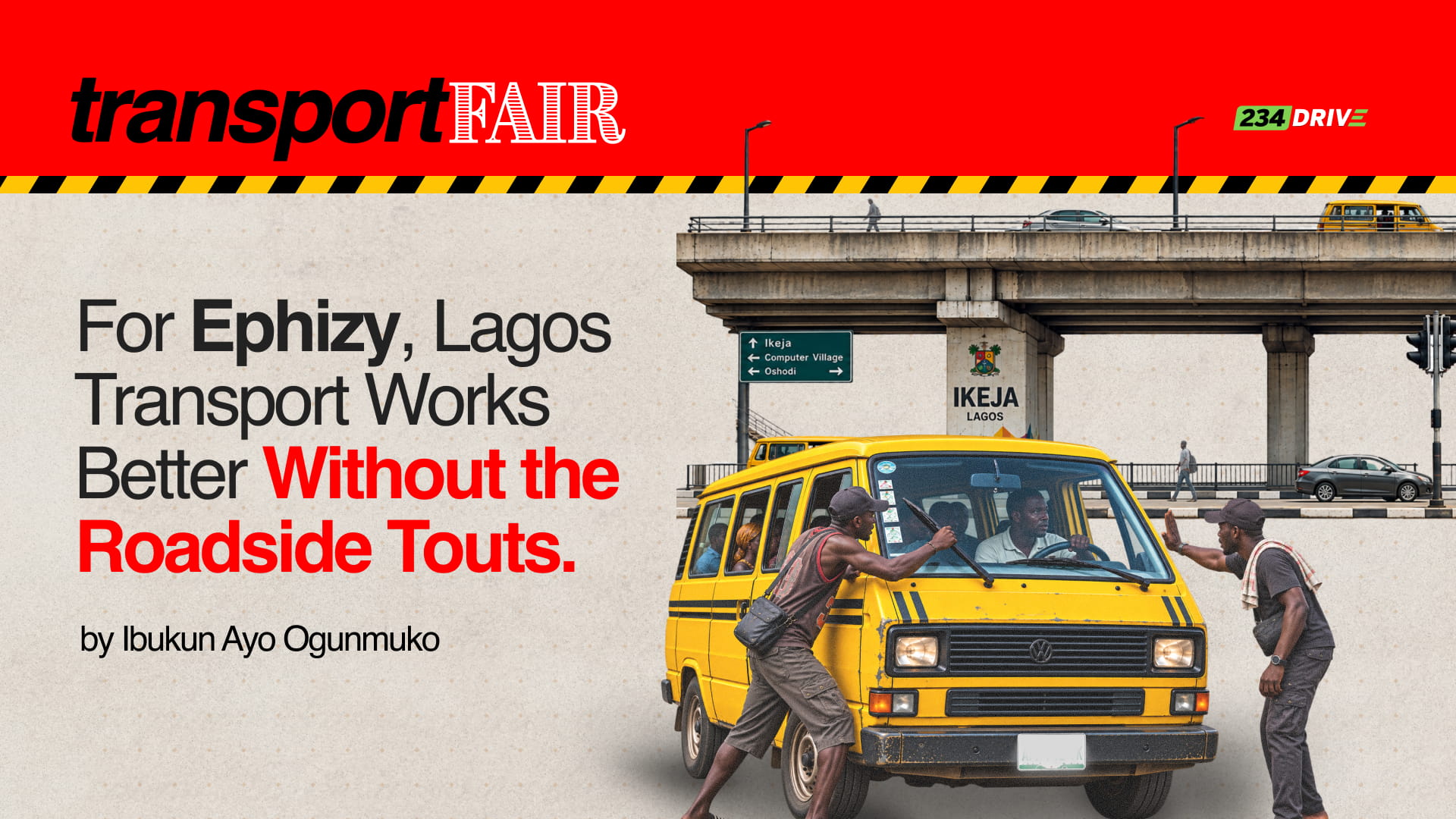
The real issue, as he sees it, is the money chain around danfo operations. At bus stops, drivers and conductors pay different people while loading, after loading or along the route. The commuter may not see the full exchange, but Ephizy believes it still finds its way into the fare.
A bus loads. Someone collects. The bus moves. Another person may collect again. By the time the conductor calls the price, passengers are no longer paying only for distance.
That is the part he wants organised.
Ephizy does not claim to have the perfect system, but he wants the payments around public transport to be clearer. If ticketing is better structured and roadside collections are reduced, fares may feel less like something shaped by too many unseen hands.
So, the fix is not just about making transport cheaper. It is about making the system easier to understand before the next bus starts loading.